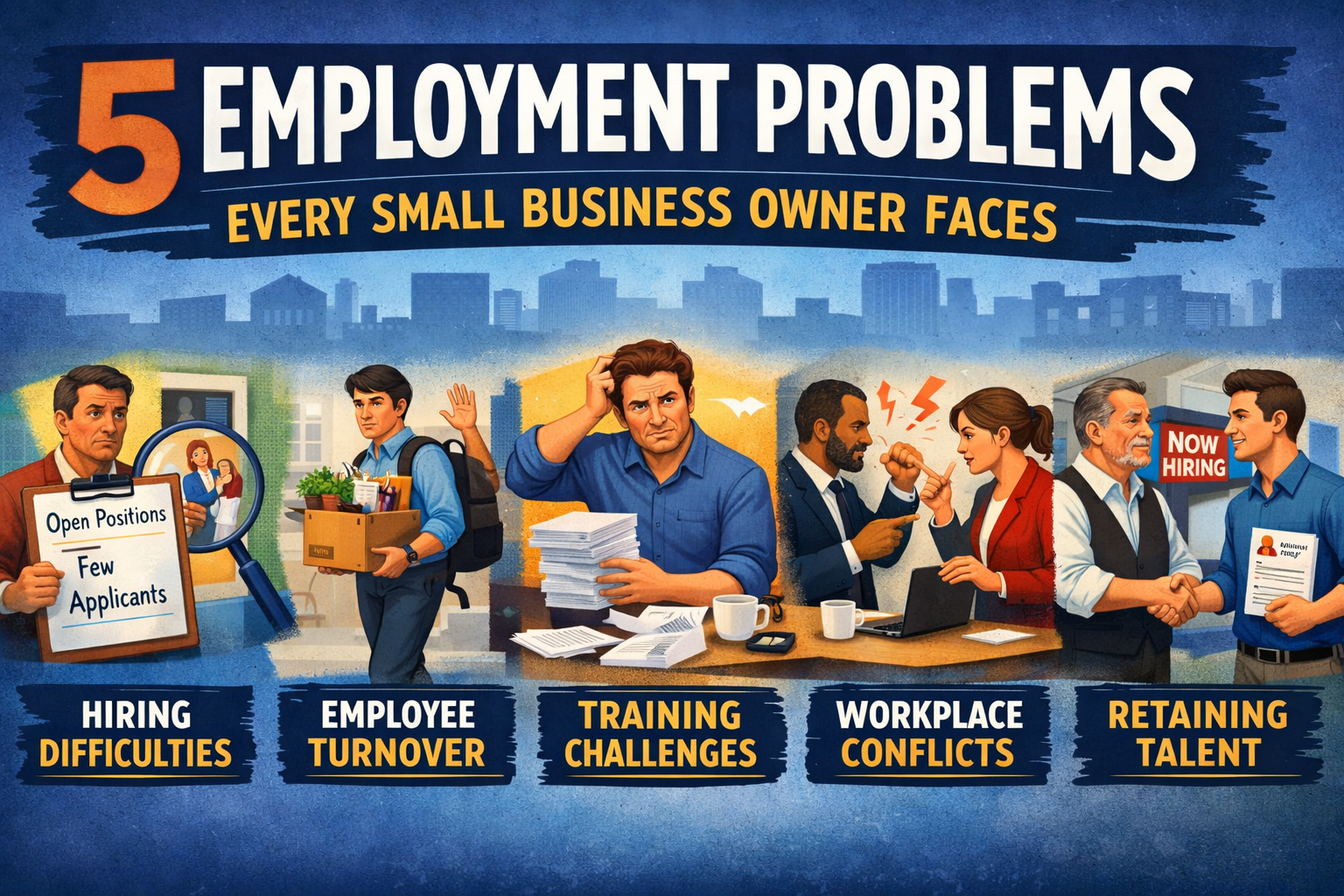
Small business owners have worker problems every day. Hiring the wrong person costs money. Firing someone the wrong way brings trouble. Paying staff wrong creates big fines. These problems hurt companies fast. This guide shows five common work troubles.
Problem One: Paying Workers Wrong
Many small companies make pay mistakes. Owners forget overtime pay. Some think salary workers never get overtime. That is wrong and costs money.
The law says most workers get overtime. The rate is one and half times normal pay. This starts after 40 hours each week. Some owners call everyone to avoid this. Courts say that does not work.
Minimum wage mistakes happen too. Florida’s minimum is higher than federal rates. Employers pay whichever is higher. Not knowing does not help in court.
Some businesses make workers stay late without pay. Others want email answers after work hours. Both break wage laws. The government checks these complaints.
Keeping records matters here. Companies must track all hours worked. They need proof of payments. Missing records make defending claims hard. Smart owners use time systems.
Problem Two: Fired Workers Claiming Unfair Treatment
Getting fired makes people mad. Some mad workers file complaints. They say firing happened because of race or age. These claims need legal help.
Laws protect many groups of workers. Protected types include race, religion, sex, and disability. Age protection starts at 40 years old. Pregnancy gets protection too.
Upset workers file with government offices. The EEOC handles federal complaints. Florida’s FCHR takes state claims. Both check everything and ask for papers.
Fighting these claims needs strong proof. Employers need records showing bad work. Written warnings help show real reasons. Papers about company rules matter.
The problem grows when rules are not used fairly. Letting one worker slide while firing another looks bad. Courts check if similar workers got similar treatment. Unfair enforcement kills defenses fast.
Teaching managers about these rules helps stop claims. Written handbooks showing complaint steps work well. Having clear firing rules protects companies.
Problem Three: Sexual Harassment Complaints
Harassment claims hurt businesses in many ways. They make bad work places. They lead to costly lawsuits. They destroy company names.
Sexual harassment includes many acts. Unwanted touching is clear harassment. Dirty jokes create problems too. Comments about looks cause complaints. Sharing bad images breaks workplace rules.
Some harassment is hidden but still wrong. Staring at someone in a sexual way counts. Asking personal questions about dating is wrong. Making rude gestures creates trouble.
The law says employers must act fast. Complaints must get a quick investigation. Victims need safety from payback. Harassers must face real punishment.
Smart companies create strong rules against harassment. These rules go in employee handbooks. Workers get training on good behavior. Managers learn how to take complaints right.
“An employer can avoid trouble by taking good steps to stop or fix sexual harassment at work,” say federal job guidelines.
Investigation steps matter when complaints come. Human Resources talks to all people involved. Witness statements get written down. The company president gets told.
Fast punishment shows the company cares about complaints. Verbal warnings come first for small issues. Written warnings follow repeat problems. Time off without pay happens for serious acts. Firing is sometimes needed.
Problem Four: Missing Work Papers
Many small businesses skip making proper job papers. Others use old employee handbooks. Some have no written rules at all. These gaps cause big legal problems.
Job papers protect both sides. They make job duties clear. They show pay and benefits clearly. They explain firing steps upfront.
Employee handbooks work as legal shields. They show company rules on unfair treatment. They explain how to make complaints safely. They show the punishment steps one by one.
Without these papers, fighting lawsuits becomes very hard. Courts ask for written proof of rules. Verbal agreements do not work well. “He said, she said,” Help employees more.
Pay practices need papers too. Companies should write overtime rules down. Break and meal rules need to be clear. Sick pay and vacation time need written explanation.
Fair use of rules needs papers. Written warnings create trails. Work reviews show ongoing issues. Firing letters explain specific reasons.
Many owners think their business is too small for formal rules. That thinking is dangerous. Even companies with five workers need written rules. There are resources that learn more here to help business owners handle employment matters correctly.
Problem Five: Not Knowing Legal Rules
Work law is hard and changes often. Federal rules differ from state rules. Local laws add more layers. Small business owners cannot know everything.
Many owners do not know who gets overtime. They think all salary workers are exempt. That guess is wrong and costly. Job duties decide exemption status, not salary alone.
Some employers do not understand family leave laws. Workers sometimes get unpaid time off. Firing someone on protected leave brings lawsuits. Not holding their job during leave causes problems.
Disability rules confuse many owners. Employers must make fair changes for disabled workers. What counts as fair varies by case. Ignoring requests creates legal trouble.
Child labor laws limit when minors work. They limit how many hours teens work weekly. They stop dangerous jobs for young workers. Breaking these brings steep fines and bad press.
Contractor labels trip up many businesses. Calling someone a contractor does not make them one. The IRS and Labor Department use specific tests. Wrong labels lead to back taxes and fines.
Record rules seem simple but matter greatly. Companies must keep work records for set periods. Pay records need keeping for three years. Some papers need even longer storage.
Anti-payback rules protect workers who complain. Firing someone after they report unfair treatment is wrong. Demoting complainers brings more lawsuits. Creating hostile places for whistle-blowers breaks federal law.
Final Thoughts
Work problems hurt small businesses badly. Legal fees drain bank accounts fast. Settlements and judgments cost even more. Bad publicity drives customers away.
Prevention works better than defense. Making clear rules costs less than lawsuits. Training managers stop many complaints. Writing everything down gives legal protection.
Getting professional help makes sense. Work lawyers understand current rules. They help create good policies. They train staff on legal duties. They defend companies when claims come.
Small business success depends on good worker relationships. Fair treatment stops most legal problems. Clear talking stops misunderstandings early. Proper papers protect everyone involved.