Most early-stage startups face the same uncomfortable trade-off when it comes to visual content: hire a designer too early and burn through limited runway, or delay hiring and end up with a product landing page, pitch deck, and social presence that all look noticeably amateur. For years, this trade-off had no good answer.
Now, a growing number of UK founders and small product teams are finding a middle path through AI-powered image generation and editing tools like Nano Banana Pro that let non-designers produce genuinely usable visual content without waiting for a full-time hire or an expensive agency retainer.
The Startup Visual Content Problem, Reconsidered
A Wide Range of Formats, One Small Team
Early-stage companies typically need visual content across a surprisingly wide range of formats: a pitch deck that looks credible to investors, a website that doesn’t scream “built by an engineer,” social media graphics to support early marketing, and product mockups to test messaging before the actual product is fully built. Each of these traditionally required either specialist software, a freelance designer, or both.
Why First Impressions Punish Underinvestment
Founders either spent money they didn’t have on design work that wasn’t yet mission-critical, or they shipped visibly rough visuals that undercut an otherwise strong pitch or product. Investors and early customers form impressions quickly, and a polished-looking deck or landing page has always carried disproportionate weight relative to how much it actually reflects the underlying business.
AI image generation tools have started to close this gap, not by replacing good design thinking, but by giving non-designers enough capability to produce professional-looking output without the traditional barriers to entry.
What’s Actually Different About the Newer Generation of Tools
From Single-Output Tools to Connected Workflows
Early AI image generators were genuinely useful but limited — mostly standalone text-to-image tools that produced one output at a time with little control over refinement. The current generation looks meaningfully different, and the shift matters for how startups actually use them.
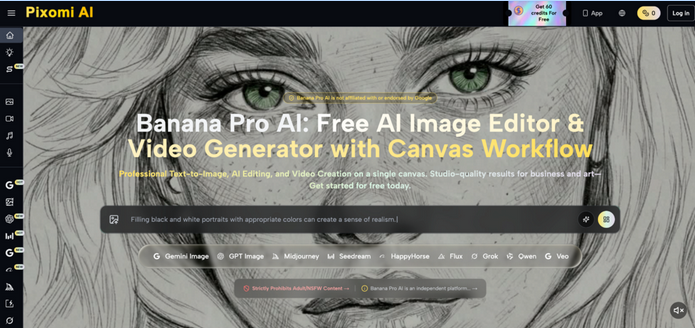
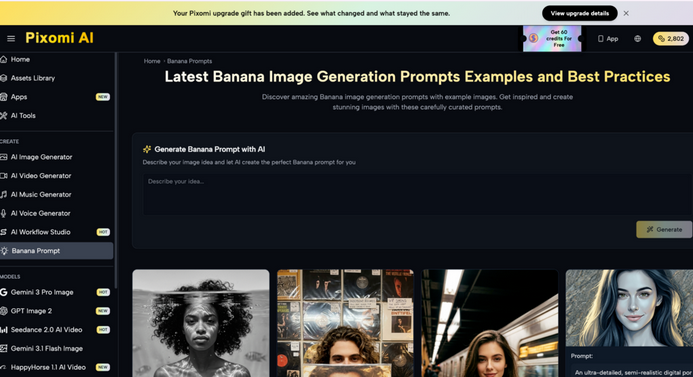
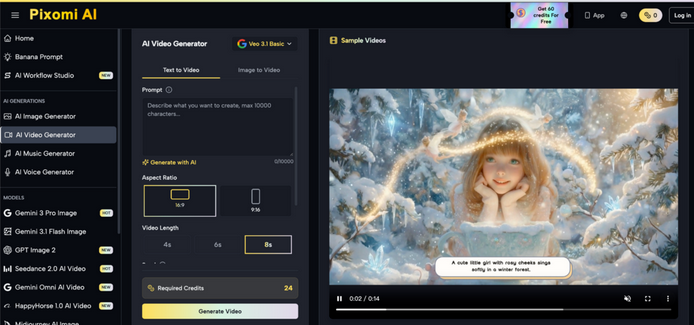
Modern platforms increasingly combine multiple capabilities in a single connected workflow rather than forcing users between separate tools for generation, editing, and video. A founder can generate a concept image, refine specific elements of it, and then turn that same asset into a short video clip for social media, all within one interface. Nano Banana Pro illustrates this shift well — it connects nodes for image generation, editing, and video creation on a single infinite canvas, letting a small team build a repeatable production pipeline instead of manually shuttling files between disconnected applications.
Why This Matters More Than It Sounds
For a two- or three-person startup team, the overhead of learning and switching between multiple specialized tools is a real cost, even when each individual tool is capable. Consolidating that workflow into fewer platforms reduces both the learning curve and the ongoing time cost of producing content regularly.
Where Founders Are Actually Applying This
- Pitch Deck Illustrations
Rather than relying entirely on stock imagery or basic icon sets, some founders now generate custom illustrations that match their specific product concept or market narrative, giving a deck a more distinctive, memorable feel without commissioning custom illustration work.
- Landing Page Visuals
Product screenshots, hero images, and supporting graphics for companies still validating their core offering and not yet ready to invest in a full brand identity. Being able to iterate quickly on visual direction while messaging and positioning are still evolving is a real advantage at this stage.
- Early Marketing and Social Proof
Generating a steady stream of visuals to support early customer acquisition efforts without a dedicated marketing hire, which is often the reality for startups in their first twelve to eighteen months.
A Word of Caution From People Who’ve Been Burned
Founders who’ve adopted these tools enthusiastically often learn a similar lesson: AI-generated visuals can look impressive in isolation but inconsistent as a set, which undermines the professional impression a startup is trying to build. A pitch deck where every slide has a different visual style, generated in isolation without any unifying direction, often looks worse than a simpler deck with consistent, if less flashy, visuals throughout.
The founders getting the best results tend to establish a basic visual direction first — a color palette, a general style, a consistent level of realism versus illustration — and then use AI tools to execute within that direction repeatedly, rather than generating each asset independently with no connective thread.
A Realistic Cost Comparison
What Traditional Design Actually Costs
For a startup weighing whether to invest time in learning these tools, it helps to think in concrete terms. A single round of professional pitch deck design from a freelance designer commonly costs several hundred pounds and takes a week or more with revisions. A landing page’s worth of custom photography or illustration can cost significantly more.
What Changes With AI Generation
AI-generated visuals, by contrast, cost essentially nothing beyond time, and that time investment drops quickly as a founder or team member becomes more comfortable with prompt writing and refinement. For a pre-seed or seed-stage company watching every pound of runway, this isn’t a marginal consideration — it can meaningfully extend the time before a dedicated design hire becomes necessary, while still maintaining a credible visual presence in the meantime.
Getting Team Buy-In When Not Everyone Is Convinced
Framing It as Removing Grunt Work, Not Judgment
It’s common for one person on a startup team to become enthusiastic about AI-generated visuals while others, particularly anyone with a design background, remain skeptical. The framing that tends to work best treats AI generation as removing grunt work rather than replacing judgment. Generating fifteen variations of a background graphic and picking the best one is not the same kind of task as making genuine creative decisions about brand identity or typography systems.
Being Transparent Without Overexplaining
It also helps to be transparent with early customers and investors about workflow, without treating it as something to hide or something to lead with unprompted. Most professional audiences are already familiar with AI-assisted content production and don’t view it negatively as long as the underlying product and business fundamentals are sound. The visual polish is a supporting factor in how a startup is perceived, not the deciding one.
Conclusion
The visual content problem that has quietly held back countless early-stage companies — good product, weak presentation — has a more accessible solution than it did even two years ago. Tools that combine generation, editing, and iteration in a single workflow, such as those built around models like Nano Banana, are letting resource-constrained startup teams produce visuals that would previously have required a hire or an agency they couldn’t yet afford. If your team has been putting off improving your pitch deck, landing page, or social presence because design felt out of budget, it’s worth spending a focused afternoon testing what’s genuinely achievable with these tools before your next fundraising conversation or product launch.