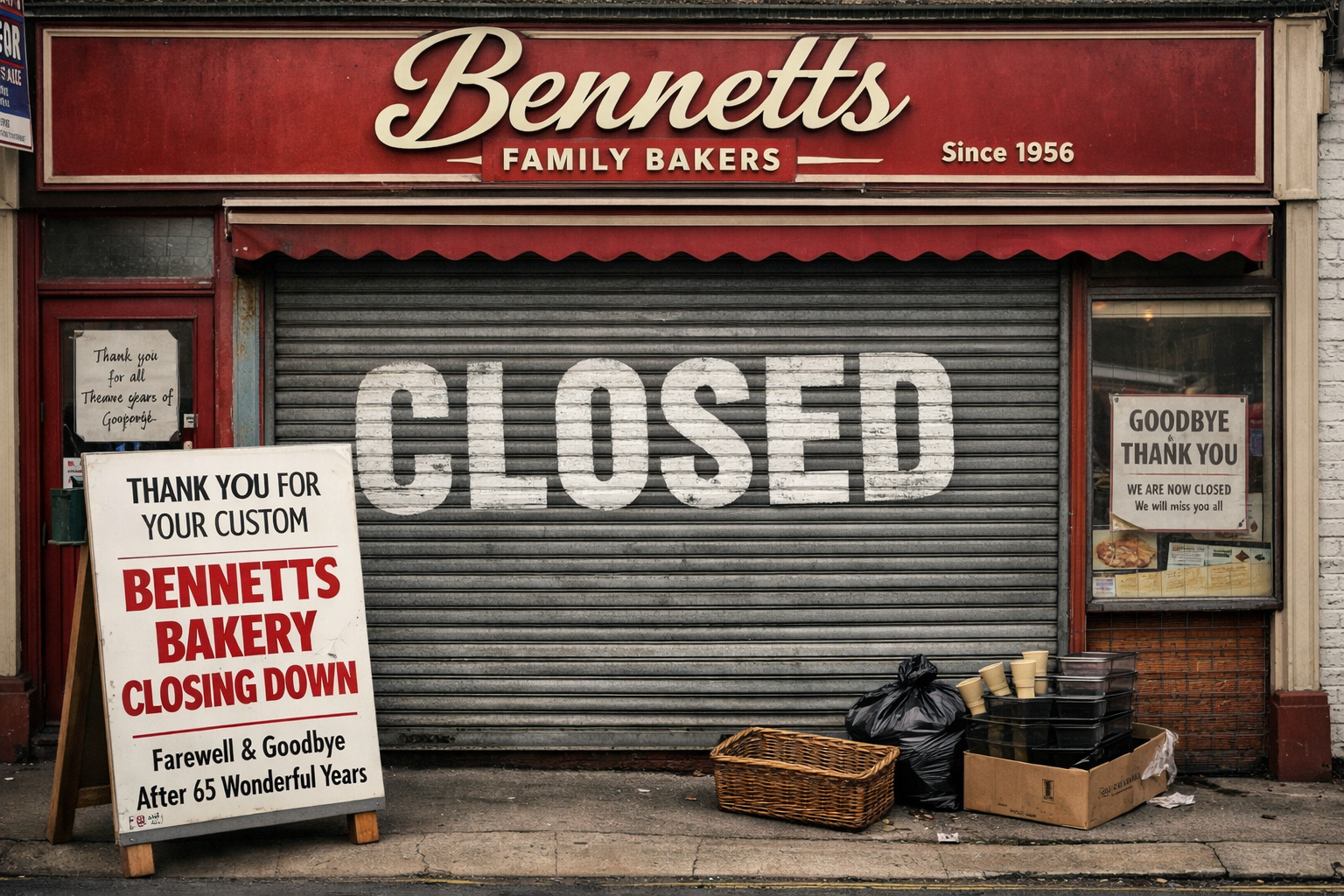
A short overview of the closure
The Bennetts Family Bakers closure marked the end of a long-running, family-operated bakery business in Dorset, England, with its final shops closing in early July 2025. Reports from trade and local coverage describe a business that didn’t fail overnight, but instead wound down branch-by-branch as the owners faced a mix of succession challenges, personal health and caregiving pressures, and ongoing operational strain.
Who Bennetts Family Bakers were to the local community
Bennetts Family Bakers built a reputation as a traditional local bakery serving Bournemouth and Poole-area neighbourhoods with everyday staples—bread, cakes, pastries, and comfort-food favourites that became part of weekly routines for regular customers. As with many independent bakeries, the “product” wasn’t just what was sold over the counter—it was also familiarity: the same faces, the same recipes, and the same sense of place that’s hard to replicate once it’s gone.
The closure timeline: how the shutdown unfolded
Most accounts describe the end coming in stages, with the final three locations (Winton, Southbourne, and Parkstone) closing on 5 July 2025, after earlier branch closures in the weeks before. This phased pattern matters because it suggests the business was trying to manage a difficult transition rather than making a single abrupt exit.
The core reason: no successor to take over
One of the most consistently reported drivers behind the Bennetts Family Bakers closure was the absence of someone willing or able to take over the business. For small family retail operations, ownership transition is often the make-or-break moment. If the next generation doesn’t want the workload or risk, the business can’t easily continue. In Bennetts’ case, the closure reflects a legacy business reaching the end of its viable leadership path.
The human side: health and caregiving pressures
Beyond succession, reporting also points to personal health issues and family caregiving responsibilities affecting the owners during the final period of trading. Independent bakeries often rely heavily on a small number of people who hold the operational knowledge. When those individuals face major life pressures, keeping the business running at an acceptable standard can become unsustainable.
Day-to-day operational strain: staffing and running costs
Operational difficulty also played a role, particularly staffing challenges, which are common across the bakery and food retail sector. Bakeries require early starts, trained hands, and dependable coverage. When staffing becomes unstable, owners frequently step in to cover gaps themselves, accelerating burnout. Rising ingredient costs, wages, utilities, and waste control further squeeze already-tight margins.
Why closures like this keep happening to long-standing local businesses
The Bennetts Family Bakers closure reflects a broader trend on UK high streets, where long-established independent businesses struggle when cost pressure, labour challenges, and succession issues collide at the same time. A shop can appear busy and popular yet still be operating with minimal financial or personal buffer, especially when success depends heavily on family labour.
What happens to employees after a closure like this
When a small bakery chain closes, staff outcomes typically vary. Some workers move quickly into similar roles with other bakeries or hospitality businesses, especially if they have baking or customer-service experience. Others use the closure as an opportunity to change industries or working hours. While individual outcomes are rarely publicised, the impact on local employment is always wider than it appears at first glance.
What happens to the shops, equipment, and brand name
After closure, shop units usually return to landlords and are offered to new tenants. Equipment may be sold, stored, or disposed of depending on ownership arrangements. As for the brand itself, revivals are possible but uncommon without a committed buyer and a viable new operating model. Public records may still show the company as administratively active even after trading ends, reflecting the time required to complete formal shutdown processes.
The Companies House details that add context
Public business records show Bennetts Family Bakers as a registered limited company based in Parkstone, Poole, with business classifications related to bakery manufacturing and retail. It’s normal for a company to remain formally listed for some time after shops close while accounts, filings, and administrative matters are finalised.
What happens next for customers and the community
For customers, the immediate next step is finding alternatives—another independent bakery, a supermarket bakery, or a nearby chain. However, replacements rarely recreate the same experience. Local bakeries are deeply tied to daily routines and community identity, which is why closures often feel personal and generate strong emotional responses.
Could Bennetts Family Bakers ever come back?
A return is theoretically possible but unlikely without a clear successor or buyer and a sustainable plan for future operations. When closures are driven by succession issues and personal limitations, owners often prefer a definitive ending rather than a risky restart. Most similar closures quietly remain permanent.
Lessons other small bakeries can take from this closure
The Bennetts Family Bakers closure offers clear lessons for independent food businesses. Succession planning is critical and cannot be left too late. Reducing reliance on a small number of individuals through documented systems can improve resilience. Finally, customer loyalty—while invaluable—cannot compensate for structural pressures related to leadership, health, and operational sustainability.