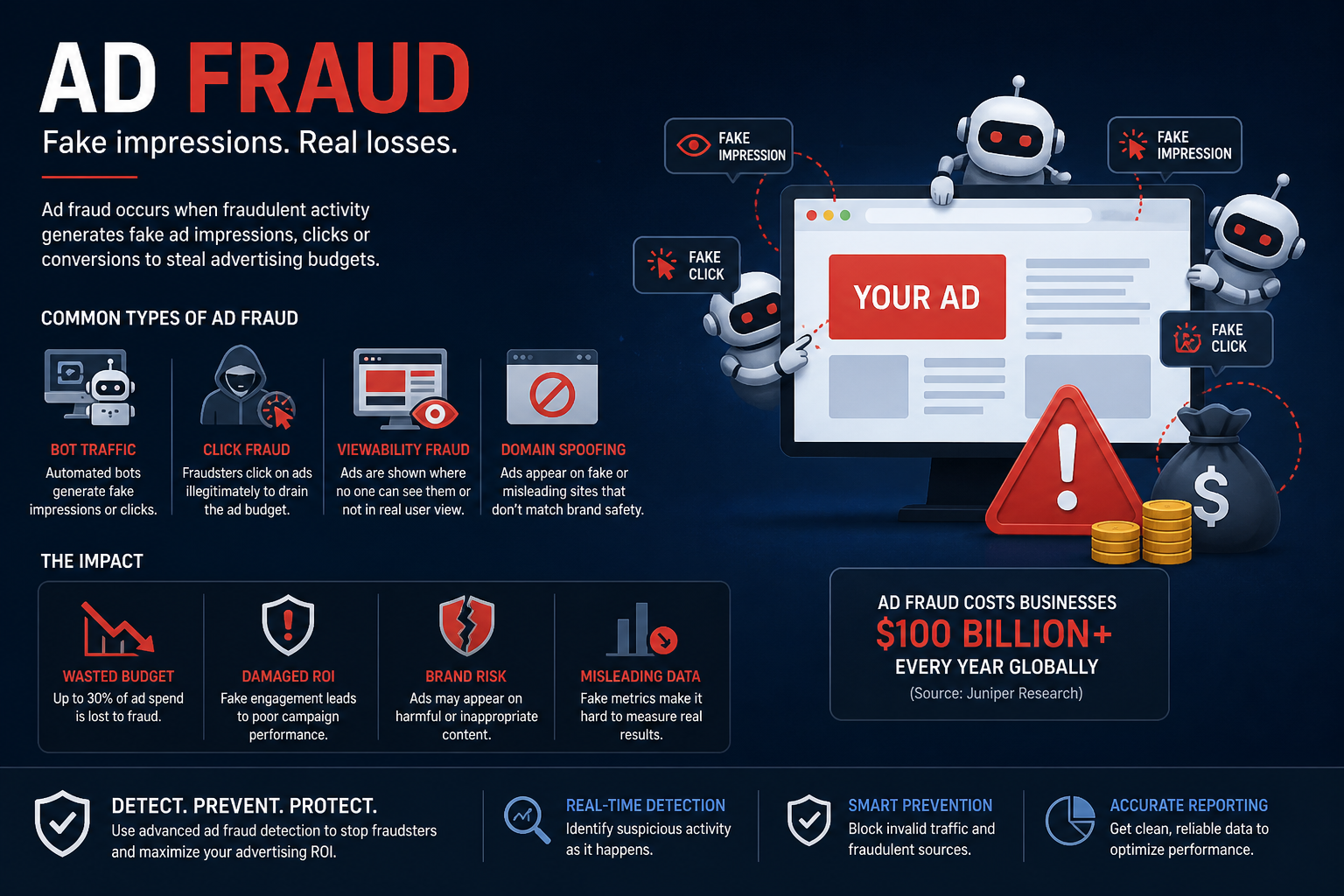
Ad fraud remains one of the most persistent challenges in digital advertising. As programmatic ecosystems expand and campaigns scale globally, fraudulent activity becomes more sophisticated and harder to detect. From bot traffic and click farms to domain spoofing and hidden placements, ad fraud distorts performance data and drains marketing budgets.
To counter these risks, advertisers are increasingly relying on artificial intelligence (AI). AI-driven systems can process vast amounts of data in real time, identify anomalies, and prevent fraudulent activity before it impacts results. In native advertising environments – where engagement and content relevance are critical – maintaining traffic integrity is especially important.
What Is Ad Fraud in Digital Advertising?
Ad fraud refers to any activity that generates fake impressions, clicks, or conversions with the goal of manipulating campaign metrics. These interactions create the illusion of performance without delivering real user value.
Common types of ad fraud include:
- Bot-generated impressions and clicks
- Click farms simulating human engagement
- Domain spoofing, where low-quality sites impersonate premium publishers
- Hidden ads that are never actually viewed
- Fake conversions designed to trigger payouts
In performance marketing, where optimization decisions depend on data accuracy, even a small percentage of fraudulent traffic can lead to significant inefficiencies.
Why AI Is Essential for Fraud Detection
Traditional fraud detection methods rely on static rules or manual checks, which are no longer sufficient in modern programmatic environments. Fraud patterns evolve quickly, making it difficult for rule-based systems to keep up.
AI offers several advantages:
- Real-time data processing at scale
- Ability to recognize complex behavioral patterns
- Continuous learning from new data
- Detection of subtle anomalies across multiple signals
By combining these capabilities, AI can distinguish between genuine user behavior and artificially generated activity more effectively than manual approaches.
How AI Detects Ad Fraud
AI-based fraud detection relies on analyzing multiple layers of data rather than isolated signals.
- Behavioral analysis
Genuine users interact with content in varied ways – scrolling, clicking, and spending time on pages. Bots often produce repetitive or unnatural patterns that can be identified through machine learning models. - Traffic pattern monitoring
Unusual spikes in traffic, identical click timing, or inconsistent geographic distribution may indicate fraudulent activity. AI systems detect these irregularities almost instantly. - Device and network evaluation
Patterns in IP addresses, device configurations, and browser environments can reveal clusters of suspicious activity. Repeated signals from similar sources are flagged for further filtering. - Engagement correlation
High click volumes combined with low engagement often signal poor-quality traffic. AI evaluates whether user behavior aligns with expected post-click actions.
Within native advertising ecosystems, advanced traffic validation systems – such as those implemented across the MGID platform – apply these techniques to maintain traffic quality and filter out invalid interactions before they affect campaign performance.
Preventing Fraud Before It Happens
Detection alone is not enough. AI is increasingly used to prevent fraudulent activity proactively by filtering traffic before ads are served.
Preventive measures include:
- Blocking known fraudulent IP ranges
- Excluding suspicious device clusters
- Prioritizing verified publisher inventory
- Adjusting traffic distribution in real time
This proactive approach reduces exposure to risk and ensures that budgets are spent on genuine user interactions.
AI in Native Advertising Environments
Native advertising presents unique conditions for fraud detection. Since ads are integrated into editorial content, engagement quality becomes a key indicator of authenticity.
AI enhances fraud prevention in native campaigns by:
- Evaluating the relationship between content context and user behavior
- Identifying abnormal interaction patterns within content feeds
- Filtering low-quality placements automatically
- Prioritizing environments with consistent engagement signals
Many native advertising solutions, including MGID’s traffic quality framework, rely on these mechanisms to ensure that advertisers receive meaningful interactions rather than inflated metrics.
Key Metrics to Monitor for Fraud
Even with AI systems in place, advertisers should monitor performance data to identify potential issues.
Key warning signs include:
- Extremely high CTR with minimal engagement
- High bounce rates across large traffic volumes
- Irregular geographic patterns
- Low conversion rates despite strong click performance
- Short or identical session behavior
These indicators help validate whether traffic is delivering real value.
Combining AI With Human Oversight
While AI significantly improves fraud detection, it should be complemented by human analysis. Strategic oversight helps interpret data correctly and ensures alignment with campaign goals.
Best practices include:
- Regularly reviewing placement-level reports
- Auditing traffic sources and performance trends
- Refining targeting based on engagement insights
- Collaborating with transparent advertising partners
This hybrid approach creates a more robust defense against fraud.
The Impact of Ad Fraud on Performance Marketing
Ad fraud affects more than just budgets – it compromises the entire optimization process. When decisions are based on inaccurate data, campaigns become less efficient and harder to scale.
Common consequences include:
- Misallocation of budget to ineffective channels
- Incorrect evaluation of creatives and targeting
- Reduced return on investment
- Loss of confidence in campaign data
Eliminating fraudulent traffic improves both performance and decision-making accuracy.
The Future of AI in Ad Fraud Prevention
As fraud tactics continue to evolve, AI systems are becoming more advanced and integrated into advertising infrastructure.
Emerging trends include:
- Cross-channel fraud detection systems
- Deeper behavioral modeling through machine learning
- Greater transparency across the supply chain
- Integration with privacy-first data strategies
- Automated optimization based on traffic quality signals
Technology providers in the native advertising space, including MGID, are actively developing these capabilities to support more reliable and secure campaign environments.
Conclusion
Ad fraud remains a critical issue in digital advertising, but AI is transforming how it is managed. By analyzing behavior, detecting anomalies, and filtering traffic in real time, AI enables advertisers to protect budgets and improve campaign outcomes.
In native advertising, where user trust and engagement are essential, maintaining high-quality traffic is especially important. Solutions built around AI-driven validation – such as those used within the MGID ecosystem – demonstrate how fraud prevention can be integrated directly into campaign execution.
For performance marketers, leveraging AI to detect and prevent ad fraud is no longer optional. It is a key component of building scalable, transparent, and effective advertising strategies.