Short-form video has changed how people think about content. A static image can still be beautiful, funny, or useful, but it often has to work harder to hold attention. On platforms built around movement, rhythm, and quick reactions, a picture that moves has an obvious advantage.
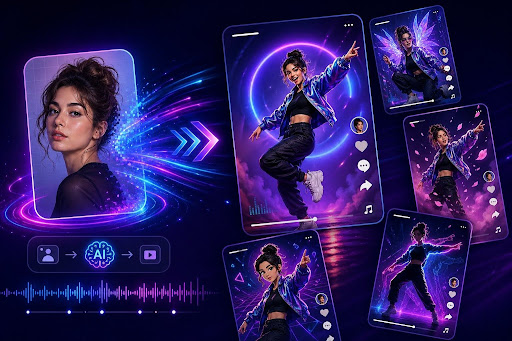
That is one reason I have been watching AI dance tools more closely. An AI dance generator can turn a portrait, character image, or creative visual into a dance-style video without filming a real performance. GoEnhance also provides a good AI video generator for creators who want to make short, dynamic clips from simple visual ideas.
Short-Form Video Rewards Movement
The logic of short-form platforms is simple: people scroll fast. A post has only a brief moment to catch attention. Movement helps. A camera shift, a dancing character, a moving portrait, or a short animated moment can stop the scroll long enough for someone to watch.
That does not mean every image should become a video. Some images are stronger when they stay still. But entertainment content, music posts, meme formats, fan edits, and character-based visuals often benefit from motion.
This explains why AI dance and image animation tools caught on so quickly. They match the pace of the platforms where creators are already posting.
Why AI Dance Generators Caught Creators’ Attention
Dance videos are easy to understand. A viewer does not need a long explanation. They see a still image turn into motion, and the result is immediate.
That makes AI dance content especially shareable. It works for portraits, virtual characters, pets, illustrations, avatars, and fan-style edits. It can be funny, stylish, strange, or surprisingly polished, depending on the source image and motion style.
I think the appeal comes from three things.
The first is simplicity. A creator can begin with one image.
The second is speed. The result can be created much faster than a traditional dance shoot or animation.
The third is surprise. People like seeing a familiar image behave in a new way.
That surprise factor is powerful in short-form video, where novelty often drives the first wave of attention.
From Portraits and Characters to Motion Content
AI dance is not only about making a real person dance. In many cases, the more interesting use is character-based content.
A digital artist can animate an original character. A music creator can turn cover art into a moving promo. A meme account can make a still image more playful. A small brand can use a mascot-style visual for social engagement. A fan creator can test different visual ideas without needing advanced animation skills.
This is why AI dance tools sit somewhere between entertainment and content production. They are fun, but they are also practical for creators who need frequent visual updates.
A few common use cases include:
| Source Image | Short-Form Video Idea |
| Portrait | Dance clip or profile-style post |
| Character art | Animated fan edit |
| Album cover | Music teaser |
| Pet image | Humorous motion clip |
| Brand mascot | Social engagement post |
| Fashion image | Movement-based style showcase |
The best results usually come from clear images with strong subjects. If the source image is confusing, the output often becomes messy too.
Image Animation Is the Bigger Trend
Dance videos are only one part of a larger shift. The broader trend is image animation, where still visuals become moving content for social platforms, music promotion, fan edits, creator campaigns, and personal projects.
That is why image animation matters beyond one specific effect. It gives creators a way to turn static photos, drawings, posters, product images, or character designs into short clips that feel more natural in video-first feeds.
This is a major change in how content can begin. A creator no longer needs to start with footage. They can start with a picture.
That may sound small, but it changes the workflow. It means old photos can become new posts. Character art can become motion content. A poster can become a teaser. A still idea can become something that feels more alive.
Why Creators Like These Tools
The appeal is not hard to understand. Most creators want more content, but they do not want more production stress.
AI dance and animation tools reduce the need for:
- Real filming
- Choreography
- Camera setup
- Motion design skills
- Complex editing software
- Large production budgets
- A full creative team
For casual creators, that makes video creation more approachable. For more serious creators, it makes testing faster. They can try several versions, compare results, and decide which one fits the platform.
This matters because short-form success often comes from iteration. One polished idea may work, but five quick tests can teach a creator more.
What Makes AI Dance or Animation Content Work Better
Not every AI-generated motion clip looks good. Some outputs can feel distorted, stiff, or too chaotic. The difference often comes down to source image quality and motion control.
From what I have seen, better results usually have:
- A clear main subject
- Good lighting
- Simple clothing or clean visual details
- A background that does not compete with the subject
- Motion that fits the image
- Stable face and body structure
- A short duration suited to social platforms
- A style that matches the creator’s account
Overly dramatic movement can look funny, but it can also break the illusion. For many posts, controlled movement feels better than extreme motion.
The Difference Between a Gimmick and a Useful Tool
AI dance can easily become a gimmick if the only purpose is “look, this picture is moving.” That may work once, but it gets old quickly.
The more useful version is when the tool supports a real content idea. A musician uses it to promote a song. An artist uses it to bring a character to life. A creator uses it to test a new visual style. A brand uses it to make a mascot more engaging. A fan page uses it to create a playful edit that fits its audience.
That is when AI animation becomes more than a novelty. It becomes part of the creative process.
The Future of Short-Form Content May Start With Images
Short-form video used to begin with a camera. More often now, it can begin with a single image. That image might be a portrait, a product photo, an illustration, a poster, a pet picture, or an AI-generated character.
AI dance and image animation tools are popular because they fit the way people already consume content: fast, visual, musical, and easy to share. They lower the barrier for creators who want movement but do not have the time or resources to produce everything manually.
I do not see this trend disappearing. The tools will become more stable, more controllable, and more useful. The creators who benefit most will be the ones who treat AI motion not as a magic button, but as another way to turn a strong visual idea into content people actually want to watch.