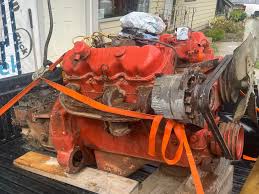
In the history of diesel pickup trucks in North America, no engine has generated more passionate, sustained, and technically specific discussion than the 6.0-liter Power Stroke that Ford installed in Super Duty trucks from 2003 through 2007. It has been the subject of class action litigation, the catalyst for an entire aftermarket remediation industry, and the direct inspiration for a substantial portion of the diesel swap work done on F-250 and F-350 platforms to this day. Understanding why requires going back to the beginning of the engine’s story — and to the particular combination of design characteristics and real-world operating conditions that created problems far exceeding what Ford or its engine supplier anticipated.
The International origins and the emissions mandate.
The 6.0L Power Stroke was engineered and manufactured not by Ford but by International Navistar, continuing the supply relationship that had produced the well-regarded 7.3L Power Stroke that preceded it. The 7.3L had established a genuine reputation for reliability — owners routinely pushed past 300,000 miles without major engine work, and the engine’s mechanical simplicity made it relatively forgiving of the maintenance gaps that commercial operators inevitably encountered.
The 6.0L was developed under significantly different constraints. Emissions regulations tightening in the early 2000s demanded substantial reductions in particulate matter and nitrogen oxide emissions, which pushed the design toward higher injection pressures, more sophisticated fuel system control, and an exhaust gas recirculation system that introduced recirculated exhaust heat into the intake charge to reduce combustion temperatures and NOx formation. Each of these features added complexity — and each of them, in the 6.0L’s specific implementation, became a documented failure pathway.
The EGR cooler problem that defined the engine’s reputation.
The EGR cooler is the component most associated with 6.0L failures in public consciousness, and with good reason. The cooler is tasked with lowering the temperature of recirculated exhaust gases before they enter the intake manifold — a necessary function given how hot EGR gases are, and a necessary component of the emissions strategy. In the 6.0L, this cooler is a small, tubular heat exchanger through which coolant flows to absorb heat from the exhaust gases passing through it.
The failure mode is thermal fatigue. The cooler cycles between very hot exhaust gases and relatively cooler coolant constantly, and over time this cycling induces stress fractures in the cooler tubes. When those fractures develop, exhaust gases enter the coolant system — introducing combustion byproducts into the cooling circuit, raising coolant temperatures, and potentially causing head gasket failures as the cooling system’s ability to manage engine heat is compromised. In severe cases, coolant enters the combustion chambers, producing the conditions that lead to catastrophic engine damage.
The rate at which EGR cooler failures occurred in field conditions — particularly in trucks used for towing or high-load commercial applications where thermal cycling is most intense — far exceeded what Ford or International had projected. The warranty costs were substantial. The owner frustration was significant.
The high-pressure oil system complexity.
Compounding the EGR situation, the 6.0L uses a high-pressure oil system to actuate its fuel injectors — a system borrowed in concept from the 7.3L but significantly modified and, in some respects, made more sensitive. The injectors are hydraulically actuated by high-pressure oil from a dedicated pump, and the injectors themselves — unit injectors of a design unique to the 6.0L — proved sensitive to contamination and to the specific quality of the oil flowing through the system.
Stuck or damaged injectors produce a range of symptoms depending on which and how many are affected: rough running, hard starting, excessive black smoke, and in worst cases, hydrolocked cylinders if a stuck-open injector delivers fuel in excess of what the engine can manage. The repair cost for a complete injector replacement — eight injectors, each requiring specific tools and procedures — is substantial enough that it frequently triggers the question of whether the investment is rational given the truck’s age and value.
Why 6.0L platforms became prime candidates for engine replacement.
The specific combination of these failure modes created a segment of 6.0L Super Duty owners who arrived at a particular conclusion: the truck itself — the chassis, the cab, the axles, the frame, the drivetrain components surrounding the engine — was worth keeping. It was the engine that needed to go. The Ford 6.0L to Cummins diesel swap addresses exactly this conclusion by removing the problematic powertrain and replacing it with an engine whose reliability record is the near-opposite of the 6.0L’s reputation.
The 2003–2007 Super Duty platform is a genuinely capable heavy-duty truck that shares nothing of the 6.0L’s reliability narrative. Its frame, axles, and suspension are well-regarded and durable. Owners who have invested in maintaining the rest of the truck — new brakes, suspension components, transmission service, bodywork — are not willing to abandon that investment because the engine became uneconomical to repair. The swap preserves what is worth preserving while addressing the one component that created the problem.
What the aftermarket remediation tells us about the engine’s legacy.
The scale of the aftermarket that grew up around the 6.0L is, in its own way, a testament to how significant the issue became. EGR delete kits, coolant filter systems, oil cooler replacements, head stud upgrades — the list of modifications developed to address or circumvent the 6.0L’s known failure modes is long enough to populate an entire catalog section, and the shops that specialize in 6.0L remediation have kept busy for two decades.
That aftermarket exists because the trucks themselves are worth saving, even when the engine is not worth repairing in stock form. It is one of the more honest indicators the diesel truck market has produced of the relationship between a chassis and its powertrain — and of what happens when those two things have very different service lives.