Customers have evolved more quickly than many businesses had anticipated.
In minutes, people can book a flight, order groceries with a tap, and schedule meetings instantly. But in many businesses, the customer is still coming through the door and is dealing with the same frustrating experience as he or she did 10 years ago: waiting in a long, unpredictable line.
That gap matters more than ever.
Your waiting experience is your first impression. When lines are long and unpredictable, it causes stress and erodes trust. Ultimately, it just gives customers a reason to leave and find a competitor who can help them faster.
Hence, organizations in sectors such as retail, healthcare, banking, telecom, and government services are fast implementing online queuing systems.
Not because digital transformation sounds impressive.
Because customers are demanding it.
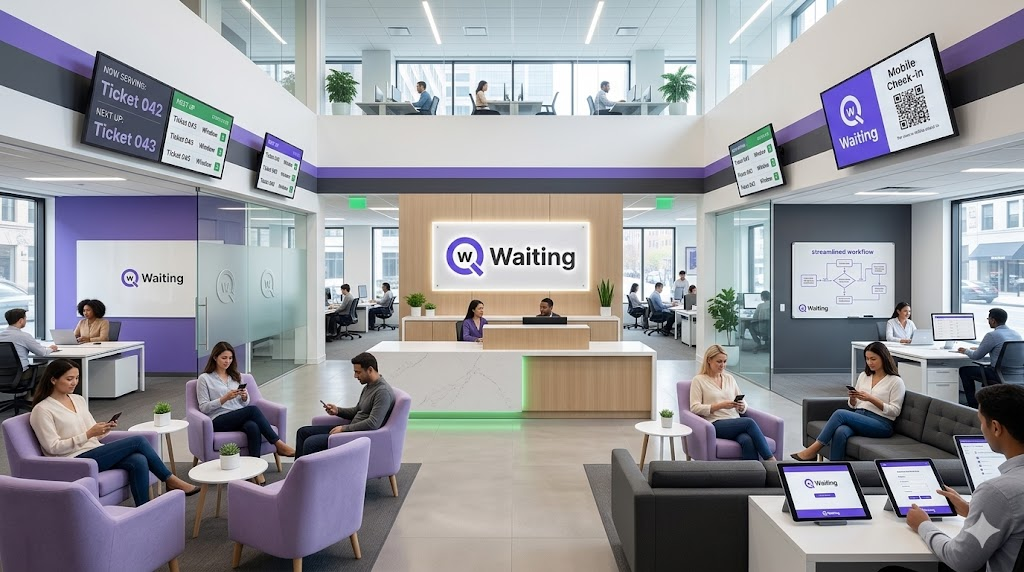
The End of Traditional Waiting Lines
Traditional queues create problems that most businesses underestimate.
Physical queues create:
- crowded waiting areas
- overwhelmed staff
- frustrated customers
- unpredictable service flow
- poor first impressions
Short wait times are acceptable to customers. The problem is they don’t know how long it will take, if the line is moving or if it’s even worth trying.
That experience is completely transformed with an online queuing system. The customer can remotely queue up in one of the following ways:
- mobile phones
- QR codes
- websites
- kiosks
- appointment links
They receive live updates about their position, expected wait times, and notifications when their turn approaches.
Why Online Queuing Systems Are Growing So Quickly
Businesses are not switching to online queues because they are trendy. They are switching because the operational improvements are immediate and measurable. Here’s how a virtual queue management solution is a smart move for every business:
1. Faster Customer Flow Without Increasing Pressure on Staff
Online queuing systems help businesses distribute demand more intelligently by:
- organizing arrivals
- balancing workloads
- reducing bottlenecks
- preventing overcrowding
- improving service pacing
Customers move through the system faster without staff feeling overwhelmed. That operational balance is incredibly valuable during peak hours.
2. Customers Prefer Freedom Over Standing in Line
Modern customers dislike wasting time physically waiting. Online queuing changes the psychology of waiting entirely.
Instead of standing in a crowded lobby, customers can:
- shop while waiting
- remain in their cars
- sit comfortably
- complete other tasks
- arrive only when needed
That flexibility dramatically improves the customer experience. A transparent queue feels shorter, even when the actual wait time stays the same.
3. Businesses Gain Real Operational Visibility
Traditional queues provide almost no useful operational data. Managers often rely on assumptions instead of real insights.
Online queue systems provide valuable analytics such as:
- average wait times
- peak service hours
- branch performance
- customer traffic trends
- service bottlenecks
- staff efficiency metrics
This visibility helps leadership teams make smarter operational decisions. Instead of reacting to complaints, businesses can proactively improve service flow using real data.
That is a major competitive advantage.
4. Multi-Location Businesses Can Standardize Service
Consistency becomes difficult when businesses expand across multiple branches.
Different locations often develop different queue processes, customer experiences, and service standards. Online queue management platforms help organizations centralize operations across locations.
Businesses can:
- Monitor branches in real time
- maintain consistent service experiences
- Compare performance metrics
- manage traffic more efficiently
- scale operations faster
For growing enterprises, this level of control becomes essential.
Industries Seeing the Biggest Impact
The adoption of online queuing systems is accelerating across industries where customer flow directly affects experience and revenue.
Retail
Long checkout lines reduce purchase satisfaction and increase abandonment rates, especially during busy shopping periods.
Online queue systems help retailers:
- reduce congestion
- improve checkout efficiency
- Organize service desks better
- manage peak-hour traffic
- improve customer retention
For retailers competing against e-commerce convenience, speed matters enormously.
Healthcare
Healthcare providers face some of the highest customer frustration levels related to waiting. Patients already arrive stressed or anxious. Long, unclear waits make the experience worse.
Hospitals and clinics are now using digital queue systems to:
- reduce overcrowding
- streamline patient flow
- improve appointment handling
- Organize walk-ins efficiently
- improve patient satisfaction
The goal is not only operational efficiency. It is creating a calmer patient experience.
Banking
Banks continue to modernize branch experiences to meet rising customer expectations.
Online queuing systems help banks:
- Reduce lobby congestion
- Organize priority services
- improve advisor scheduling
- shorten perceived wait times
- Optimize branch staffing
Customers no longer want to spend half their day waiting for basic services.
Banks know that.
Government Offices
Government service centers often face extremely high visitor volumes. Traditional waiting systems create confusion, overcrowding, and frustration for citizens.
Digital queue management allows government offices to:
- improve transparency
- reduce physical crowding
- organize appointments more effectively
- improve public satisfaction
- modernize service delivery
For many public institutions, queue modernization has become part of broader digital transformation initiatives.
What Businesses Now Expect From Modern Queue Management Platforms
Businesses today expect far more than simple ticket dispensing. Modern online queuing platforms now combine:
- virtual queue management
- appointment scheduling
- self-service check-in
- customer communication
- analytics dashboards
- mobile access
- real-time notifications
- multi-branch management
The strongest platforms focus on improving the entire customer journey, not just managing lines. Businesses are no longer looking for different tools that simply organize waiting areas.
They want platforms that improve operational performance, customer satisfaction, and service scalability together. More companies are turning to tools like Qwaiting because they realize waiting isn’t just a backend chore—it is a huge part of how customers feel about a business. They want a system that connects the dots from the moment someone walks in to the moment they leave, instead of just using a basic digital ticket dispenser.
Why Some Businesses Still Hesitate
Even though online queuing is catching on fast, some companies are still holding back because of a few old myths.
“This Is Only for Large Enterprises”
Not anymore.
Modern cloud-based queue management systems are scalable for businesses of all sizes. Small clinics, retailers, and service centers are adopting them alongside large enterprises.
“Customers Prefer Traditional Lines”
Most customers prefer convenience, flexibility, and visibility.
Very few people genuinely enjoy standing in crowded waiting areas.
Once customers experience virtual queuing, many do not want to return to traditional lines.
“Implementation Must Be Complicated”
Modern platforms are significantly easier to deploy than many businesses expect.
Cloud-based systems often require minimal infrastructure and can integrate smoothly into existing operations.
The operational gains typically outweigh the transition effort quickly.
What Businesses Should Look for Before Choosing an Online Queuing System
Not all queue management platforms deliver the same value. Businesses should prioritize solutions that offer:
- easy customer adoption
- scalable infrastructure
- omnichannel access
- appointment integration
- strong analytics
- real-time notifications
- flexible deployment options
- enterprise-level reliability
Most importantly, businesses should choose platforms designed around customer experience improvement, not just queue control.
That difference shapes long-term success.
Faster Service Has Become a Business Requirement
The businesses leading customer experience today are reducing friction everywhere they can. They get something a lot of companies completely miss: customers remember how easy you made their lives.
In a world where almost everything is digital and instant, standing in a long, crowded line with no idea when it’ll be your turn just doesn’t cut it anymore.
Online queuing systems are helping businesses modernize service experiences in ways customers immediately notice:
- less waiting
- better communication
- smoother operations
- greater convenience
- faster service delivery
If you are still stuck in those manual registers and paper tokens, now is the right time to upgrade to an online queuing system.
Not just this will improve your customers’ visiting experience, but will also foster their trust in the services your business offers because people now judge you not just on your price or product, but also on how you respect their time.
They are comparing experiences. And waiting in line has become one of the fastest ways to lose that comparison.