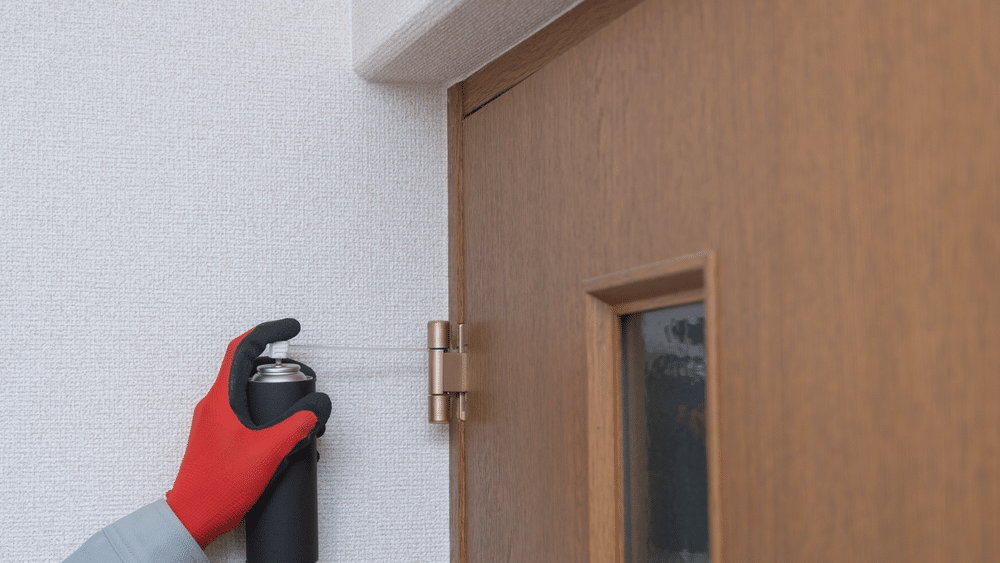
Living in a student dormitory or flat is a gratifying experience – but it does come with some challenges. For one, students can find that their rental properties aren’t quite up to scratch, especially when it comes to things like their doors. Are you finding, for example, that your students complain that doors are a bit loose? It could be down to the hinges on the door. Luckily, adjusting composite door hinges is not too complex.
As the property owner, it would make sense to check these problems before a serious issue takes place. Adjusting composite door hinges could be the simple solution to your door problems. Quality security is essential for any student, not just for your own security, but for your privacy. Whether you need to adjust composite door hinges or you are adjusting UPVC door hinges, the process can feel quite similar.
To help you understand the job you have ahead of you, we contacted Locks & Handles for insights. They provided us with some useful information about how to best go about composite door hinge adjustment.
Why Student Flats & Dormitories Need Hinge Checks
So, as the resident of this building, you would be well within your rights to ask why your hinges even need adjustment. Isn’t this something that should be caught during a property check before you move in? You would assume so. Unfortunately, plenty of student flats and dormitories are given a quick once-over before they are rented out again. As such, things like troublesome composite door hinges or patio door hinges might not be spotted!
Why do these problems persist? The main reason just comes down to usage. Flats and dormitories have doors that, generally, are in much more common use than the doors in a traditional family home. The average family will use their doors a few times per day; student accommodation can see these same doors, designed for the same usage, used tens of times, depending on residency numbers.
As such, it can be common for student apartment buildings to run into problems with their hinges. This can be the main cause for doors feeling loose, moving around a little too much when they open, or, in a more serious circumstance, cause a potential security breach. From keeping safe to making sure you can maintain your own privacy, adjusting those hinges should be a priority for you.
If you are a landlord and are checking out student accommodation hinge complaints, you need to follow a procedure.
How To Adjust Composite Door Hinges In Shared Housing
The process for adjusting the door hinges in your student accommodation is quite easy, thankfully. There are two steps you need to take to make sure you can adjust composite door hinges:
Check Your Hinge Type
So, the first problem many property owners run into is that they try to adjust the wrong type of hinge. Most hinges will use either standard butt hinges or T hinges. Butt hinges are very common, highly reliable and generally suitable for most door types. T hinges are larger and are sometimes known as gate hinges. Butt hinges have a pair of ‘leaves’ which connect using a pin-and-barrel system that fits through the centre of both leaves.
Once you have looked at your hinges and have a rough idea of what hinge type you have, you can move on with the repair process. If you are unsure what hinge type you have, run an online search for examples of butt and T hinges; you should be able to tell the difference with an image comparison.
Adjusting Composite Door Hinges
So, the good news is that adjusting these hinges is pretty easy work, even if you are not the most skilled DIY expert. That said, if the below sounds too confusing for you to feel comfortable, hire a locksmith to do the job for you. To get started, you will need to do the following:
- Look for the adjustment screw within your hinges; these are usually hidden behind a small plastic cap, so you will need to remove this. The adjustment screw should be obvious.
- Get a screwdriver and untighten the two screws on the inside part of the hinge. This should give you access to the adjustment screw. Remove the cap/head with a screwdriver.
- Retrieve an Allen key; a universal one should be fine, but some hinges need a specific style of Allen key. Give this 1 or 2 rotations, and test the hinge to see if it feels sturdier.
- If your hinges still feel a bit off, then continue to give them small rotations and keep testing the hinge. You should eventually feel like the hinge is strong and held well in place again.
This should be enough to get your hinge tightened up enough. However, adjusting composite door hinges can be a bit more complex if you have other screws in place, like a grub screw. This quick guide only covers basic composite door hinges; for anything more complex, you would be well-advised to watch a DIY video about how to correct this hinge type.
For T hinges, you should be able to follow a similar process to the above. Again, if you feel like you are not making a difference, it might be that you need a specialist to find the issue. It might not be your hinge itself; the door could be out of line in another way.
How Often Should Student Door Hinges Be Checked?
It would be wise to consider adjusting composite door hinges anytime a student moves out of your building. This is ample time to check, as there are no tenants to disturb. As soon as the changeover happens, consider setting aside the time to double-check your composite door hinges.
However, given the rapid change in weather in the UK, it would also be wise to check during any breaks in term time. Students might be going home for the duration, and the change in weather could leave composite door hinges out of line. If nothing else, make sure you check hinges at least once per year; if students complain to you about doors that feel stiff or loose, arrange a check-up ASAP.