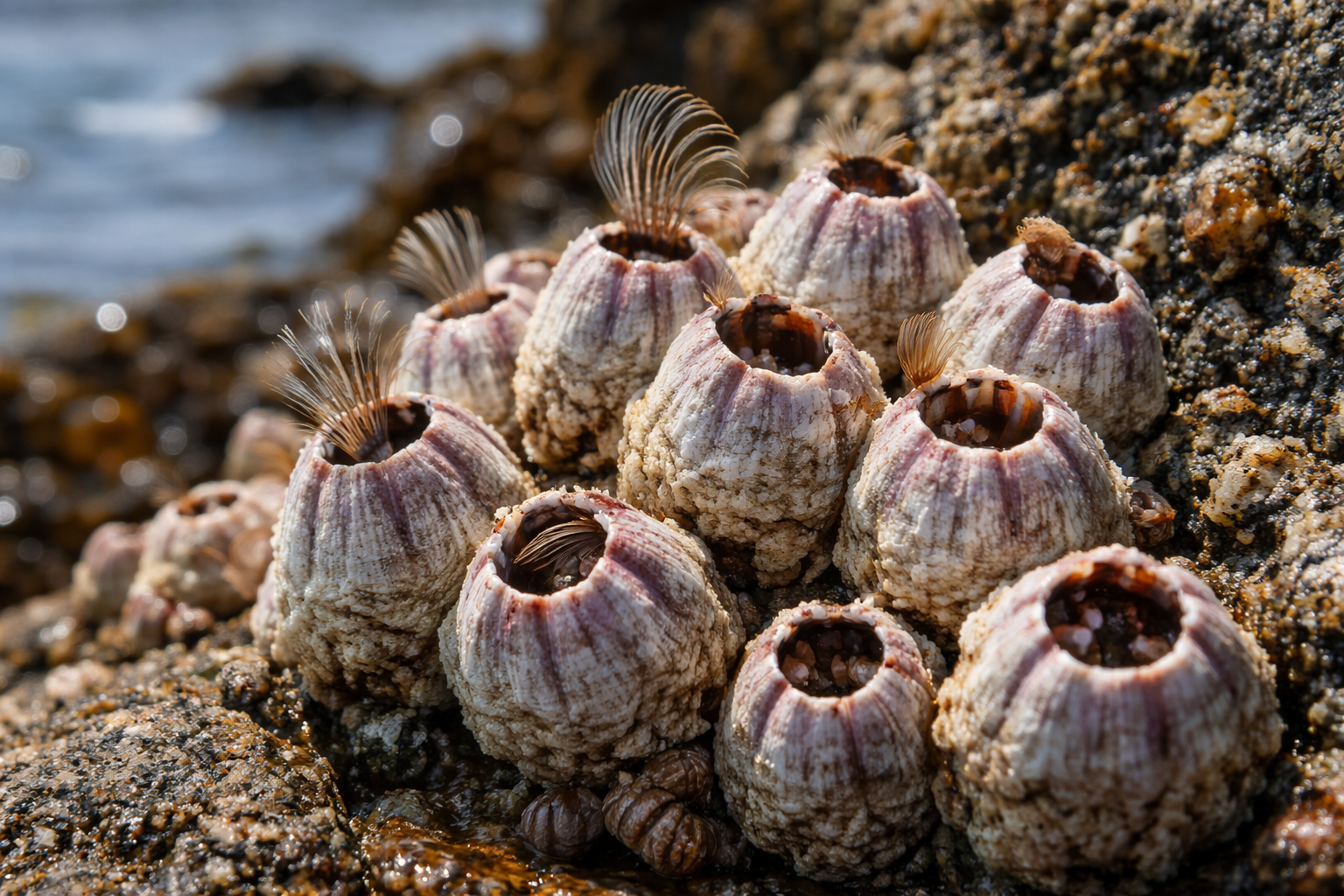
The barnacle arthropod is one of the most intriguing and misunderstood creatures in the marine world. Though its stationary lifestyle and hard shell make it easy to overlook, this tiny organism hides a remarkable story of evolution, adaptation, and ecological impact. Unlike many mobile marine animals, the barnacle has evolved into an expert at surviving in harsh ocean environments, from rocky intertidal zones to the undersides of ships. In this complete guide, we’ll explore the science behind barnacle arthropods, their unique biology, fascinating life cycle, and the secrets that make them such successful survivors in a dynamic ocean.
What Is a Barnacle Arthropod?
A barnacle arthropod is a type of crustacean — a member of the phylum Arthropoda — and more specifically part of the subclass Cirripedia within the subphylum Crustacea. This means barnacles are distant relatives of crabs, lobsters, and shrimp but have taken a very different evolutionary path. Unlike most crustaceans that move freely, adult barnacles are sessile, meaning they attach permanently to a surface and stay there for life. Scientists estimate there are over 2,000 described species of barnacles, adapted to a wide range of marine environments.
Anatomy and Physical Features of the Barnacle Arthropod
Despite their unusual appearance, barnacles share key traits with other arthropods. They possess a hard exoskeleton, made up of calcified plates that protect their soft inner body — a feature derived from their arthropod ancestry. Unlike many crustaceans, adult barnacles lack obvious segmentation and have reduced visible appendages, but their bodies are still organized in a way that reflects their evolutionary history. Inside their shell, barnacles lie on their stomach with feathery appendages called cirri that extend outward to catch food. Their shells can be conical or stalked, depending on the species, and serve both protective and structural functions.
Unique Adaptations for a Sessile Lifestyle
What makes the barnacle arthropod truly fascinating are its adaptations for a life permanently attached to a surface. Rather than swimming or crawling, barnacles secrete an incredibly strong biological adhesive through specialized gland cells, effectively cementing themselves onto solid substrates such as rocks, ship hulls, piers, or even the bodies of whales. This cement is considered one of the strongest natural glues discovered and has inspired scientific research into bioadhesives for human use.
Their hard shell plates protect them from predators, wave action, and drying out during low tide, while their ability to close tightly against unfavorable conditions enhances survival in intertidal zones. To feed, barnacles use their cirri — modified limbs that act like feathery nets, sweeping through the water to trap plankton and organic particles.
Life Cycle: From Larva to Adult Barnacle
The life cycle of a barnacle arthropod is a striking example of metamorphosis. It begins with planktonic larvae called nauplii, which swim freely in the water column and feed on microscopic organisms. After several moulting stages, these larvae transform into a non-feeding stage known as the cyprid. The cyprid’s job is simple but critical: find a suitable hard surface on which to settle. Once it locates a spot, it uses its antennae to secrete adhesive and permanently attach itself, undergoing a dramatic metamorphosis into the adult form.
Once settled, adult barnacles remain fixed for the rest of their lives, growing their calcareous plates and inserting their cirri out into the water to filter feed. Some species even demonstrate hermaphroditic reproductive systems, possessing both male and female organs, allowing complex mating strategies between nearby individuals.
Ecological Role and Impact of Barnacle Arthropods
Barnacle arthropods play several important ecological roles in their environments. As filter feeders, they help remove plankton and other fine particles from seawater, contributing to nutrient cycling and water clarity in coastal ecosystems. Their colonies also create habitat structure, providing surfaces and shelter for other small marine organisms such as algae, small invertebrates, and juvenile fish.
However, barnacles are also well-known for their role in biofouling — the unwanted accumulation of organisms on man-made structures like ship hulls and underwater equipment. Biofouling can increase drag on vessels, reduce fuel efficiency, and accelerate corrosion, making barnacles a significant concern in maritime industries.
Barnacle Arthropods and Human Culture
Despite their small size, barnacles have woven their way into human culture and history. Early European folklore once claimed that certain barnacles gave rise to barnacle geese — birds thought to hatch directly from the crustacean’s shell due to migratory mysteries. While entirely mythical, this belief highlights how unusual barnacles appeared to early naturalists. In modern times, barnacles have inspired scientists studying adhesives and have appeared in jokes, songs, and tales referring to their stubborn attachments.
Specialized Types of Barnacle Arthropods
Not all barnacles fit the classic image of the cone-shaped shell. Some, like “goose barnacles,” attach by a flexible stalk and drift with ocean currents, clinging to flotsam or seaweed. Other groups, such as Acrothoracica, have evolved to bore into hard substrates like coral or mollusc shells, using specialized limbs to catch food from within their protective burrows. These variations illustrate the incredible adaptability of barnacle arthropods to diverse marine niches.
Barnacles on Whale Skin and Floating Surfaces
Certain barnacles take their adaptations even further by living on other organisms or moving substrates. Whale barnacles, for example, cement themselves to the skin of whales, benefiting from the host’s movement to access nutrient-rich waters. Meanwhile, Dosima fascicularis, a specialized barnacle species, secretes gas-filled cement that allows entire colonies to float at the water surface, hitchhiking on debris and driftwood across the oceans. These behaviors challenge the perception that barnacles must live on static surfaces.
Barnacle Arthropods and Evolutionary Success
The barnacle arthropod’s evolutionary journey spans hundreds of millions of years, with fossil evidence dating back to at least the Carboniferous period, more than 300 million years ago. Over time, they diversified into forms suited to a wide range of marine environments. Their success lies in strategies that favor secure attachment, efficient feeding, and adaptation to extreme tidal fluctuations, rather than mobility. This unique evolutionary niche has allowed barnacles to persist and thrive even as other marine organisms changed dramatically over geological time.
What Barnacles Reveal About Arthropod Adaptation
Barnacles are a powerful example of how arthropods can evolve beyond typical expectations. Most people associate arthropods with mobility — think crabs, insects, and spiders — yet barnacles show that even within this diverse group, stationary lifestyles can be successful when paired with the right biological innovations. Their hardened shells, adhesive secretions, and feeding cirri are remarkable adaptations that serve their unique ecological role.
Conclusion: The Hidden Secrets of the Barnacle Arthropod
The barnacle arthropod is far more than a stubborn crustacean clinging to rocks or boat hulls. It represents a remarkable evolutionary strategy that combines robust anatomy, specialized behavior, and ecological significance in ways that intrigue scientists and everyday observers alike. From its complex life cycle to its ecological impacts and cultural curiousness, the barnacle arthropod stands out as a fascinating subject in marine biology — a tiny titan of adaptation in the vast ocean world.