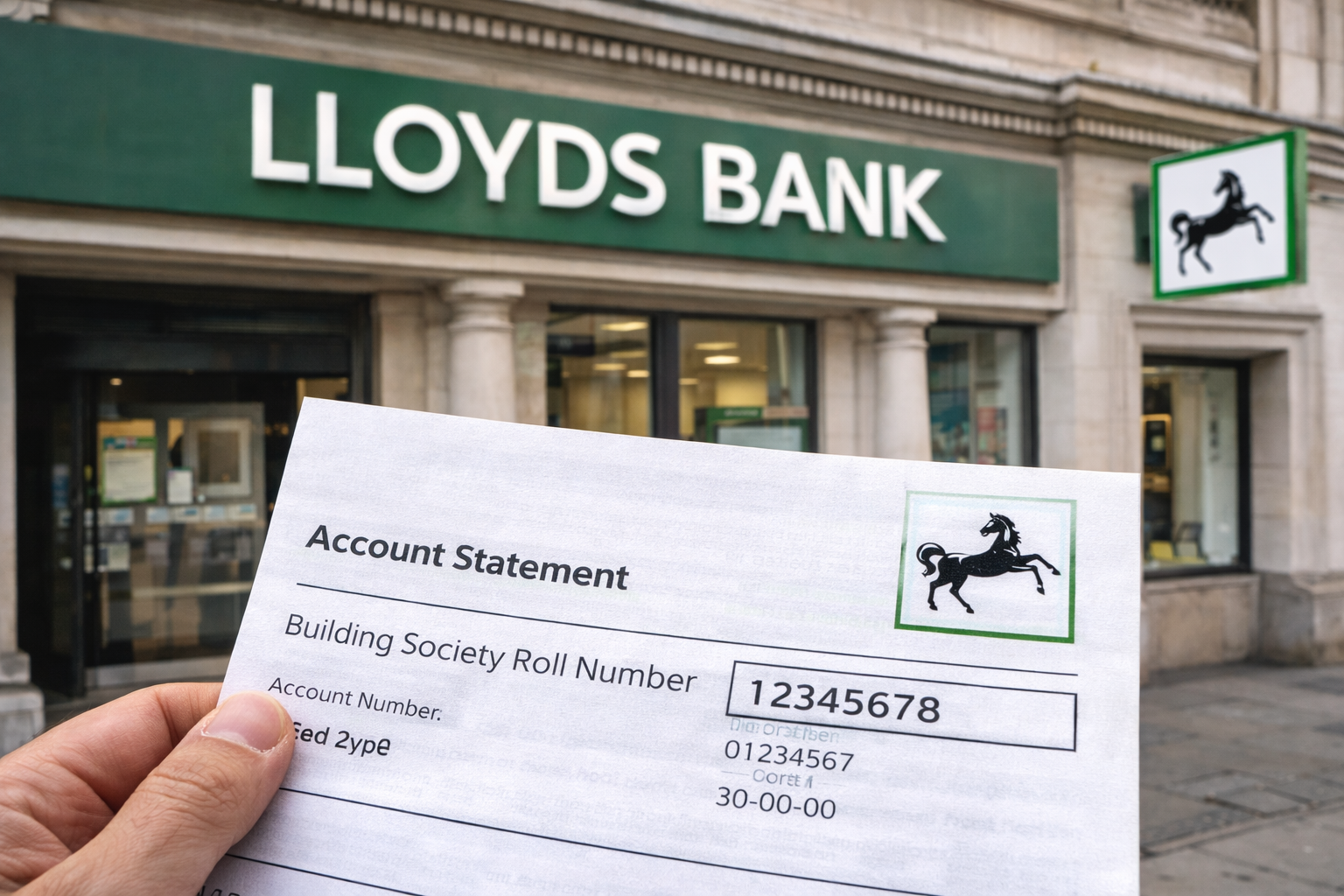
If you’ve ever filled out a payment form or set up a direct debit and been asked for a building society roll number Lloyds, you may have paused and wondered what it actually means. Is it the same as an account number? Do you still need one? And why do some banks request it while others don’t?
In this comprehensive guide, we’ll break down exactly what a building society roll number is, whether Lloyds requires one, how it differs from standard banking details, and how to find it if needed. Whether you’re setting up payments, receiving funds, or managing savings accounts, understanding this detail can help ensure smooth and secure financial transactions.
What Is a Building Society Roll Number?
A building society roll number is a unique reference number assigned to customers by certain UK building societies. Historically, building societies used roll numbers instead of—or alongside—standard bank account numbers to identify individual savings or mortgage accounts.
Unlike a typical eight-digit account number used by banks, roll numbers may include a mix of letters and numbers. They were originally designed for internal identification before electronic banking systems became standardized across the UK financial system.
Today, roll numbers are mainly associated with older building society accounts or certain savings and mortgage products.
Understanding the Term “Building Society”
Before diving deeper into the building society roll number Lloyds question, it helps to understand what a building society is. In the UK, building societies are financial institutions owned by their members rather than shareholders.
They traditionally focus on savings accounts and mortgages. While many building societies now operate similarly to banks, they retain unique systems and identification formats, including roll numbers in some cases.
Over time, as banking systems became more unified, the need for separate roll numbers decreased.
Does Lloyds Use a Building Society Roll Number?
Here’s the key point: Lloyds Bank does not typically use a building society roll number for standard bank accounts.
Lloyds operates as a bank, not a building society. Therefore, most Lloyds customers will only need their sort code and account number for transactions.
However, confusion can arise because some former building societies were converted into banks or merged with larger banking groups over the years. Customers who previously held accounts with building societies that later became part of major banks might still encounter references to roll numbers in older documentation.
For standard Lloyds accounts, you usually do not need a roll number.
Why the Confusion Around Building Society Roll Number Lloyds?
The phrase “building society roll number Lloyds” often appears in online searches because payment forms sometimes include a field labeled “building society roll number.”
When Lloyds customers see this field, they may wonder whether they need to provide something extra. In most cases, if you bank with Lloyds, you can leave that field blank.
The roll number field exists to accommodate customers whose accounts are still managed by building societies that use that identification system.
How Banking Identification Works Today
Modern UK banking relies primarily on two key pieces of information:
- Sort code (six digits)
- Account number (eight digits)
Together, these identify your bank branch and your specific account. For Lloyds customers, these details are sufficient for receiving payments, setting up direct debits, and managing transactions.
Roll numbers are generally no longer necessary for mainstream banks like Lloyds.
When Might a Roll Number Still Be Required?
Although rare for Lloyds customers, roll numbers may still be relevant in the following cases:
- Older building society savings accounts
- Mortgage accounts managed by certain societies
- Legacy accounts not fully integrated into modern banking systems
If your account was originally opened with a building society and later transferred to a bank, documentation may reference a roll number for historical reasons.
In such cases, you should check official account documents or contact customer support for clarification.
How to Find a Building Society Roll Number
If you do have an account requiring a roll number, here’s where you can usually find it:
- Your savings passbook (for older accounts)
- Official account statements
- Welcome letters from when the account was opened
- Online banking portal (if applicable)
It may be labeled as “Roll Number,” “Reference,” or “Account Reference.”
If you cannot locate it, contacting your financial institution directly is the safest option.
Security and Fraud Prevention Considerations
Understanding whether you actually need a building society roll number Lloyds is important for security reasons. Providing unnecessary information can create confusion or increase fraud risk.
When completing payment forms:
- Only provide information requested for your account type.
- Never share full banking details with unverified sources.
- Confirm payment instructions directly with trusted institutions.
Banks like Lloyds have robust security systems and typically rely only on sort codes and account numbers for transactions.
The Evolution of UK Banking Systems
The decline of roll numbers reflects broader modernization in UK banking infrastructure. Electronic payment systems such as Faster Payments and BACS standardized account identification methods.
This standardization made it easier to process transactions efficiently across different institutions. As a result, roll numbers became less relevant for most customers.
However, forms and templates often retain the roll number field to ensure compatibility with all types of accounts.
Differences Between Banks and Building Societies
To clarify further:
- Banks like Lloyds use sort codes and account numbers.
- Building societies historically used roll numbers for internal tracking.
- Many building societies now also use standard account numbers.
While the distinction once mattered greatly, today’s financial landscape is more integrated.
Understanding this difference helps explain why Lloyds customers typically do not need a roll number.
Common Questions About Building Society Roll Number Lloyds
Is a roll number the same as an account number?
No. A roll number is a separate identification system used by certain building societies. Lloyds account numbers are eight digits and function independently of roll numbers.
Should I leave the roll number field blank?
If you bank with Lloyds and your account documentation does not mention a roll number, you can usually leave it blank.
Can a missing roll number delay payments?
For Lloyds accounts, payments rely on sort code and account number. A missing roll number should not cause issues.
Practical Example: Setting Up a Direct Debit
Imagine you’re setting up a direct debit for a service provider. The form asks for:
- Account holder name
- Sort code
- Account number
- Building society roll number
If you are a Lloyds customer, you complete the first three fields and leave the roll number blank.
The payment system processes the transaction using your sort code and account number alone.
Why Accurate Banking Details Matter
Even though roll numbers may not apply to Lloyds customers, ensuring accurate details is essential. Incorrect sort codes or account numbers can lead to failed transactions or delays.
Always double-check:
- Spelling of account holder name
- Correct six-digit sort code
- Correct eight-digit account number
Accuracy ensures secure and timely processing.
The Role of Customer Support
If you are unsure whether your Lloyds account requires a roll number, contacting customer service is the safest approach.
They can confirm:
- Whether your account has a roll number
- Which details are required for specific transactions
- How to resolve rejected payment forms
Professional guidance eliminates guesswork.
Summary: Do Lloyds Customers Need a Building Society Roll Number?
In most cases, the answer is no. Lloyds Bank operates using standard banking identification—sort codes and account numbers.
The term “building society roll number Lloyds” appears frequently in searches due to form confusion, but Lloyds customers generally do not use roll numbers.
Roll numbers are primarily relevant for traditional building society accounts or legacy financial products.
Understanding this distinction ensures smoother transactions and avoids unnecessary complications.
Conclusion
The concept of a building society roll number dates back to an earlier era of UK banking, when building societies relied on internal reference systems to manage customer accounts.
For Lloyds customers today, this identification method is rarely relevant. Standard banking details—sort code and account number—are typically all that’s required for secure transactions.
By understanding what a building society roll number is, why it appears on forms, and whether it applies to your account, you can confidently manage your financial transactions without confusion.
Clear knowledge leads to smoother banking experiences and greater financial confidence.