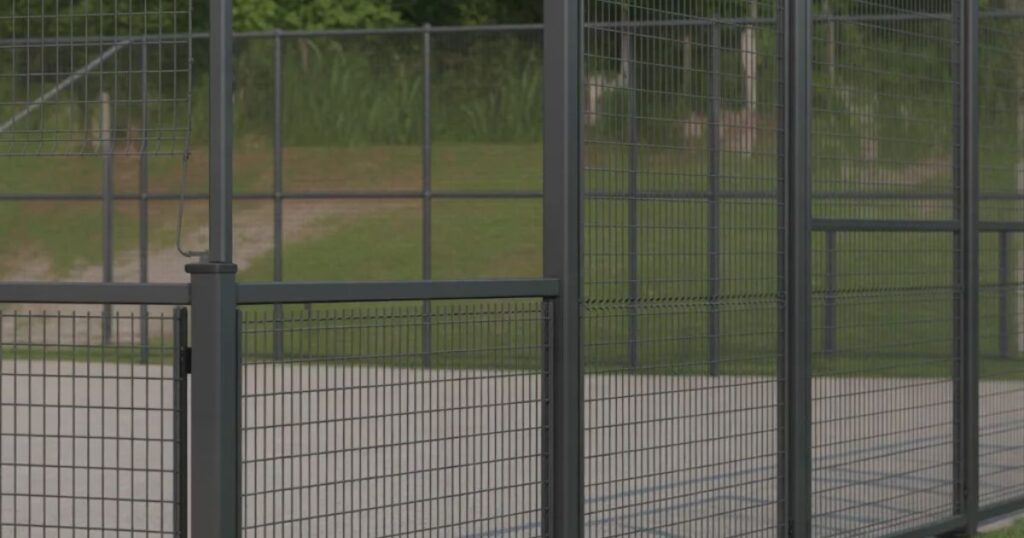
Sports fencing is an essential component in contemporary sporting facilities, which guarantees safety, organisation, and performance in a broad environment. Sports fencing is necessary on football fields and even on multi-use games fields to control access, ensure spectator safety, and contain equipment in designated areas.
The high-quality sports fencing systems are specifically designed to withstand impacts, reduce risks, and improve the overall playing experience. Sports fencing, whether in a school, a park, or a professional arena, offers a well-structured and safe experience for players and spectators.
What is Fencing in Sports?
Sports fencing: specially constructed fencing systems to define sports fields like football fields, tennis courts, basketball courts, and MUGAs. These systems are designed to offer security and stability, be easily visible, and have secure boundaries.
Sports fencing, in contrast to normal fencing, is designed to withstand repeated strikes from balls and equipment while meeting safety standards. It also helps deter unauthorised access and supports regulated movement in sporting settings.
Significance of Sports Fencing in Contemporary Facilities
Fencing is not simply about boundary marking in sports. It is significant in improving safety and effectiveness.
- Secures players and spectators.
- Stops the exiting of balls out of the field.
- Minimises the risk of accidents and injuries.
- Improves the space organisation of sports.
- Helps to comply with the UK safety standards.
Well-designed sports fencing would ensure it is safe, efficient, and attractive to all users.
Types of Sports Fencing Systems
Various types of sporting events have different fencing needs. The most widespread ones are:
Twin Mesh Fencing
Twin mesh fencing is very tough and inflexible, and can be used in high-impact sporting grounds. It is very strong and anti-climbing.
Chain Link Fencing
An affordable, multifunctional solution popular with tennis courts and sports fields. It offers transparency and maneuverability.
Rebound Mesh Fencing
This fencing, used in sports such as football and basketball, absorbs impact and keeps the ball within the field of play.
Spectator Railings
Utilised to keep spectators out of the field of play and ensure good visibility and safe viewing positions.
Ball Stop Netting
It is fixed higher to ensure that balls do not go out of the field, particularly when it is placed by roadsides or highways.
Applications of Sports Fencing
Fencing in sports is popular in many industries:
- Lounges, schools, and learning institutions.
- Recreation and parks are open.
- Sports clubs and stadiums.
- Leisure centres and playgrounds.
- Community sports facilities
These applications show how sports fencing can be used in various environments and be very effective in managing them.
Materials Used in Sports Fencing
Durability, maintenance, and performance are directly influenced by the choice of material.
Galvanised Steel
Offers outstanding resistance to rust and corrosion, making it suitable for outdoor sports fencing.
Powder-Coated Mesh
Increases durability, provides a pleasing finish, and prevents environmental destruction.
Welded Mesh Panels
These are very strong, secure panels, primarily used in high-impact sports due to their rigidity.
Chain Link Wire
Portable and economical, it can be used both temporarily and permanently.
The choice of the appropriate material will guarantee reliability over a long period and minimal maintenance.
Key Features of High-Quality Sports Fencing
The sports fencing system should be designed with a number of features that are essential:
- Long-term performance of high durability.
- Impact resistance in ball sports.
- Anti-climb to promote improved security.
- Weather-resistant coatings
- Low maintenance requirements
The features ensure that sports fencing systems remain effective even in busy and challenging environments.
Recommended Heights for Sports Fencing
The height of fences will differ based on the sport and the level of play:
- Football pitches: 3m -5m.
- Tennis courts: approximately 2.75m
- Basketball courts: 3m to 4m.
- Hockey pits: 5m or less.
An increased fence can have more netting to enhance containment and safety.
Choosing the Right Sports Fencing Solution
The choice of the appropriate sports fencing is determined by a number of factors:
- Type of sport being played.
- Level of usage and traffic:
- Budget and installation requirements.
- Safety and security needs.
- Environmental conditions
Facilities must focus on durability, visibility, and compliance when selecting fencing systems.
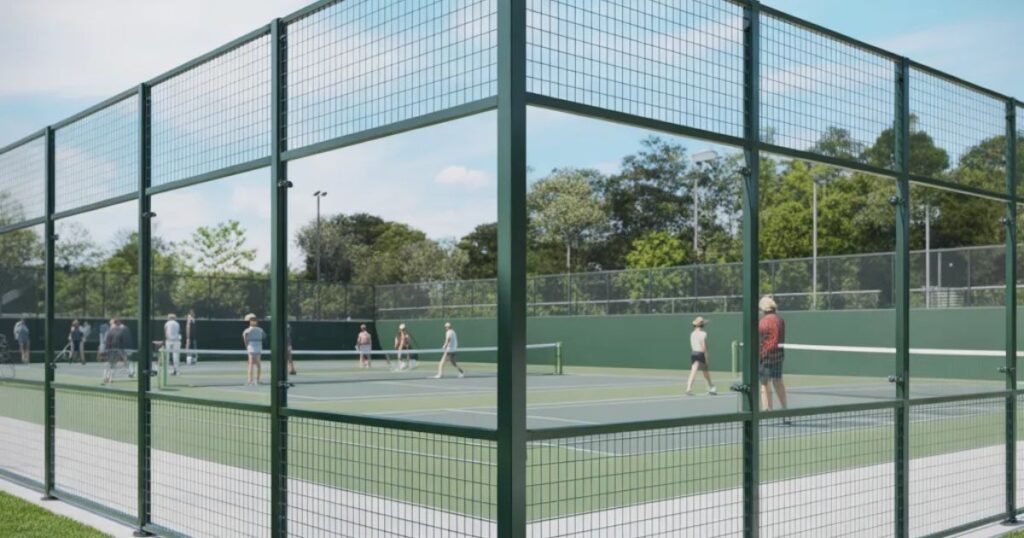
Maintenance and Longevity of Sports Fencing
Sports fencing systems have a longer life with proper maintenance:
- Periodic checks for damage.
- Cleaning to remove dirt and debris.
- Replacing broken or loose parts.
- Checking protective coatings
Contemporary fencing systems require little maintenance due to galvanised and powder-coated finishes.
Conclusion
Fencing is a fundamental part of any contemporary sports arena, providing stability, protection, and improved functionality. There are numerous materials, designs, and applications for sports fencing, offering a wide variety of options and ensuring the long-term value and reliability of the selected system.
In multi-use game facilities and stadiums, high-quality sports fencing has improved both functionality and appearance. Organisations investing in the right solution can establish safe, efficient, and professional sports activity environments.