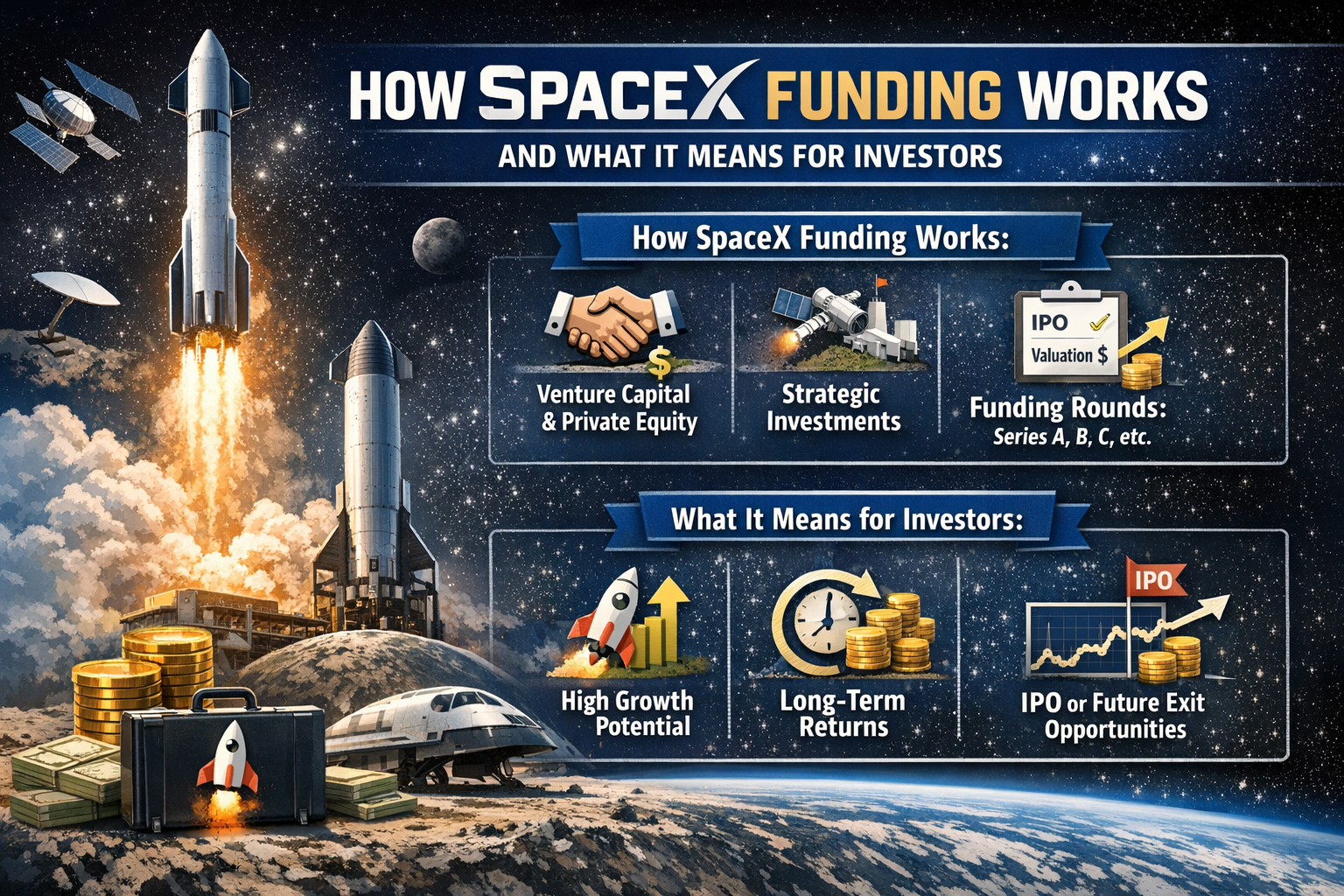
The growing curiosity around SpaceX stock reflects a broader fascination with how one of the world’s most influential private space companies finances its ambitious missions. Unlike publicly traded aerospace firms, SpaceX operates through a unique mix of private capital, government contracts, and revenue-generating services. For investors, understanding this funding model is essential to evaluating future opportunities, risks, and the broader impact on the space economy.
Understanding SpaceX’s Business Model
At its core, SpaceX is not just a rocket company; it’s a vertically integrated space infrastructure provider. The company designs rockets, launches satellites, builds spacecraft, and operates a global satellite internet network. This diversified model creates multiple revenue streams, which in turn shape how the company raises and deploys capital.
Key Revenue Drivers
- Launch services for commercial and government clients.
- Long-term contracts with NASA.
- Satellite internet subscriptions through Starlink.
- Partnerships and payload delivery for global enterprises.
Because of these varied income sources, SpaceX can fund high-risk innovation while maintaining relatively stable cash inflows compared to traditional aerospace startups.
How SpaceX Raises Capital
SpaceX raises capital through private investments, strategic partnerships, and revenue from its space and satellite services.
1. Private Equity Funding Rounds
SpaceX remains privately held, meaning it raises money primarily through private investment rounds. Institutional investors, venture capital firms, and select strategic partners purchase shares directly from the company. These rounds often occur at increasing valuations, reflecting investor confidence in long-term growth.
Private funding gives SpaceX a major advantage: it can focus on long-term technological breakthroughs without the quarterly earnings pressure faced by public companies.
2. Government Contracts and Milestone Payments
Government partnerships are a cornerstone of SpaceX financing. Contracts for cargo delivery, astronaut transport, and lunar missions provide predictable revenue and milestone-based payments. This reduces reliance on external capital and supports research and development for next-generation vehicles.
3. Internal Cash Flow Reinvestment
Unlike many high-growth tech companies, SpaceX reinvests a significant portion of its operational revenue back into innovation. Profits from launch services and satellite subscriptions help fund projects like reusable rockets and deep-space exploration systems.
The Role of Reusable Rocket Technology
One of the biggest reasons SpaceX attracts strong investor interest is its cost-reduction strategy. The company’s reusable launch systems dramatically lower the price of sending payloads into orbit.
The success of the Falcon 9 rocket demonstrated that rockets could land and fly again, transforming launch economics. This innovation improves margins and increases launch frequency, both of which strengthen the company’s financial outlook.
Lower costs also expand the total addressable market, creating more opportunities for commercial launches and satellite deployments.
Starlink: The Financial Engine
While rockets generate headlines, Starlink is increasingly seen as the company’s long-term cash engine. The satellite internet service operates on a subscription model, providing recurring revenue, something rare in the aerospace sector.
This steady income stream helps balance the cyclical nature of launch contracts and supports capital-intensive projects like deep-space transportation systems.
In the middle of growing investor discussions, SpaceX stock is often referenced as a proxy for exposure to both the space launch market and the rapidly expanding satellite connectivity industry.
Strategic Vision and Long-Term Investment
Its long-term strategy focuses on scaling reusable launch technology, expanding satellite networks, and investing in future space infrastructure to drive sustained growth.
Building Infrastructure for a Space Economy
SpaceX’s funding strategy is closely tied to its long-term vision: building infrastructure that enables a self-sustaining space economy. Projects like the Starship are not just technological milestones; they’re capital allocation decisions aimed at unlocking future markets such as lunar logistics, space tourism, and interplanetary transport.
Leadership Influence
The leadership of Elon Musk plays a significant role in attracting capital. His track record of scaling disruptive companies and his willingness to reinvest wealth into ambitious ventures contribute to strong investor confidence, even in high-risk phases.
What This Means for Potential Investors
Although shares are not publicly traded, the company’s funding model still offers important insights for investors tracking the broader space sector.
1. Valuation Growth Potential
Repeated funding rounds at higher valuations indicate market belief in long-term revenue expansion, especially from satellite services.
2. Liquidity Constraints
Because investments occur in private markets, liquidity is limited. Shares are typically accessible only through secondary markets or specialized funds, which can involve higher risk.
3. Sector Spillover Effects
SpaceX’s innovations influence publicly traded companies across aerospace, satellite manufacturing, and space infrastructure. Investors often gain indirect exposure by investing in suppliers, partners, or competitors.
4. Risk and Reward Balance
The company operates in a capital-intensive, high-risk industry where technological delays or regulatory hurdles can impact timelines. However, the potential market size, from global connectivity to space logistics, is enormous.
Comparing SpaceX to Traditional Aerospace Firms
Traditional aerospace companies rely heavily on defense contracts and slower innovation cycles. SpaceX’s approach is fundamentally different:
- Faster product iteration.
- Higher R&D spending ratios.
- Commercial-first revenue diversification.
- Vertical integration reduces supplier dependency.
This model resembles high-growth technology firms more than legacy aerospace contractors, which partly explains its strong private-market demand.
Future Funding Paths
There has been ongoing speculation about potential future funding strategies, including a partial public listing of specific business units. For example, separating satellite operations from launch services could allow targeted investment without exposing the entire company to public market volatility.
Even without an IPO, continued private funding and rising revenue could sustain expansion for years.
Broader Impact on the Investment Landscape
SpaceX has reshaped how investors think about the space industry. What was once considered a niche, government-driven sector is now viewed as a high-growth frontier market. The company’s funding success has encouraged venture capital flows into satellite technology, launch startups, and space infrastructure platforms.
For investors, this shift means the “space economy” is no longer speculative; it’s becoming a measurable asset class with expanding opportunities.
Conclusion
SpaceX’s funding model blends private investment, government partnerships, and recurring commercial revenue to support one of the most ambitious technological roadmaps in modern industry. This hybrid approach allows the company to innovate rapidly while maintaining financial resilience.
For investors, tracking developments around SpaceX stock is less about immediate trading opportunities and more about understanding how private capital is shaping the future of space infrastructure, connectivity, and global technology markets. As the company continues scaling its launch cadence and satellite network, its financial strategies will remain a key indicator of where the broader space economy is headed.