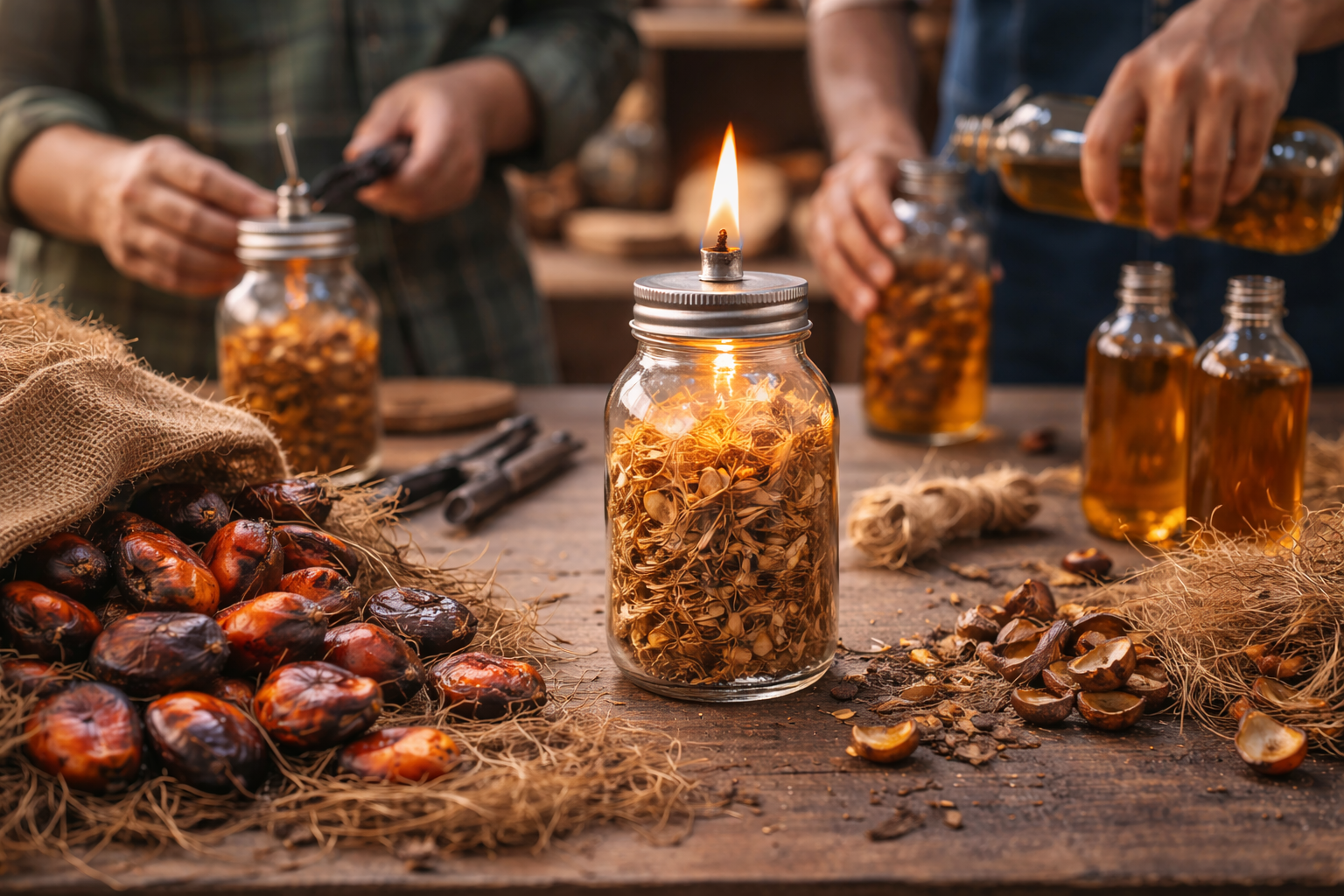
The global push toward sustainability has inspired engineers, researchers, and entrepreneurs to rethink how waste can become a resource. One of the most promising ideas emerging from agricultural regions is the Oil Palm Waste Used Lamp Project. This innovative concept transforms oil palm byproducts into functional, eco-friendly lighting solutions, reducing waste while promoting clean energy access.
Oil palm cultivation produces large volumes of biomass residue every year. Traditionally, much of this waste is burned, left to decay, or underutilized. The Oil Palm Waste Used Lamp Project addresses this challenge by converting agricultural leftovers into sustainable lighting materials and energy sources, offering both environmental and economic benefits.
Understanding Oil Palm Waste
Oil palm plantations generate significant byproducts during harvesting and processing. These include empty fruit bunches (EFB), palm kernel shells (PKS), palm fiber, fronds, and palm oil mill effluent. While some residues are reused for compost or fuel, a substantial portion remains underexploited.
Improper disposal of oil palm waste can contribute to greenhouse gas emissions and local environmental degradation. By recognizing this waste as a renewable resource, the Oil Palm Waste Used Lamp Project reframes the problem as an opportunity for sustainable innovation.
The Concept Behind the Oil Palm Waste Used Lamp Project
At its core, the Oil Palm Waste Used Lamp Project focuses on converting biomass into useful lighting components. This can be achieved in two primary ways: transforming palm waste into bio-based lamp structures or converting it into bioenergy to power lighting systems.
In rural or off-grid communities, lighting remains a critical issue. By utilizing locally available agricultural waste, the project reduces reliance on fossil fuels and expensive imported materials while promoting circular economy principles.
Biomass as a Renewable Energy Source
Oil palm waste contains high calorific value, making it suitable for bioenergy production. Palm kernel shells and fiber can be processed into biomass fuel or converted into biochar and syngas. These fuels can power small generators or integrated energy systems that support LED lighting.
Through gasification or pyrolysis, agricultural waste can produce cleaner-burning fuel compared to traditional firewood or kerosene. The Oil Palm Waste Used Lamp Project leverages these technologies to create sustainable lighting solutions in energy-limited regions.
Eco-Friendly Lamp Materials from Palm Waste
Beyond energy production, oil palm residues can be processed into biodegradable materials for lamp construction. Fibers from empty fruit bunches can be transformed into composite panels or molded into decorative lamp casings.
This approach reduces plastic dependency and encourages the use of natural, renewable materials. Lamps designed under the Oil Palm Waste Used Lamp Project can be durable, aesthetically appealing, and environmentally responsible.
Environmental Benefits of the Oil Palm Waste Used Lamp Project
One of the biggest advantages of the Oil Palm Waste Used Lamp Project is its positive environmental impact. By repurposing agricultural waste, the project minimizes landfill accumulation and reduces open burning practices that release harmful emissions.
Additionally, using biomass-based energy decreases reliance on kerosene lamps, which produce indoor air pollution. Cleaner lighting solutions contribute to improved respiratory health and reduced carbon footprints.
Supporting Rural Electrification
Access to reliable lighting is essential for education, safety, and economic development. In many oil palm-producing regions, rural communities still lack stable electricity infrastructure.
The Oil Palm Waste Used Lamp Project provides a localized solution. By converting agricultural waste into energy or materials, communities can develop decentralized lighting systems that operate independently of large power grids.
Economic Opportunities for Farmers
Farmers and plantation workers can benefit financially from waste valorization. Instead of discarding oil palm residues, they can sell or supply them to community-based processing units.
This creates additional income streams and encourages sustainable agricultural practices. The Oil Palm Waste Used Lamp Project strengthens rural economies by turning waste into a marketable resource.
Circular Economy in Action
The concept of a circular economy emphasizes reducing waste and maximizing resource efficiency. The Oil Palm Waste Used Lamp Project perfectly embodies this model by ensuring that agricultural byproducts are reintegrated into productive use.
Rather than extracting new raw materials, the project leverages existing waste streams. This reduces environmental strain while fostering innovation in sustainable product design.
Technological Processes Involved
Several technologies can support the Oil Palm Waste Used Lamp Project. Biomass combustion systems convert palm waste into heat energy. Gasification transforms solid biomass into combustible gas. Pyrolysis produces bio-oil and biochar, which can support energy applications.
Advanced material processing techniques also allow palm fibers to be refined into composite boards or molded into biodegradable components. Combining energy and materials science ensures the project remains both functional and scalable.
Challenges and Considerations
While the Oil Palm Waste Used Lamp Project offers significant promise, challenges exist. Initial setup costs for biomass processing equipment can be high. Training and technical expertise are required to operate conversion systems efficiently.
Sustainable sourcing must also be maintained to avoid overharvesting biomass that serves other ecological functions, such as soil enrichment. Careful planning ensures the project remains environmentally balanced.
Health and Social Impact
Replacing kerosene lamps with biomass-powered or solar-integrated palm waste lamps can dramatically improve indoor air quality. Kerosene fumes are associated with respiratory problems and eye irritation.
By offering cleaner lighting alternatives, the Oil Palm Waste Used Lamp Project supports healthier living environments. Improved lighting also enhances productivity and educational outcomes, especially for children studying at night.
Integration with Solar Technology
For even greater sustainability, the Oil Palm Waste Used Lamp Project can integrate solar panels with biomass-derived lamp structures. Solar-charged LED systems housed in palm fiber casings create hybrid solutions that maximize renewable energy use.
This combination ensures reliable lighting even when biomass processing is limited. Hybrid systems increase resilience and adaptability in rural settings.
Reducing Carbon Emissions
Oil palm waste, when left to decompose, emits methane—a potent greenhouse gas. By converting this biomass into usable energy or durable products, emissions are significantly reduced.
The Oil Palm Waste Used Lamp Project contributes to climate mitigation efforts by reducing waste-related emissions and lowering dependence on fossil fuels for lighting.
Educational and Research Applications
Universities and technical institutes can use the Oil Palm Waste Used Lamp Project as a research model. Engineering students can explore biomass conversion methods, while design students can develop sustainable lamp prototypes.
Educational involvement encourages innovation and spreads awareness about renewable resource management. It also inspires young professionals to pursue careers in green technology.
Scalability and Future Potential
The scalability of the Oil Palm Waste Used Lamp Project depends on infrastructure, funding, and policy support. Governments in oil palm-producing countries can promote such initiatives through incentives and grants.
With proper investment, the project could expand beyond local communities and contribute to national renewable energy strategies. As sustainability becomes a global priority, innovations like this gain greater relevance.
Comparing with Conventional Lighting
Traditional lighting options, such as kerosene lamps and grid-dependent systems, come with environmental and economic drawbacks. Kerosene is costly and polluting, while grid expansion is expensive in remote areas.
The Oil Palm Waste Used Lamp Project offers a cost-effective alternative. By utilizing available agricultural waste, communities reduce expenses and gain greater energy independence.
Promoting Sustainable Development Goals
The Oil Palm Waste Used Lamp Project aligns with global sustainability objectives, including affordable clean energy, responsible consumption, climate action, and poverty reduction.
By transforming agricultural waste into practical solutions, the project bridges environmental protection with social progress. It demonstrates how local innovation can contribute to broader sustainable development efforts.
Final Thoughts
The Oil Palm Waste Used Lamp Project represents a groundbreaking approach to sustainability. By turning agricultural waste into clean lighting solutions, it addresses environmental, economic, and social challenges simultaneously.
As the world continues searching for renewable alternatives, projects like this highlight the immense potential hidden in everyday waste. Through innovation, collaboration, and responsible implementation, oil palm byproducts can illuminate homes while protecting the planet.