Getting a tattoo is an exciting experience, but the work doesn’t stop once the needle is put down. Proper tattoo efterpleje — or tattoo aftercare — is crucial for ensuring that your new ink heals quickly, stays vibrant, and avoids complications like infection, scarring, or fading. This comprehensive guide breaks down everything you need to know about caring for your tattoo, from the moment you leave the studio to long-term maintenance, in a clear and expert-informed way.
Whether this is your first tattoo or you’re adding another piece to your collection, this guide is packed with practical and factual aftercare advice you can trust.
What Tattoo Efterpleje Is and Why It Matters
Tattoo efterpleje refers to the routine of cleaning, protecting, moisturizing, and monitoring a new tattoo as it heals. A tattoo is essentially a controlled injury: ink is injected into the dermis through thousands of tiny punctures, and the body must repair this wound. Proper aftercare reduces the risk of infection, promotes faster healing, and helps preserve the vibrancy and clarity of the ink.
Neglecting aftercare can lead to complications like prolonged redness, raised scars, colour loss, or blurred lines — problems that can impact the final look of your tattoo or even require touch-ups.
Immediate Aftercare: What to Do Right After Your Tattoo
Right after getting inked, your tattoo artist will typically cover your new tattoo with a protective dressing or film. This bandage shields the open wound from bacteria and friction. Your artist will instruct you on how long to leave it on — usually a few hours to a full day depending on the product used.
Once you remove this initial covering, you should gently wash the tattoo with lukewarm water and an unscented, mild soap to remove any blood, plasma, or excess ink. Pat the area dry using a clean paper towel — avoid rubbing, which can irritate the skin.
Depending on your artist’s recommendation, you may start moisturizing shortly after cleaning. Some advice suggests waiting until the tattoo stops “weeping” (releasing plasma) before applying moisturizer.
Daily Cleaning and Moisturizing for Optimal Healing
Cleanliness is essential in early tattoo efterpleje. Most experts recommend washing your tattoo 2–3 times per day with a gentle, fragrance-free cleanser. This removes bacteria and prevents crusting on the skin’s surface while keeping the area clean.
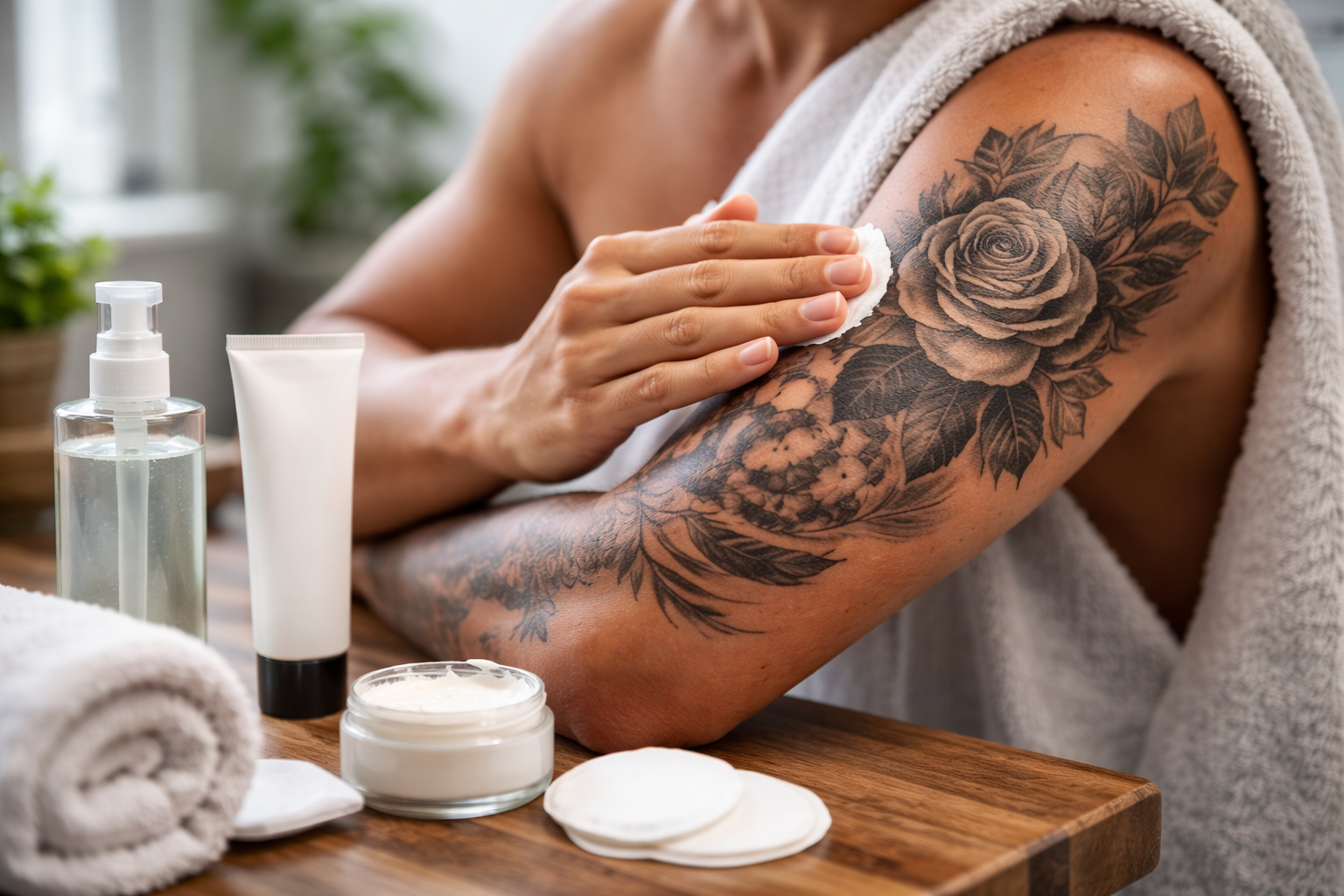
After you clean and dry the tattoo, apply a thin layer of fragrance-free lotion or aftercare cream to keep the skin hydrated. Over-moisturizing can be harmful — a thin, light coating is all you need. Too much product can suffocate the tattooed skin and slow healing.
Aim to moisturize several times daily, especially if your tattoo feels dry or itchy. Hydration helps the skin heal properly and minimizes scabbing or cracking.
What Products to Use — and What to Avoid
Choosing the right products for tattoo efterpleje can make a big difference. Experts generally recommend:
- Mild, fragrance-free soaps for cleaning.
- Unscented lotions or specialized aftercare creams to keep the skin hydrated.
- Light ointments for the first few days if recommended by your artist.
Avoid products that contain heavy ingredients like petroleum jelly or strong fragrances for prolonged use, as these can trap moisture and block healing. Some artists also caution against overly thick ointments beyond the first few days of healing.
Also avoid exfoliating products or soaps with alcohol, parabens, or harsh chemicals that can irritate the tattoo.
Protecting Your Tattoo from Irritation and Infection
Your fresh tattoo is an open wound, so avoiding irritation and infection is paramount. Keep these points in mind:
- Wear loose, breathable clothing over the tattoo to reduce friction and irritation.
- Don’t pick or scratch at scabs or peeling skin — this can pull out ink and cause scarring.
- Avoid swimming, hot tubs, and long baths during the early healing period, as prolonged water exposure can soften the skin and introduce bacteria.
- Wash your hands before touching the area to reduce the risk of infection.
Being cautious with activity and avoiding sweat-heavy workouts for the first week also helps prevent irritation and delayed healing.
Sun Exposure: A Major Factor in Tattoo Efterpleje
Sun exposure can drastically affect both the healing tattoo and its long-term appearance. During the first 2–4 weeks, keep your new tattoo out of direct sunlight entirely. UV rays can weaken your skin’s ability to heal and lead to premature fading.
Once the tattoo is fully healed, sunscreen with an SPF of 30 or higher should always be applied when the tattoo is exposed to the sun. This protects the ink from ultraviolet damage and helps maintain vibrant colors over time.
Typical Healing Timeline and What to Expect
Everyone heals at a slightly different pace, but most tattoos show visible healing progress within a few weeks. Here’s a general idea:
- Days 1–3: Tattoo may be red, swollen, and feel tender or warm. Swelling and plasma leakage are normal.
- Days 4–7: Tattoo may start to feel tight and itchy. Peeling and flaking are common during this phase. Refrain from picking to avoid ink loss.
- Weeks 2–4: The outer layer of skin should appear mostly healed and less sensitive. However, deeper layers may continue to repair for weeks afterward.
Full healing can take up to six months beneath the surface of the skin, though it often looks healed on the surface much sooner. Patience and consistent aftercare throughout this period help ensure the best possible result.
Long-Term Aftercare for Lasting Ink
Once your tattoo has healed, aftercare doesn’t end. To keep your ink vibrant and sharp for years to come:
- Moisturize the skin regularly to maintain elasticity and skin health.
- Use sunscreen daily on tattooed areas that are exposed. UV damage is one of the biggest causes of fading.
- Stay hydrated and maintain healthy skin habits to support overall healing and skin quality.
Taking care of your skin broadly also protects your tattoos, as healthy skin holds ink better and looks better overall.
Common Complications and When to Seek Help
Even with proper tattoo efterpleje, complications can arise. Signs of potential infection or problems include:
- Excessive redness or swelling.
- Warmth, pus, or strong odor from the tattooed area.
- Severe pain that doesn’t improve with time.
If you experience any of these symptoms, it’s important to seek medical advice promptly. Most healing issues can be avoided or minimized with proper aftercare, but unusual symptoms warrant professional attention.
Final Thoughts on Tattoo Efterpleje
Tattoo efterpleje is as essential as the tattoo itself. Taking the time to clean, moisturize, protect, and monitor your new ink ensures it heals quickly and looks vibrant for years. With consistent care in the early days and ongoing attention to hydration and sun protection, you give your tattoo the best chance at lasting beauty and clarity.
Your new tattoo is a form of self-expression — treat it with the care it deserves.