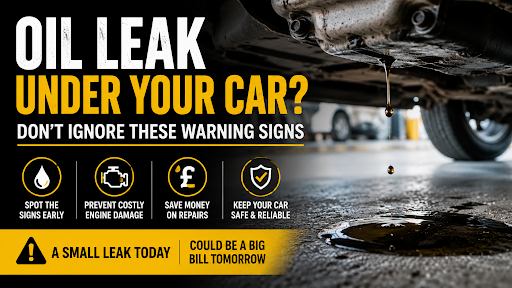
Spotted an oil leak under your car? Learn the warning signs, causes, and risks before a small drip becomes a costly engine repair.
A dark patch on the driveway. A faint burning smell after a short drive. A dashboard light that flickers on then disappears. These small signals are often the first hint of an oil leak, and they are far too easy to brush aside.
Engine oil is not just another fluid under the bonnet. It lubricates moving parts, reduces friction, and carries heat away from components working under constant pressure. When it starts escaping the system, the engine is quietly losing the protection it depends on. Ignoring that drip on the driveway can turn a simple, affordable fix into a serious mechanical failure.
Why Oil Leaks Happen in the First Place
Oil leaks rarely appear out of nowhere. They usually develop gradually as parts age, seals harden, or gaskets lose their grip. Common causes include:
- Worn or perished gaskets, particularly around the rocker cover or sump
- A damaged oil filter or one that was not fitted correctly during a previous service
- A loose or cracked sump plug, often from repeated removal during oil changes
- Degraded seals around the crankshaft or camshaft
- Cracks in the oil pan caused by impact damage, such as hitting a speed bump too hard
Some of these issues are minor and inexpensive to fix. Others, if left alone, can affect engine performance significantly. The distinction usually comes down to how quickly the problem is identified.
Spotting the Signs Before They Become a Problem
Oil leaks tend to leave a trail, both literally and mechanically. Knowing what to look for makes early detection far easier.
Visual Clues
- Dark brown or black spots underneath the car after it has been parked overnight
- Oil residue visible around the engine bay, particularly near the base of the engine
- A burning smell, especially noticeable after the car has been running for a while
- Smoke rising from the engine area, usually when oil drips onto a hot exhaust or manifold
- An oil level that keeps dropping despite no visible reason
Dashboard and Performance Clues
The oil pressure warning light is one of the most important indicators a car can give. If it appears, even briefly, it should never be ignored. A drop in oil pressure means the engine is not receiving adequate lubrication, which can cause damage within minutes of continued driving.
Other performance signs include a rougher idle, unusual engine noise, or the engine feeling less responsive than usual. These symptoms often develop alongside a leak rather than appearing on their own, which is why regular car servicing plays such an important role in catching problems before they esca
Why a Small Leak Should Never Be Left Alone
It is tempting to think a small drip is not worth worrying about, particularly if the car still drives normally. This assumption is where most expensive repairs begin.
Engine oil protects components that are in constant motion under intense heat and pressure. When oil levels drop, even slightly, friction increases between metal surfaces. Over time, this leads to accelerated wear on the pistons, bearings, and camshaft. In more serious cases, insufficient lubrication can cause the engine to seize entirely, a failure that often means replacing the engine rather than repairing it.
A leak that costs very little to fix at an early stage can, if ignored for months, escalate into one of the more expensive engine repair costs across the UK, simply because the damage extends far beyond the original fault.
What UK Drivers Are Saying
Across online forums and social media groups, a familiar story repeats itself. Drivers often mention noticing a small oil spot for weeks, assuming it was condensation or a leftover puddle, before eventually realising the level had dropped significantly. Several describe the moment the oil warning light appeared on a motorway, followed by an anxious drive to find somewhere safe to stop.
A recurring piece of advice within these communities is to check the driveway or parking spot regularly, since a consistent stain in the same place is one of the clearest indicators of an ongoing leak. Many also stress the importance of not topping up oil repeatedly without investigating why the level keeps falling, since this only delays a problem that will eventually need proper attention.
How Mechanics Diagnose an Oil Leak
Not all leaks are obvious just from looking underneath the car. Oil can travel along the underside of the engine before dripping, which sometimes makes the source harder to pinpoint by eye alone.
A proper inspection usually involves:
- Cleaning the engine thoroughly to remove existing residue
- Running the engine and observing where fresh oil appears
- Using a UV dye added to the oil, which glows under ultraviolet light to reveal the exact leak point
- Checking gaskets, seals, and the sump plug for visible wear or damage
For anything beyond a simple visual check, a professional diagnostic test can help identify whether the leak is linked to a wider issue, such as pressure irregularities or sensor faults, rather than a single isolated seal.
What Happens If an Oil Leak Is Left Untreated
The consequences of ignoring an oil leak tend to build gradually, then arrive all at once.
- Oil levels drop slowly, often unnoticed between services.
- Increased friction begins to wear down internal components faster than normal.
- The engine may start running hotter, since oil also plays a role in heat dispersal.
- Warning lights appear, sometimes intermittently at first.
- If oil levels fall critically low, the engine can suffer serious internal damage or seize completely.
What began as a straightforward gasket replacement can, at this final stage, mean an entirely new engine. This is why even a small, seemingly harmless leak deserves prompt attention rather than a wait and see approach.
If you notice any of these warning signs, arranging an inspection with G Force Tyres can help identify the source of the leak before it develops into major engine damage. Early diagnosis is almost always less expensive than repairing the consequences of low oil levels.
Simple Habits That Catch Leaks Early
A few consistent habits make a significant difference in avoiding this kind of escalation.
- Check the oil level monthly using the dipstick, ensuring the car is on level ground
- Glance underneath the car occasionally, particularly after it has been parked in the same spot for a while
- Pay attention to any burning smell, especially after longer drives
- Note the colour and consistency of any spots found, since fresh oil is usually a rich amber or brown
- Keep up with scheduled inspections, since routine checks under the vehicle are a standard part of an MOT test in Aldershot and can catch leaks before they become severe
According to official government guidance, vehicles must meet specific roadworthiness standards, and fluid leaks that pose a safety or environmental risk can affect whether a car passes its MOT inspection.
Final Thoughts
An oil leak rarely announces itself with urgency. It shows up quietly, a small stain, a faint smell, a dashboard light that flashes and fades. For drivers across Aldershot, Farnborough, Fleet, Farnham, Ash Vale, Tongham, and North Camp, the safest habit is simple curiosity. A quick glance underneath the car every so often can be the difference between a minor seal replacement and a conversation about a new engine.
Frequently Asked Questions
Is it safe to keep driving with a small oil leak?
A very minor leak may not cause immediate harm, but oil levels should be checked frequently in the meantime. Continuing to drive without monitoring the level risks running the engine low on lubrication, which can cause lasting damage.
How can I tell the difference between an oil leak and normal condensation?
Condensation usually appears as a clear puddle of water, often near the exhaust. Oil leaves a darker, thicker stain that does not evaporate quickly and often has a distinct smell.
Can a loose oil filter cause a leak?
Yes. If a filter was not tightened correctly during a previous oil change, it can leak steadily until the fault is identified and corrected.
Does a small oil leak affect fuel efficiency?
Not directly, but the underlying wear caused by running low on oil can eventually affect engine performance and efficiency as components work harder under increased friction.
How often should oil levels be checked?
Checking monthly is generally sufficient for most drivers, though anyone who has previously noticed a leak should check more frequently until the issue is resolved.