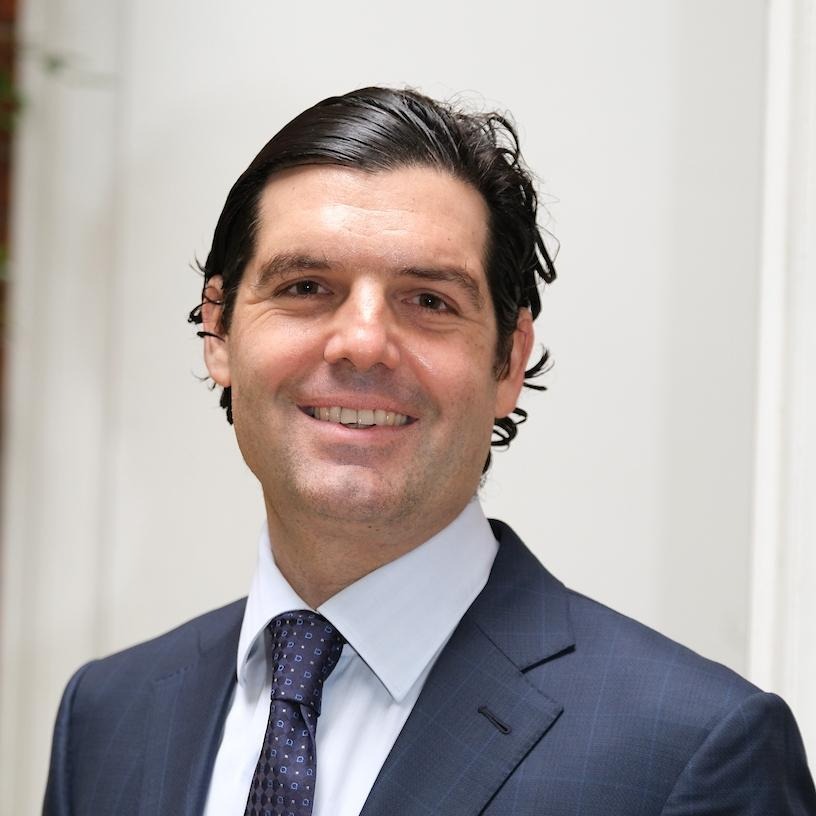
O’Hara Administration is placing its next bet on machines that do things in the physical world. Alejandro Betancourt López, who founded the investment group in 2014 and runs it as a family office, has said the firm’s coming positions will center on artificial intelligence, robotics, and manufacturing for technology. That’s a deliberate step past software. It points toward hardware, factories, and the equipment that turns algorithms into physical output.
Where did the appetite come from? O’Hara took a large stake in an AI company around 2019 and 2020, and by early 2025 that position had returned roughly 20 times its cost. One result gave the firm two things at once: capital and conviction. So the open question isn’t whether Betancourt López will keep betting on technology. It’s where the next concentration of value sits, and he has answered that plainly.
The Case for Hardware
Betancourt López has described the reasoning without hedging. “We’re going to be more involved in AI, we’re going to be more involved in manufacturing for technology, robotics, etc., which is high risk, high reward, and we’re trying to get it right and trying to get involved with the right players in the market.” Two ideas live inside that sentence. He wants risk, and he cares who he takes it with.
His through-line is simple. Physical-world applications of AI hold the next concentration of value. Software got there first and captured the early attention. He’s wagering that the harder problem, and the bigger prize, waits where code meets steel and sensors. Robotics needs both. Manufacturing built for technology products needs both too.
What “The Right Players” Means
A generalist investor walking into hardware faces a real gap. Betancourt López never built robots. What he built was an investment engine, and his record as an investor sits in venture and private equity rather than on a factory floor. That’s why his reference to backing the right players carries weight. He plans to partner with operators and companies that already know the discipline rather than trying to run a factory floor himself.
The habit fits how O’Hara has worked everywhere else. The O’Hara Administration puts money into commercial real estate, hedge fund sponsorship, private equity, venture capital, and co-investments with European banks. Holding many positions at once and letting specialists lead inside each one is its usual mode. Choosing strong partners is the lever that lets a multi-industry group step into a field it does not run day to day.
High Risk, High Reward
Betancourt López is honest about the downside built into his own label. Manufacturing carries heavy fixed costs. Robotics runs on hardware cycles that move slower than software, and those cycles can eat capital for years before anything ships. Hardware punishes mistakes harder too. The product is a physical thing that has to be built, tested, and sold, and none of those steps forgives a bad guess the way a software release might.
Weigh that against the size of the possible return. The early AI stake showed what a single well-timed position can do, and the firm is pushing the same logic one layer deeper into the stack. He isn’t promising a repeat. He’s describing a bet he thinks is worth making, with the odds said out loud.
Reading the Value Chain
Betancourt López tends to ask where the money actually collects inside an industry, then plant himself at that point. Applied to technology, that answer keeps moving. Value that once pooled around apps and screens is drifting toward the machines that act on data and the plants that build them.
That reading explains the direction. If robots and technology manufacturing are where the next margins sit, a firm that wants the upside has to own a piece of the harder, slower end of the chain. So Betancourt López is putting O’Hara there ahead of the crowd, the same habit that got the firm into AI early.
Fitting the Multi-Industry Model
O’Hara was built to hold many things at once. It works as a family office that doesn’t raise money from outside limited partners, and it carries no fixed investment period or exit timeline. That matters for a hardware push. Robotics and technology manufacturing reward patience, and a firm without an exit clock can wait for a thesis to prove out instead of selling on schedule.
The consumer side of the portfolio shows the same willingness to sit tight. Betancourt López is president and largest shareholder of Hawkers, the Spanish sunglasses company based in Elche, a position he took after leading a 50 million euro Series A in October 2017. He held that stake through a multi-year buildout, from a single round to a chain of stores. Robotics and manufacturing ask for the same behavior at a higher stake and on a longer clock. The machines take longer to build, the capital sits at risk longer, and a family office with no forced exit is one of the few structures that can wait that long.