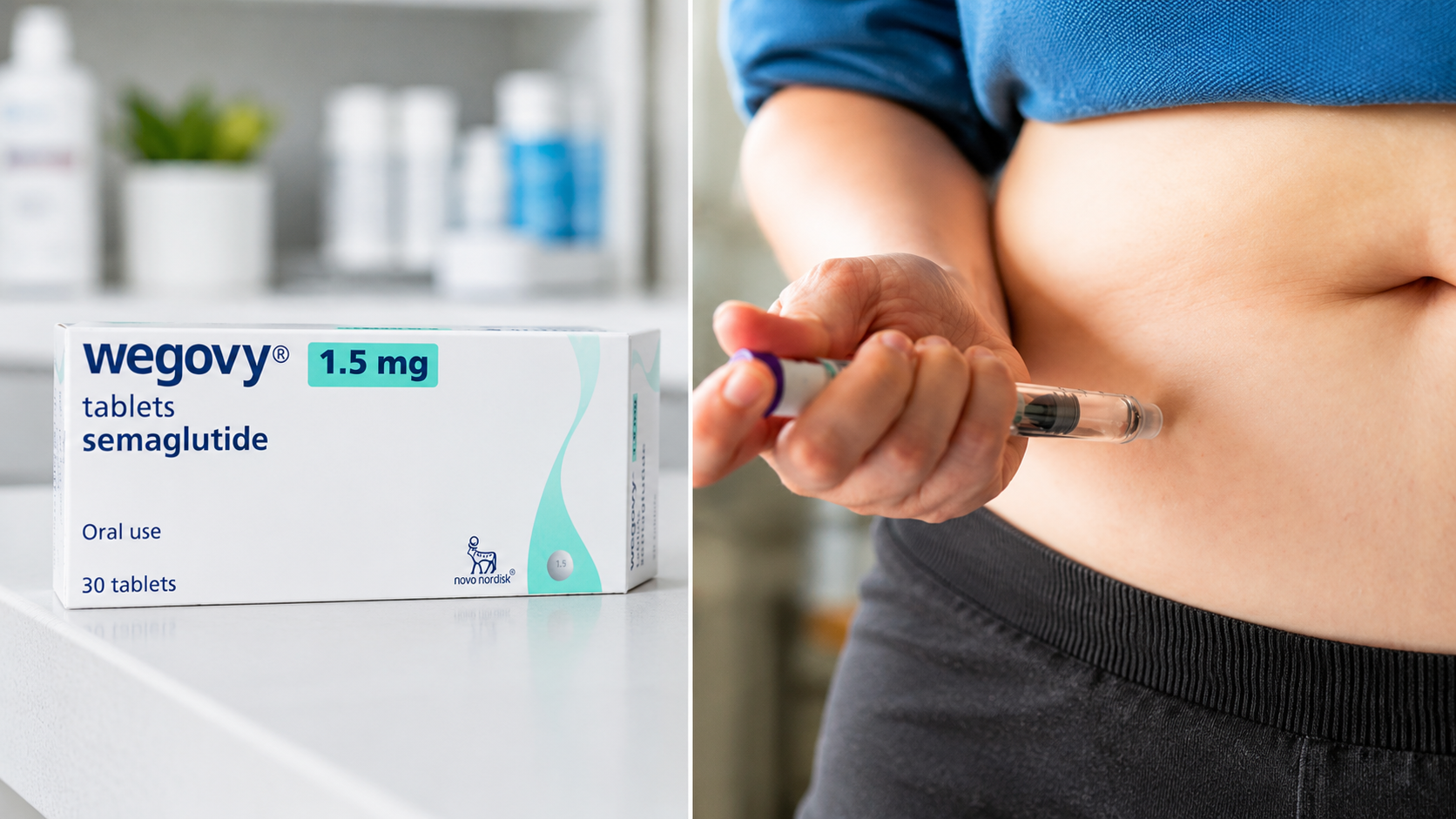
Weight-loss injections have transformed obesity treatment in recent years, with medicines such as Wegovy and Mounjaro becoming widely recognised options for people who meet the clinical criteria for treatment.
Now, patients in the UK have another choice.
The Medicines and Healthcare products Regulatory Agency (MHRA) approved the Wegovy tablet, containing semaglutide, for weight management in June 2026, making it the first GLP-1 tablet authorised for weight loss in the UK.
Instead of injecting Wegovy once a week, eligible patients can now potentially take semaglutide as a daily tablet.
But does avoiding injections actually make the Wegovy pill a better treatment?
Not necessarily. Both formulations have advantages, and the right choice can depend on effectiveness, convenience, dosing preferences, medical history and how easily someone can follow the treatment routine.
What Is the Wegovy Weight-Loss Pill?
The Wegovy pill contains semaglutide, the same active ingredient used in Wegovy injections.
Semaglutide belongs to a group of medicines known as GLP-1 receptor agonists. These medicines imitate the action of the naturally occurring GLP-1 hormone, which is involved in appetite regulation and blood-sugar control.
By acting on GLP-1 receptors, semaglutide can help people feel fuller after eating and reduce hunger, making it easier to consume fewer calories.
The MHRA authorised oral Wegovy for weight management in the UK on 11 June 2026.
The tablet therefore offers an important alternative for people who may qualify for medical weight-management treatment but would prefer not to use an injectable medicine.
Wegovy Pill vs Wegovy Injection – What Is the Main Difference?
The most obvious difference is how frequently and how the medicine is taken.
The Wegovy tablet is taken orally once a day, whereas traditional Wegovy is administered as a once-weekly injection.
Although they contain the same active ingredient, patients should not assume the tablet and injection doses are directly interchangeable.
The oral formulation has been specifically developed to allow semaglutide to be absorbed through the digestive system, where absorption is more challenging than with an injection.
This means patients switching between formulations need guidance from their prescriber rather than simply replacing one dose with another.
How Effective Is the Wegovy Pill?
Clinical trial results suggest that oral Wegovy can produce substantial weight loss.
The phase 3 OASIS 4 trial studied once-daily oral semaglutide 25 mg in adults with obesity or overweight alongside lifestyle intervention.
When researchers analysed outcomes regardless of whether every participant remained on treatment, average body-weight reduction at 64 weeks was approximately 13.6% with oral semaglutide compared with 2.2% with placebo.
A separate analysis estimating outcomes among people who adhered to treatment showed an average weight reduction of approximately 16.6%, compared with around 2.7% with placebo.
These results are important because they suggest that taking semaglutide as a tablet does not necessarily mean sacrificing a large amount of potential effectiveness.
However, individual results can vary considerably.
Weight-loss medicines should also be used alongside appropriate dietary, physical-activity and behavioural changes rather than viewed as a replacement for them.
Is the Wegovy Pill More Effective Than the Injection?
There is no simple answer.
Clinical studies of injectable Wegovy has also demonstrated substantial reductions in body weight. In previous studies, semaglutide 2.4 mg injections produced average reductions in body weight of around 15% in people with overweight or obesity without diabetes.
Meanwhile, OASIS 4 suggests that oral semaglutide 25 mg can achieve weight-loss results in a broadly similar range.
However, these figures come from different clinical-trial populations and study designs.
They should therefore not be interpreted as evidence that the Wegovy tablet is definitively better than the injection.
For an individual patient, factors such as treatment adherence, side effects, lifestyle and underlying health conditions may have a greater influence on results than simply whether Wegovy is taken as a tablet or injection.
Why Might Someone Prefer the Wegovy Pill?
For some patients, the biggest benefit will simply be avoiding needles.
No injections
Some people feel uncomfortable giving themselves injections or have a genuine fear of needles.
A tablet can remove this barrier and may make GLP-1 treatment feel more accessible.
Familiar treatment format
Taking tablets is already part of many people’s everyday healthcare routine.
For those accustomed to oral medication, a pill may therefore feel easier and less intimidating.
Easier when travelling
A tablet may also be more convenient for some people when travelling because there are no injection devices or needles to manage.
The practical storage requirements for any medicine should still be checked before travelling.
Why Might Someone Still Prefer the Injection?
A pill is not automatically the easier option.
One of the biggest advantages of injectable Wegovy is its once-weekly dosing schedule.
A person only needs to remember treatment once every seven days, whereas oral Wegovy must be taken every day.
For someone who regularly forgets daily medication, a once-weekly injection could actually be more convenient.
There may also be differences in how oral semaglutide needs to be taken in relation to food and drink to ensure adequate absorption, meaning following the dosing instructions carefully is important.
The best treatment is therefore not necessarily the one with the simplest method of administration but the one that a patient can safely and consistently use.
Wegovy Pill vs Injection at a Glance
| Feature | Wegovy Tablet | Wegovy Injection |
| Active ingredient | Semaglutide | Semaglutide |
| Administration | Oral tablet | Subcutaneous injection |
| Frequency | Once daily | Once weekly |
| Needles required | No | Yes |
| GLP-1 medicine | Yes | Yes |
| Prescription required | Yes | Yes |
| Lifestyle changes recommended | Yes | Yes |
| Best suited to | People who prefer tablets | People comfortable with weekly injections |
Neither option should be considered universally superior.
What About Mounjaro?
Wegovy is not the only major medicine used for weight management in the UK.
Mounjaro contains tirzepatide, which acts on both GIP and GLP-1 receptors and is administered as an injection.
This means someone considering changing from an injectable medicine to an oral one should not assume that the Wegovy tablet is simply a tablet version of Mounjaro.
They are different medicines.
People already using Mounjaro, injectable Wegovy or another weight-management treatment should speak to their prescriber before changing medication.
Combining or switching weight-loss medicines without clinical guidance could increase the risk of side effects or inappropriate dosing.
Does the Wegovy Pill Have Side Effects?
Yes.
Because both forms contain semaglutide, oral and injectable Wegovy share many of the same potential side effects.
Common adverse effects reported with oral semaglutide during the OASIS 4 programme included gastrointestinal symptoms such as nausea, diarrhoea and vomiting.
GLP-1 medicines can also have less common but potentially serious risks.
The MHRA strengthened warnings in 2026 around acute pancreatitis with GLP-1 and dual GLP-1/GIP medicines. Patients experiencing severe, persistent abdominal pain, particularly pain that may spread towards the back and occur with nausea or vomiting, should seek urgent medical attention.
The MHRA has also advised healthcare professionals about a very rare eye condition called non-arteritic anterior ischaemic optic neuropathy (NAION) associated with semaglutide. Anyone experiencing sudden or rapidly worsening vision while taking semaglutide should seek urgent medical assessment.
Your prescriber should discuss relevant risks before treatment begins.
Who Can Use Weight-Loss Medication?
GLP-1 medicines are prescription-only treatments.
They are not intended simply as a quick way to lose a small amount of cosmetic weight.
Eligibility depends on factors including BMI, weight-related health conditions, medical history and the individual medicine being considered.
A healthcare professional must assess whether treatment is appropriate.
The MHRA has repeatedly warned people to obtain medicines such as semaglutide and tirzepatide only through legitimate healthcare channels and to use them exactly as prescribed.
So, Is the New Wegovy Tablet Better Than Weight-Loss Injections?
For some people, yes, but mainly because it may suit them better, not because tablets have been proven universally superior.
Someone who dislikes needles may find once-daily oral Wegovy far easier to use.
Someone else might prefer the simplicity of a once-weekly injection rather than remembering a tablet every day.
In terms of weight loss, the OASIS 4 results show that oral semaglutide can produce clinically significant reductions in body weight and may deliver results in a broadly comparable range to injectable semaglutide in separate trials.
That makes the tablet an important additional treatment option rather than a straightforward replacement for injections.
The Bottom Line
The arrival of the Wegovy pill gives patients something that was previously missing from modern GLP-1 weight management: a prescription oral alternative to injectable semaglutide.
For people who are eligible for treatment but reluctant to inject themselves, this could make a significant difference.
However, convenience should not be confused with superiority.
The Wegovy tablet is taken every day, while Wegovy injections are normally taken weekly. Both contain semaglutide, both can cause side effects, and both require appropriate medical assessment and ongoing lifestyle changes.
Ultimately, whether a pill or injection is the better option depends on the individual.
A pharmacist, GP or specialist weight-management clinician can assess your medical history, current medication and treatment goals before recommending the most suitable approach.
Frequently Asked Questions
Is there a Wegovy pill in the UK?
Yes. The MHRA authorised semaglutide tablets under the Wegovy brand for weight management in the UK on 11 June 2026.
Is Wegovy available as both a pill and injection?
Yes. Wegovy uses semaglutide, and weight-management treatment is now available in both oral and injectable formulations in the UK, subject to prescribing and availability.
Is the Wegovy pill as effective as the injection?
Clinical trials suggest oral semaglutide can produce substantial weight loss. In OASIS 4, average weight reduction at 64 weeks was 13.6% in the primary treatment-policy analysis and 16.6% in an analysis estimating outcomes with treatment adherence. However, direct comparisons between separate trials should be interpreted cautiously.
Do you take the Wegovy pill every day?
Yes. Oral Wegovy is designed as a once-daily treatment, whereas injectable Wegovy is generally administered once weekly.
Can I switch from Wegovy injections to tablets?
Switching may be possible for some patients, but it should only be done under the guidance of a qualified prescriber. Tablet and injection doses should not be assumed to be directly interchangeable.
Can I switch from Mounjaro to the Wegovy pill?
Potentially, but Mounjaro and Wegovy contain different active ingredients and work differently. A healthcare professional should assess whether switching is appropriate and provide a safe transition plan.
Are weight-loss pills safer than injections?
Not necessarily. The method of administration does not remove the potential risks of the active medicine. Oral and injectable semaglutide can both cause side effects, so treatment should be prescribed and monitored appropriately.
Which is better weight-loss pills or injections?
There is no single best option for everyone. Tablets may appeal to people who want to avoid injections, while weekly injections may be easier for people who do not want to remember medication every day. Treatment choice should be based on medical suitability as well as personal preference.
This article is for information only and is not medical advice. Speak to a GP, pharmacist or prescriber about whether any weight-management medicine is appropriate for you.