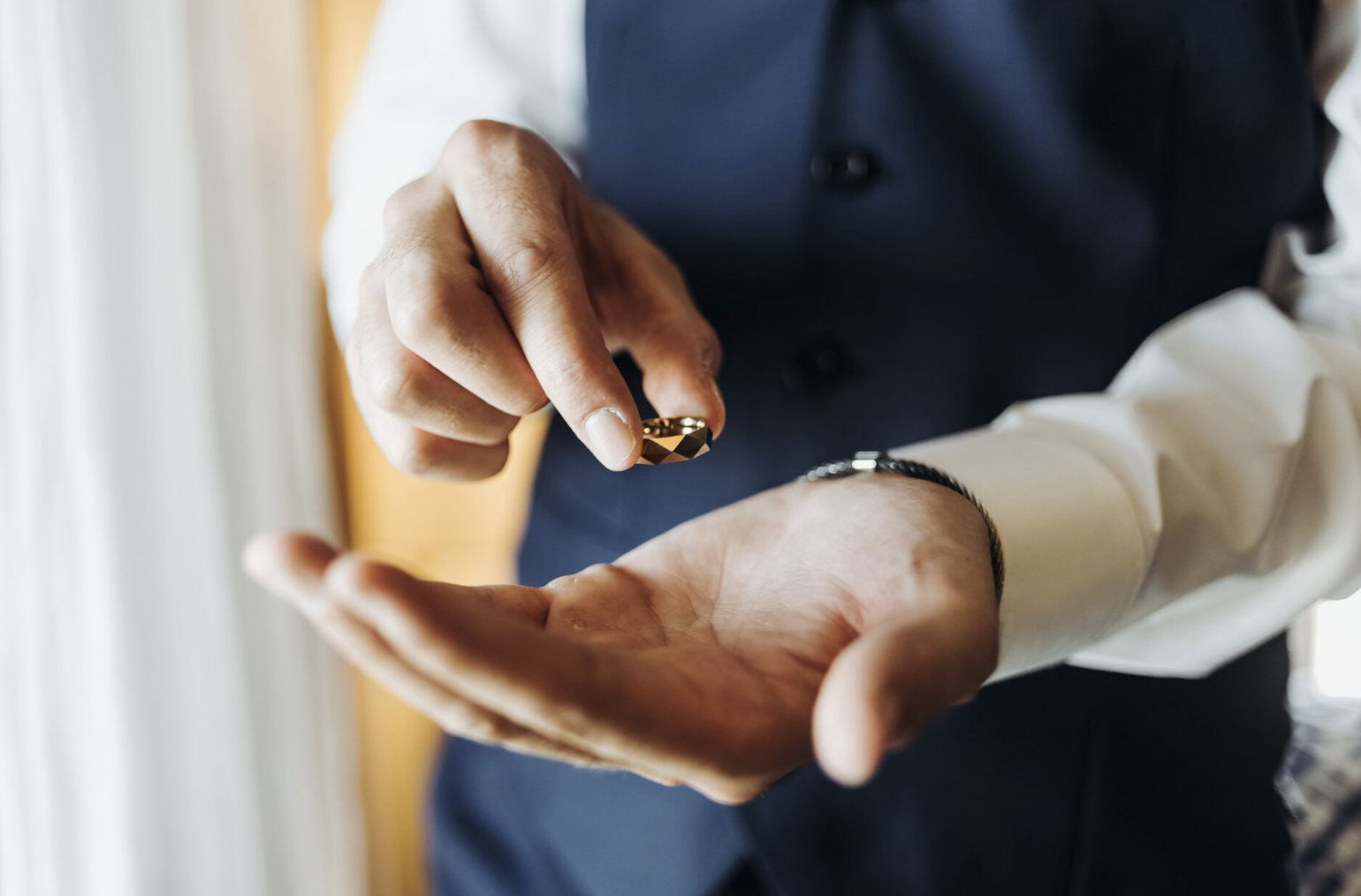
Not long ago, a men’s wedding band meant one of maybe three options at a jewellery counter, a plain gold ring, a slightly wider plain gold ring, or a plain silver-toned alternative for anyone who preferred a different metal, with almost no meaningful variation beyond width and finish. That era is largely over. Men are now shopping for wedding rings with the same level of consideration once reserved almost exclusively for engagement ring shopping, and the market has responded with genuinely distinctive designs to match.
What Changed and Why
Part of this shift is generational. Younger couples increasingly treat wedding ring selection as a joint decision worth real time and thought, rather than something the groom handles as an afterthought a week before the ceremony. Part of it is simply exposure. Social media and online jewellers have made it far easier to see the full range of what is actually available, rather than being limited to whatever a local shop happens to stock.
The result is a market that now offers genuinely varied materials and designs for men who want a ring that reflects something about them personally, rather than one that looks interchangeable with millions of others. Unique materials like meteorite inlay, mixed metals, and handcrafted detailing have moved from niche novelty into mainstream consideration.
Materials Worth Understanding Before You Shop
Traditional gold remains a popular choice for good reason, it is durable, timeless, and available across a range of karats and colour tones from yellow to white to rose gold. But the growing appeal of unconventional materials deserves a closer look for anyone who wants something distinctive.
Meteorite banding, for instance, incorporates actual fragments of meteorite into a ring’s design, creating a naturally occurring pattern that no two rings replicate exactly. For couples drawn to the idea of something genuinely one of a kind, this kind of material choice offers a level of individuality that a standard gold band simply cannot match. Handcrafted rings more broadly, whether in traditional or unconventional materials, tend to carry small variations and details that mass-produced rings lack entirely.
What to Prioritise When Choosing a Ring
Durability matters more for a wedding ring than almost any other piece of jewellery a person owns, since it gets worn daily, often during manual work, exercise, or other activities that would damage a delicate piece. This is where material choice becomes a practical decision as much as an aesthetic one. Some metals and materials hold up better to daily wear, resist scratching more effectively, or are easier to resize later if needed.
Comfort fit is another detail worth prioritising but easy to overlook when shopping primarily by appearance. A ring with a slightly rounded interior profile tends to sit more comfortably over years of daily wear than a flat-profile band, particularly for anyone who works with their hands regularly.
For couples specifically shopping for men’s wedding rings, working with a jeweller who specialises in unique, handcrafted designs rather than a generic mass-market retailer tends to produce a considerably better outcome, both in terms of material quality and in finding a design that actually reflects the wearer’s personal style rather than the most commercially convenient option available.
The Case for Handcrafted Over Mass-Produced
Mass-produced rings are manufactured to a standard template with essentially no variation between units. Handcrafted rings, by contrast, involve an actual person shaping and finishing each piece, which introduces both the possibility of customisation and a level of quality control that comes from someone paying close attention to each individual ring rather than overseeing an automated production line.
This matters practically as well as sentimentally. A handcrafted ring made with attention to detail tends to have cleaner finishing, better proportions, and fewer of the small manufacturing inconsistencies that show up in heavily mass-produced jewellery over time.
Getting the Sizing Right
Because a wedding ring gets worn every day for decades, sizing deserves more attention than a quick guess. Finger size can fluctuate with temperature, activity level, and time of day, so getting properly measured, ideally more than once, gives a far more reliable result than sizing based on a single measurement taken under one set of conditions.
Bringing It All Together
None of this means a traditional plain band is the wrong choice for every groom. Plenty of men still prefer that classic simplicity, and there is nothing wrong with it. What has changed is that it is now genuinely one option among many, rather than the only realistic choice available. Couples who take the time to look beyond the first jewellery counter they visit tend to end up with a ring that actually feels personal, rather than one selected purely out of convenience or limited local stock.
Frequently Asked Questions
Why have men’s wedding ring options expanded so much in recent years? Increased consumer awareness through social media and online retailers, combined with a generational shift toward treating ring selection as a joint decision, has driven demand for more varied and distinctive designs.
What is meteorite banding in a wedding ring? It involves incorporating actual meteorite fragments into the ring’s design, creating a naturally occurring pattern unique to each piece, which appeals to couples wanting something genuinely one of a kind.
Is a handcrafted ring more durable than a mass-produced one? Not necessarily more durable by default, but handcrafted rings often benefit from closer individual attention during production, which can result in better finishing and fewer manufacturing inconsistencies.
How important is comfort fit when choosing a wedding ring? Very important for daily wearability. A slightly rounded interior profile tends to be more comfortable over years of wear than a flat-profile band, particularly for people who work with their hands.
Why does ring sizing need extra care for a wedding band? Since a wedding ring is worn daily for years, and finger size can fluctuate with temperature and activity, getting measured carefully, ideally more than once, produces a far more reliable and comfortable long-term fit.