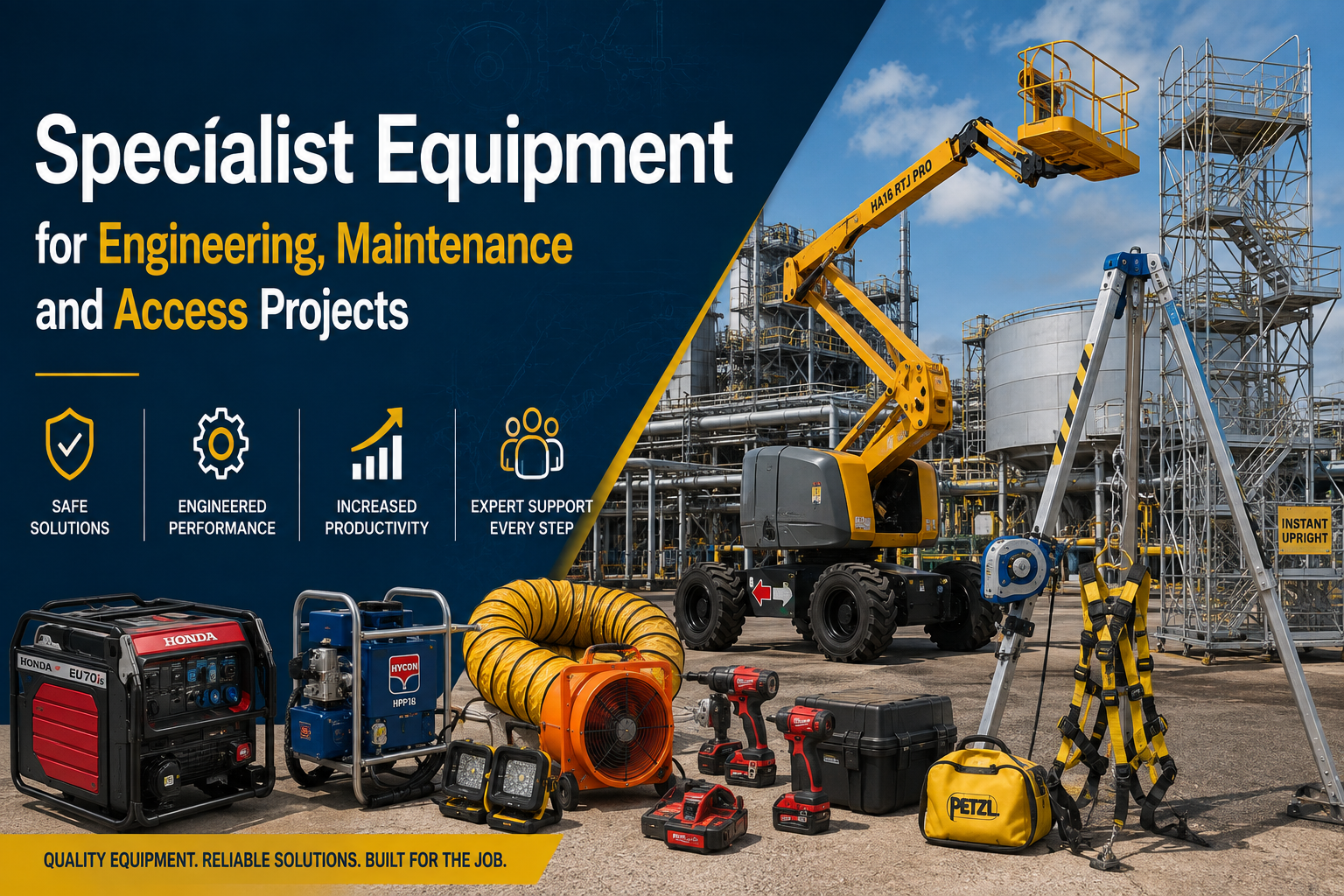
Modern engineering, construction and maintenance projects often depend on specialist equipment to achieve accurate results and maintain safe working conditions. From measuring structural forces to cleaning fuel storage systems and providing access to elevated areas, the right tools can improve efficiency and help prevent unnecessary delays.
Selecting equipment should always begin with a clear understanding of the task. Businesses need to consider the environment, technical requirements, available space and expected duration of use. Hiring equipment can also be a practical alternative to purchasing machinery that may only be required for a particular project.
Understanding Strain Measurement
Engineers frequently need to understand how components behave when subjected to different forces. Measuring strain can provide valuable information about how a structure or component responds under load.
A strain gauge is a sensor used to measure changes in strain on a surface. When appropriately installed, it can help engineers assess how a material responds to stress and loading conditions.
Strain gauges can be used in research, manufacturing, structural monitoring and product development. They may form part of testing programmes designed to evaluate the performance of components under controlled conditions.
Applications for Strain Gauges
The information gathered from strain measurement can help engineers understand whether a component is behaving as expected. This can be particularly valuable when developing new products or investigating potential weaknesses.
Before installing a strain gauge, the surface and measurement requirements need to be assessed carefully. Installation quality can affect the accuracy of the results, so appropriate preparation and technical knowledge are important.
Environmental conditions should also be considered. Temperature, moisture, vibration and other factors may influence measurements, meaning the equipment and installation method need to be suitable for the application.
Maintaining Fuel Storage Systems
Fuel storage tanks can accumulate sediment, sludge and other contaminants over time. If these materials are not managed appropriately, they may affect the condition of the tank and the quality of the stored fuel.
Regular inspection and maintenance can therefore be an important part of managing fuel storage infrastructure. The frequency and type of maintenance required will depend on factors such as tank design, fuel type, usage and environmental conditions.
Professional fuel tank cleaning can help remove accumulated contaminants and provide an opportunity to assess the condition of the tank. Cleaning procedures should be planned carefully, particularly when dealing with flammable substances or confined spaces.
Why Fuel Tank Maintenance Matters
Keeping a fuel tank clean can help support reliable operation and reduce the likelihood of contamination affecting associated equipment. It can also provide an opportunity to identify potential issues before they become more serious.
Businesses should ensure that any work involving fuel storage is carried out by appropriately trained professionals using suitable procedures and equipment. Safety is particularly important because fuel can present fire, environmental and health hazards.
Records of inspections and maintenance can also be useful. Keeping track of when a tank was cleaned or inspected makes it easier to plan future maintenance and demonstrate that appropriate procedures are being followed.
Accessing Elevated Work Areas
Construction, maintenance and installation projects frequently require workers to access equipment or structures at height. Suitable access machinery can make these tasks more efficient while reducing the need for unsuitable temporary arrangements.
For businesses requiring flexible lifting equipment, Hire genie lift services can provide access to machinery for temporary projects. Hiring can be useful when a lift is needed for a limited period, such as during installation, refurbishment or maintenance work.
Choosing the Right Lift
There are different types of lifting equipment available, and the appropriate choice depends on the application. Factors such as maximum working height, platform or load requirements, available space and site conditions should all be considered.
Businesses should also assess how the equipment will reach the work area. Indoor projects may have restrictions relating to doorways, floor surfaces and ceiling heights, while outdoor sites can present different challenges involving terrain and weather.
Before hiring equipment, it is important to provide accurate information about the site and intended use. This can help ensure that a suitable machine is supplied.
Safe Operation of Lifting Equipment
Lifting machinery should only be operated by appropriately trained and authorised personnel. Operators should understand the controls, limitations and safety procedures associated with the specific equipment.
Pre-use inspections are also important. Tyres, controls, platforms, hydraulic systems and other components should be checked according to the manufacturer’s guidance.
The working area should be assessed for potential hazards, including overhead obstructions, uneven surfaces and nearby traffic. Where necessary, barriers and exclusion zones can help keep other people away from the operating area.
Planning Specialist Equipment Requirements
Engineering measurement, fuel tank maintenance and elevated access may appear to be unrelated tasks, but they share an important requirement: appropriate preparation.
The right equipment needs to be selected according to the task, environment and safety requirements. Hiring can provide flexibility for temporary requirements, while specialist services can provide expertise for technically demanding work.
Businesses should also consider maintenance, training and compliance when planning projects. Cutting corners with specialist equipment can lead to inaccurate results, unnecessary downtime or avoidable safety risks.
Making Informed Decisions
Whether measuring the performance of a component, maintaining a fuel storage system or accessing an elevated work area, suitable equipment can make a significant difference to project outcomes.
By assessing requirements carefully and obtaining professional guidance where necessary, businesses can choose solutions that provide practical value. Regular maintenance, competent operation and appropriate safety procedures can further improve reliability.
With thoughtful planning, specialist equipment can help organisations complete complex engineering, maintenance and construction tasks more efficiently while supporting safer working environments.