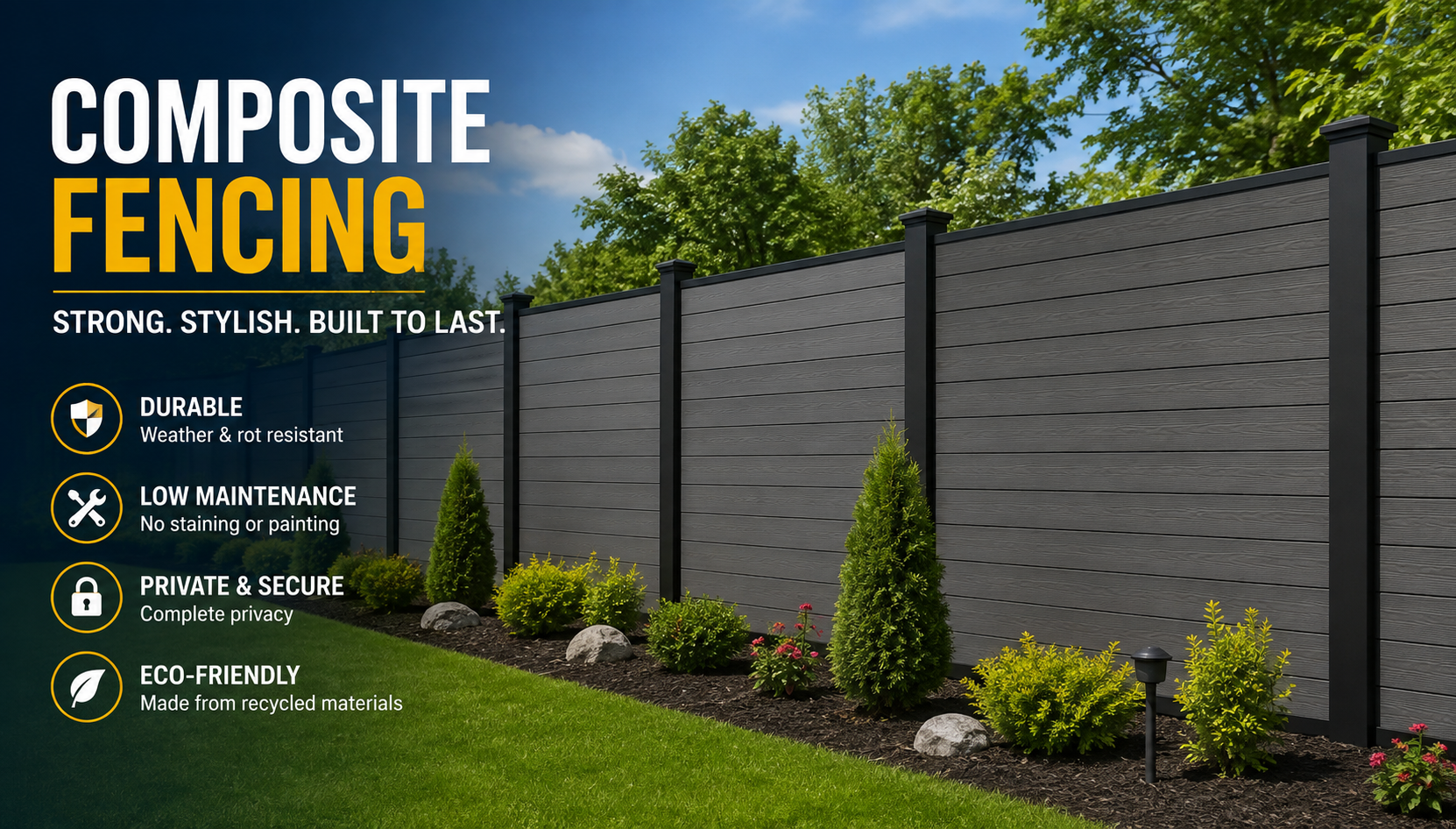
Choosing new fencing is one of those home-improvement decisions that quietly affects the whole garden. A fence defines privacy, frames planting schemes, sets the backdrop for patios and decking, and has to keep looking good through rain, sun, wind, and seasonal temperature changes. For many homeowners, the question is no longer whether timber fencing is familiar. It is whether a more durable alternative will reduce maintenance while still giving the garden a warm, finished appearance.
That is where composite fencing has become a serious option. A composite fencing company can help homeowners compare materials, colours, posts, gates, trellis, accessories, and installation methods before they commit to a full boundary project. eComposite, the brand behind ecompositeproducts.co.uk, focuses on composite fencing in the UK and presents its systems as long-lasting, weather-ready alternatives to traditional wood. Its range includes Superior and Ultimate fencing, composite gates, trellis, screening, decorative panels, posts, boards, lights, samples, and other garden products.
Why Composite Fencing Appeals To Modern Homeowners
Composite fencing is usually made from wood plastic composite, often called WPC. The material combines wood fibres with plastic to create boards that are designed to resist many of the problems associated with timber. Instead of regular sanding, painting, staining, or sealing, homeowners can choose a system that is intended to keep its shape and finish with minimal upkeep.
The visual appeal matters too. A garden fence is not only a barrier; it is part of the outdoor design. Composite boards can create a clean, modern look while still echoing the texture and colour depth of timber. Depending on the range, homeowners may be able to choose classic full-height panels, Venetian-style slats, vertical boards, trellis sections, decorative screening, or matching gates. That flexibility makes composite fencing useful for full boundary replacements as well as smaller design upgrades.
What To Look For In The Product Range
A good fencing supplier should make the selection process easier, not more confusing. Homeowners should be able to compare panel styles, board thicknesses, colour options, post compatibility, gate choices, and accessories in one place. eComposite separates its fencing into ranges such as Superior, described for all-weather conditions, and Ultimate, positioned as a thicker, reversible option for more demanding weather exposure. The site also highlights fencing colours, composite gates, trellis, screening, posts, lights, and samples.
The ability to order samples is especially useful. Composite fencing can look different in bright sun, shade, rain, or next to brick, render, stone, decking, and planting. A sample lets homeowners check colour, texture, weight, and finish before ordering a complete project. It also helps installers and landscapers confirm whether the boards will complement other garden materials.
A careful buyer should also check how the company handles practical pre-sale support: quoting, sample packs, delivery timing, installation advice, and returns or replacement questions. These everyday service details often determine whether a fencing project feels smooth once measurements, colour choices, and site conditions start becoming real. A strong supplier should make it easy to confirm what to order, how components fit together, and what support is available if a board, post, cap, or gate accessory needs attention.
Durability, Weather Resistance, And Long-Term Value
The most practical reason to consider composite fencing is durability. Traditional timber can warp, crack, rot, fade, or require repeated treatment. Composite systems are designed to reduce those maintenance tasks while staying structurally reliable in normal garden use. eComposite describes its systems as weatherproof and UV-resistant, and its homepage references wind resistance claims for different ranges.
Homeowners should still look carefully at the details behind any durability claim. Useful questions include how the fencing performs with existing concrete posts, whether aluminium or composite posts are available, what warranty terms apply, how boards are fixed, and what installation guidance is provided. A fence that is easy to buy but difficult to install can quickly become frustrating. Clear installation information, accessories, and product comparisons are signs that the supplier understands real garden projects.
Sustainability As A Design Consideration
Many homeowners want outdoor materials that perform well without feeling wasteful. Composite fencing can support that goal when it uses recycled plastic and reclaimed wood fibres. eComposite states that its composite fence panels are made from recycled plastic and reclaimed wood fibres, positioning the material as an eco-conscious alternative to timber. That does not mean every garden project has the same environmental outcome, but it gives buyers a helpful material story to consider alongside appearance and service life.
Sustainability also relates to replacement cycles. A fence that lasts longer and needs fewer coatings may reduce the time, materials, and disruption associated with maintenance. For a homeowner planning a long-term garden design, that can be just as important as the initial purchase price.
Matching Fencing To The Garden Plan
Before choosing a supplier, homeowners should think about how the fence will function in the finished space. A boundary fence around a family garden may prioritise privacy and wind resistance. A patio screen may focus more on style, light, and sightlines. A front garden may need a lower or more decorative approach. A side return may need practical access, a matching gate, or a layout that works around existing posts.
The strongest projects treat fencing as part of the full outdoor scheme. Colour should relate to paving, decking, planting, exterior paint, and furniture. Height should balance privacy with light. Gate style should match the panels. Accessories such as post caps or fence lights can finish the design when used carefully.
Conclusion
Composite fencing is worth considering when a homeowner wants the appearance of a designed garden boundary without the regular maintenance associated with timber. The best supplier will offer clear product ranges, realistic durability information, compatible gates and accessories, sample options, and guidance that helps buyers make a confident decision.
eComposite provides a useful example of a UK-focused composite fencing brand with several fencing systems, gates, trellis, screening, posts, samples, and installation support. For homeowners comparing options, the right company is the one that connects material performance with the way the garden will actually be used.