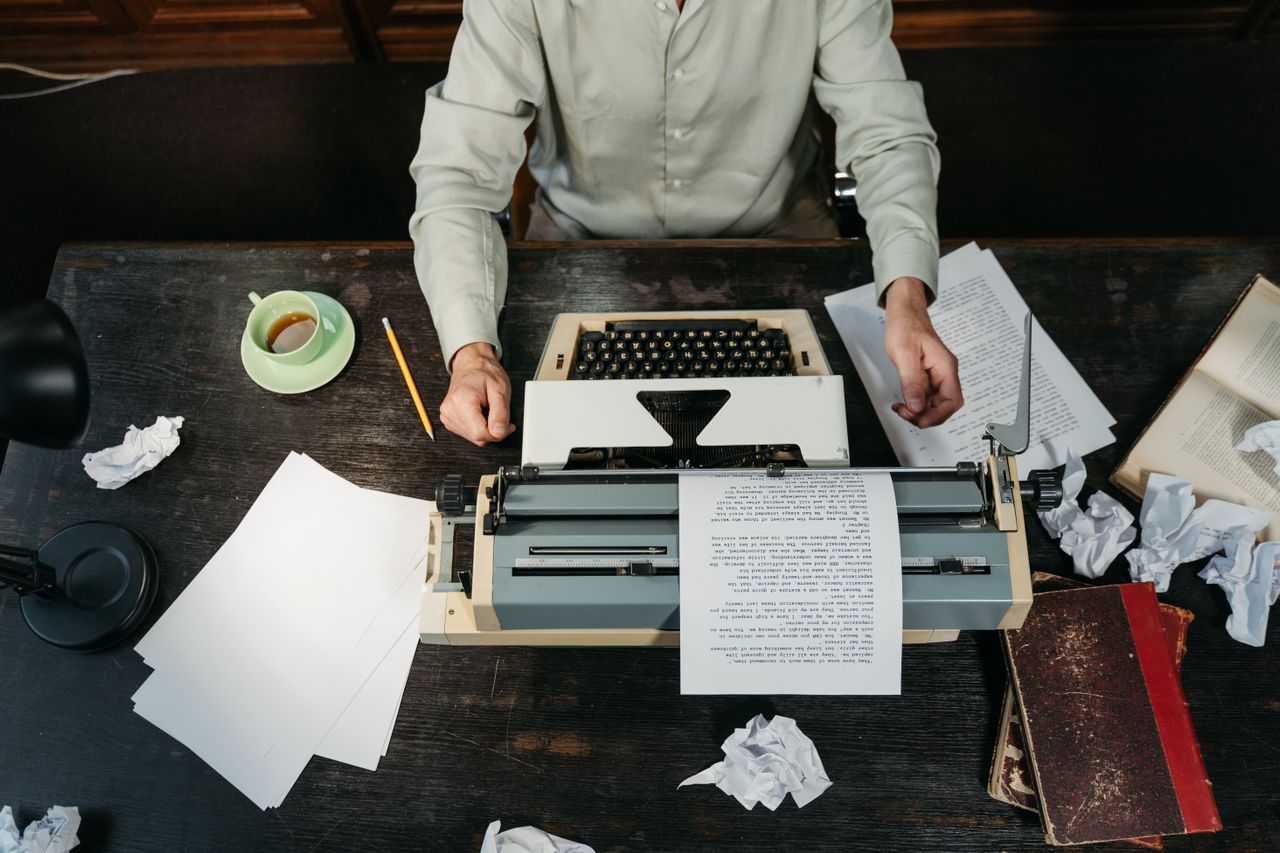
A story often begins with something small: a character, a line of dialogue or an image of a place that does not yet exist. Developing that initial idea into a complete narrative requires many decisions about motivation, appearance, setting, mood and structure.
Generative AI can help creators explore these decisions more quickly. A writer can discuss a character with an AI chatbot, turn the resulting description into an image and then animate that image into a short scene.
However, using AI for creative work also raises questions about privacy and control. Prompts may contain unpublished ideas, personal themes or commercial concepts. Mainstream platforms may also reject lawful stories involving horror, mature relationships, dark fantasy or other sensitive subjects.
Private, less restrictive AI tools give writers and visual creators another way to experiment. Their value is not that they replace the creative process, but that they make it easier to explore, visualise and test an idea.
Why Writers Use AI During Early Development
The beginning of a creative project can be difficult because the possibilities are almost unlimited. A writer may know the central idea but remain uncertain about the setting, character conflict or sequence of events.
AI can function as a responsive brainstorming partner during this stage. Instead of producing the final story, it can help the creator ask better questions.
For example, a writer might begin with:
A former detective returns to a coastal town where everyone seems to remember an event that never happened.
The AI could help explore:
- Why the detective originally left
- What the residents believe happened
- Which character benefits from the false memory
- How the town’s appearance supports the mystery
- What evidence challenges the accepted version
- How the protagonist changes during the investigation
The writer remains responsible for choosing which ideas fit the story. AI simply makes it faster to compare possibilities before committing to one direction.
Building More Consistent Characters
A memorable character needs more than a name and physical description. The character should have goals, fears, contradictions and relationships that influence their decisions.
Creators can use an uncensored AI chatbot to develop characters and storylines involving mature or unconventional themes that stricter systems may interrupt. HackAIGC combines conversational creation with image and video tools, allowing an idea to move from written development into visual production within the same broader platform.
A useful character-development prompt might include:
- The character’s role in the story
- Their immediate objective
- Their long-term desire
- A weakness they try to hide
- A formative past experience
- Their relationship with another character
- The type of conflict they avoid
- The decision they will eventually be forced to make
The resulting profile should be treated as a draft. Writers can keep the useful details, reject predictable suggestions and introduce contradictions that make the character feel more human.
For instance, a confident leader may be highly capable in public but unable to make decisions affecting someone they love. That tension creates more narrative potential than a list of positive personality traits.
Using Role-Play to Test Dialogue
Dialogue may look natural on the page while failing to reflect the character’s personality. Role-play can help writers test whether a conversation feels believable.
The creator can give the AI a character profile and ask it to respond from that character’s perspective. The goal is not necessarily to copy the AI’s wording into the final manuscript. It is to discover how the character might react under pressure.
Writers can test scenes such as:
- A first meeting between two rivals
- An argument between partners
- A negotiation with an antagonist
- A confession that changes a relationship
- A conversation in which one character is lying
- A reunion after a long separation
If every character sounds similar, the writer can refine their vocabulary, sentence length, emotional openness and communication habits.
One character may speak directly and avoid metaphor. Another may hide uncomfortable truths behind humour. A third may answer questions with questions. These differences create recognisable voices.
Developing Mature Stories Without Losing Narrative Quality
Less restrictive AI tools are particularly relevant to adult fiction, romance, horror and other genres that may contain sensitive themes. Yet creative freedom alone does not make a story effective.
A mature scene should still serve a narrative purpose. It might reveal trust, vulnerability, conflict, power imbalance or a change in a relationship. If removing the scene has no effect on the characters or plot, it may not be contributing much to the story.
Creators should continue to evaluate:
- Character motivation
- Emotional credibility
- Consent
- Narrative relevance
- Pacing
- Point of view
- Intended audience
- Publishing-platform rules
AI can offer alternative versions of a scene, but the writer must decide what belongs in the final work.
It is also important to keep all characters clearly adult when developing adult-oriented material. Creative freedom does not remove legal, ethical or platform responsibilities.
Turning Written Characters Into Visual References
Once a character is clearly defined, the written profile can become the basis of an image prompt.
A visual prompt should focus on visible information rather than the character’s entire biography. Instead of explaining every past event, describe how those experiences affect appearance, posture, clothing and expression.
A practical prompt can include:
- Age range and general appearance
- Facial characteristics
- Hairstyle
- Clothing and accessories
- Posture or expression
- Environment
- Lighting
- Camera angle
- Colour palette
- Visual medium
For example, describing a character as “sad” leaves the visual interpretation open. A more precise direction might specify lowered shoulders, tired eyes, an unfocused gaze and cold evening light.
The first image does not need to become the final illustration. It can serve as a reference that helps the writer decide whether the visual result matches the imagined character.
Creating a Character Reference Sheet
Visual consistency becomes difficult when a project includes several scenes. AI models may change facial features, clothing or proportions between generations.
A reference sheet can reduce this problem. It should record the details that must remain stable, including:
- Face shape
- Eye colour
- Hairstyle
- Body type
- Primary costume
- Recurring accessories
- Distinguishing features
- Typical expressions
- Main colour palette
Creators can also generate front, side and three-quarter views where the tool supports them. Even imperfect references make it easier to identify unwanted changes in later images.
Not every detail needs to remain identical. Clothing, lighting and expression can change with the story. The reference sheet should protect the features that make the character recognisable.
Visualising Settings Before Writing a Scene
AI images are also useful for exploring locations.
A writer developing a fictional city, historical interior or fantasy landscape may understand its general atmosphere but struggle to describe how the space is organised. Generating a visual concept can expose missing details.
After reviewing the image, the writer might ask:
- Where would a character enter?
- What can be seen from the window?
- Which areas are hidden?
- What objects reveal the location’s history?
- How does the lighting affect the mood?
- What sounds or smells might exist there?
- How could the environment complicate the scene?
This process can improve descriptive writing because the setting becomes a functional space rather than a decorative background.
Creators should not feel obligated to reproduce every generated detail. The image is a thinking tool, not a fixed blueprint.
Using Images as Storyboards
A sequence of generated images can function as an early storyboard for a short film, visual novel, game scene or social media narrative.
Each image should represent a meaningful story beat, such as:
- Establishing the setting
- Introducing the character
- Revealing a problem
- Showing a reaction
- Escalating the conflict
- Presenting a decision
- Showing the consequence
This approach helps creators review pacing before investing time in animation. If two consecutive frames communicate the same information, one may be unnecessary. If an important change happens between frames without explanation, another shot may be needed.
Storyboarding also reveals continuity problems. A prop may disappear, a costume may change or characters may appear in physically inconsistent locations.
Moving From a Still Image to a Short Video
Animation adds timing, movement and atmosphere to a visual story. A character can blink, turn or react. Wind can move through clothing, and the camera can gradually reveal part of the environment.
Creators can use HackAIGC’s image-to-video tool to animate permitted mature or adult-oriented images that may not be accepted by more restrictive video generators.
The source image should be prepared carefully. Images tend to animate more reliably when:
- The main subject is easy to identify
- The character has a readable pose
- Important body parts are visible
- The background does not overlap heavily with the subject
- Hair and clothing have clear shapes
- The composition leaves space for movement
- Facial details are already correct
An image containing obvious structural problems is unlikely to improve during animation. Motion may make those defects more noticeable.
Writing Better Motion Prompts
An image prompt describes appearance. A motion prompt describes change.
The motion instruction should focus on one main action and, if necessary, one camera movement. For example:
The character slowly turns towards the window while the camera moves closer. Curtains shift gently in the wind.
This gives the model a clearer task than a request to “make the scene dramatic and cinematic.”
Useful motion details may include:
- Direction of movement
- Speed
- Facial expression
- Camera movement
- Environmental motion
- Beginning and ending positions
Complexity should be introduced gradually. A creator can begin with subtle blinking, breathing or a slow camera movement before attempting a more active scene.
Short clips can then be edited together to create a longer sequence.
Reviewing AI-Generated Motion
A generated video should be watched several times. The first viewing can focus on the overall effect, while later reviews should inspect individual details.
Common problems include:
- Facial features changing
- Hands becoming distorted
- Clothing merging with the body
- Jewellery disappearing
- Hair passing through shoulders
- Background objects bending
- Unwanted camera movement
- Flickering between frames
- Sudden changes in lighting
If the result fails, change one variable at a time. Simplify the motion prompt, select a clearer source image or reduce the amount of camera movement.
Making several changes simultaneously makes it difficult to understand which adjustment improved the result.
Why Privacy Matters to Story Creators
Creative prompts can contain highly personal information. A writer may explore private emotions, unpublished commercial ideas or mature fictional scenarios that they do not want associated with a public profile.
Before using any AI tool, creators should understand:
- Whether prompts are recorded
- Whether uploaded images are retained
- Whether conversations are connected to an account
- Whether content may be used for model training
- Whether projects can be permanently deleted
- How the provider describes its data-processing practices
A platform’s approach to content restrictions does not automatically determine its approach to privacy. An uncensored service is not necessarily private, and a private service is not necessarily uncensored.
Creators should review the current privacy policy rather than relying exclusively on marketing terms.
Keeping Human Authorship at the Centre
AI can generate large quantities of text and imagery, but volume is not the same as originality.
Human authorship becomes visible through selection and revision. The creator decides:
- Which idea deserves development
- What the story is trying to say
- Which suggestions feel predictable
- How characters should change
- What visual details matter
- Which generated outputs should be rejected
- How the finished work should be presented
Saving drafts can help document this process. Writers may keep the original concept, selected AI suggestions, revised character profiles, visual references and final text.
This record is useful when explaining how AI contributed to a commercial or portfolio project.
Responsible Use of Less Restrictive AI
Creative freedom should remain connected to accountability.
Creators should avoid:
- Using a real person’s likeness without consent
- Producing deceptive material intended to harm someone
- Uploading confidential reference files without permission
- Requesting direct copies of protected characters
- Presenting generated work as entirely handmade
- Ignoring the rules of the final publishing platform
- Creating illegal or exploitative material
Writers and visual artists should also consider the audience. Content appropriate for a private adult community may not be suitable for a general social platform.
The responsibility for that decision remains with the person creating and publishing the work.
A Practical Story-to-Video Workflow
A repeatable process might look like this:
Step 1: Define the premise
Summarise the central character, conflict and setting in two or three sentences.
Step 2: Develop the characters
Establish goals, fears, relationships and contradictions.
Step 3: Test important scenes
Use conversational role-play to explore dialogue and reactions.
Step 4: Create visual descriptions
Translate character and setting information into focused image prompts.
Step 5: Generate reference images
Compare several versions and correct visible errors.
Step 6: Plan the sequence
Arrange images around the key story beats.
Step 7: Add controlled motion
Animate one clear action or camera movement in each shot.
Step 8: Review and edit
Check continuity, pacing, visual defects and narrative clarity.
Step 9: Confirm publishing requirements
Review consent, ownership, content rules and export specifications.
Frequently Asked Questions
Can AI write an entire story?
Yes, AI can generate a complete draft, but the result may be generic or inconsistent. Human planning and revision are still necessary to create distinctive characters, themes and narrative structure.
What is an uncensored AI chatbot?
An uncensored AI chatbot applies fewer content restrictions than many mainstream assistants. It may support lawful mature fiction, role-playing and unconventional creative themes, although platform rules still apply.
Can writers use AI-generated images as character references?
Yes. Generated images can help establish appearance, clothing and mood. Writers should inspect the results carefully and avoid requesting copies of protected characters or real people without permission.
Why turn a story image into a video?
Animation can test how a scene feels when movement, timing and camera direction are introduced. It can also support visual novels, short films, trailers and social media storytelling.
Are private AI tools completely anonymous?
Not necessarily. Creators should examine the platform’s current logging, storage, account and model-training policies before sharing sensitive material.
Does AI replace the writer or visual artist?
No. AI can accelerate brainstorming and production, but the creator remains responsible for direction, selection, revision and the final meaning of the work.
Final Thoughts
Private and less restrictive AI tools are expanding what writers and visual storytellers can explore during early production. A creator can develop a character through conversation, test dialogue, visualise a setting and animate a key moment without beginning with a full production team.
The most valuable result is not the first generated paragraph, image or video. It is the clearer understanding that emerges through comparison and revision.
When creators combine AI assistance with human judgement, privacy awareness and responsible publishing, these tools can support a richer process of experimentation while leaving authorship where it belongs: with the person telling the story.
READ ALSO: Why a Configuration Baseline Beats a Chain of Chamber Emails