
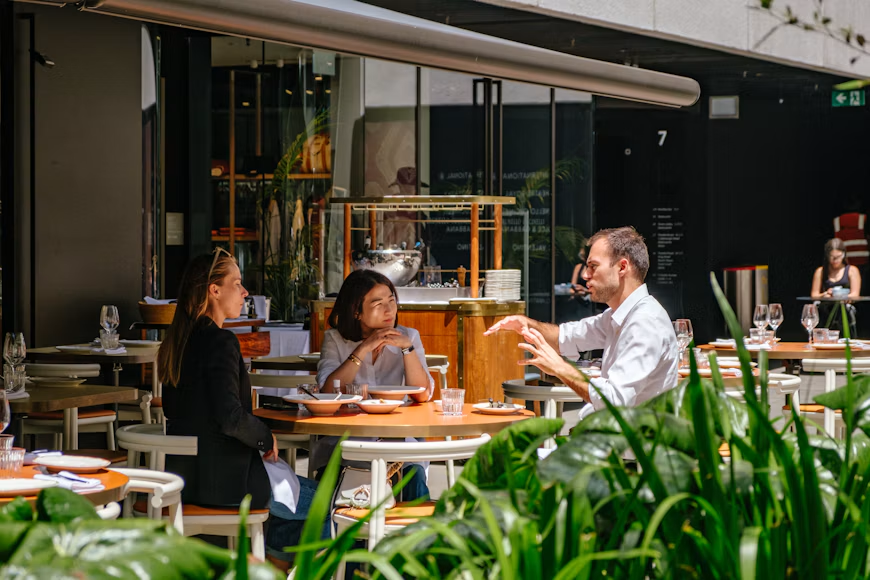
A shared meal can change the tone of a professional relationship more effectively than another hour in a meeting room. Around a dining table, job titles become less prominent, conversation develops at a more natural pace and people gain a clearer sense of the personalities behind the business cards.
That doesn’t mean every client dinner automatically builds trust. The format, food and timing all influence how comfortable guests feel. Shared dining works especially well because it creates small moments of co-operation, from passing a dish to helping someone choose what to try. Those interactions can make the business discussion that follows more open and productive.
The Psychology of Shared Plates
Shared dishes give everyone at the table a reason to pay attention to one another. Guests need to notice who has been served, pass plates within reach and decide how much to take. These are minor actions, but together they establish a pattern of mutual awareness.
Evidence discussed in an article about sharing plates and cooperation suggests that eating from shared dishes can encourage people to co-ordinate their behaviour. In a professional setting, this can soften the rigid roles that sometimes dominate formal meetings. A procurement director and a new supplier, for example, are briefly engaged in the same simple task when they divide a dish or offer one another the final portion.
The wider social significance of meals also comes from their structure. People sit together for a defined period, follow familiar rituals and divide their attention between food and conversation. Silence feels less awkward because guests can pause to eat. That gives quieter participants time to consider what they want to say without feeling that they must compete for every opening.
For hosts, the practical lesson is to choose dishes that encourage interaction without creating confusion. Three or four clearly different options often work better than a crowded table. Ask waiting staff to explain each dish briefly, then allow guests to serve themselves at a comfortable pace. Dietary requirements should be confirmed privately beforehand so nobody has to announce a personal need in front of the group.
Tactile Food and Informal Rapport
Food that requires some participation can make an evening more memorable. Breaking bread, assembling a small plate or serving a neighbour creates movement and gives people an easy subject to discuss before conversation turns towards work.
The key is to judge the group accurately. Senior colleagues who already know each other may enjoy a hands-on seafood dinner, while first-time contacts could prefer food that involves less effort. If you’re hosting at home or arranging a delivered corporate meal, Maine Lobster Now’s king crab selection is one example of premium seafood intended for home consumption or gifting. A choice like this suits a small group where the practical experience of sharing the food forms part of the occasion.
Keep the set-up easy. Provide the correct serving tools, plenty of napkins and generous space between place settings. Sauces should be accessible from both sides of the table, and side dishes should be simple to portion. Guests will relax more quickly if they can understand what to do without requesting instructions every few minutes.
Research and commentary on the psychology of sharing food highlight how preparing and eating food together can create a sense of connection. In business, that shared activity provides useful conversational breathing room. Someone may comment on a flavour, offer help with a serving dish and then continue into a more personal story about travel, family traditions or a favourite restaurant.
Those details matter because rapport grows through specific knowledge. Remembering that a client enjoys cooking at weekends gives you a more genuine point of contact at the next meeting than another exchange about the weather.
Designing Memorable Client Evenings
A successful client evening needs enough structure to prevent uncertainty, but it should never feel like an extended board meeting. Start with a clear guest list. Six to eight people is often a practical number because everyone can take part in one conversation while smaller exchanges can still develop naturally.
Think carefully about seating. Place the host where they can welcome arrivals and communicate with staff without repeatedly leaving the table. Avoid grouping colleagues from the same company together. Instead, seat people beside someone with a relevant interest, similar remit or useful perspective. Tell guests in advance if seating is assigned so the arrangement doesn’t feel unexpectedly formal.
Timing also affects the mood. Allow around 20 to 30 minutes for arrivals and introductions before the main meal. This gives late-running guests some flexibility without holding up a carefully timed first course. Once everyone is seated, leave detailed proposals, pricing and contract questions until the group has settled. Early conversation can cover current projects, industry changes or experiences connected to the venue and menu.
Shared dining has deep cultural roots, as explored in this account of eating together. Yet hosts shouldn’t assume every guest has the same dining customs. Explain unfamiliar formats simply and avoid pressuring anyone to try a particular dish. Include satisfying vegetarian options and ask about allergies when invitations are accepted.
Small operational choices often make the strongest impression. Check that the restaurant can keep background music low, choose a table where every guest can hear and arrange transport details before the evening. If the event is online or spread across several offices, send matching meal boxes and keep the call short enough for the food to remain enjoyable. Ninety minutes is usually ample for introductions, dinner and a focused closing discussion.
Conversations That Move Business Forward
Good dinner conversation has direction without sounding rehearsed. Prepare two or three topics that matter to the guests, then use open prompts to invite detail. “What has changed most for your team this quarter?” is likely to reveal more than asking if business is going well. Follow-up questions should respond to what the person has actually said, not pull them back towards a hidden sales script.
Listen for practical information. A client might mention that a launch has been delayed because internal approvals take longer than expected. That comment can lead to a useful discussion about revised scheduling, reporting or decision points. Don’t attempt to solve every issue over dinner. Note the concern and offer to return with a considered response the next working day.
The host also needs to manage airtime. If one person dominates, bring others in through a relevant connection: “Priya, your team faced a similar deadline last year. What helped?” This keeps the exchange inclusive without openly correcting the more talkative guest. For quieter attendees, questions about a defined experience are easier to answer than broad requests for an opinion.
Sensitive negotiations need particular care. A shared meal can support trust, but the relaxed setting shouldn’t become a reason to seek commitments that someone may regret later. Keep significant commercial decisions for a documented follow-up meeting. During dinner, concentrate on understanding priorities, clarifying the background and identifying where both sides see potential.
End while the atmosphere is still positive. Thank guests, confirm any agreed follow-up and avoid delivering a lengthy closing pitch. A short email the next morning can refer to one specific point from the conversation, list the next action and name the person responsible. That shows the evening produced more than pleasant talk.
The most valuable client meals leave people feeling that they were heard as individuals. When the last shared plate has been cleared, a precise follow-up based on the conversation is what turns that warmer relationship into useful work.