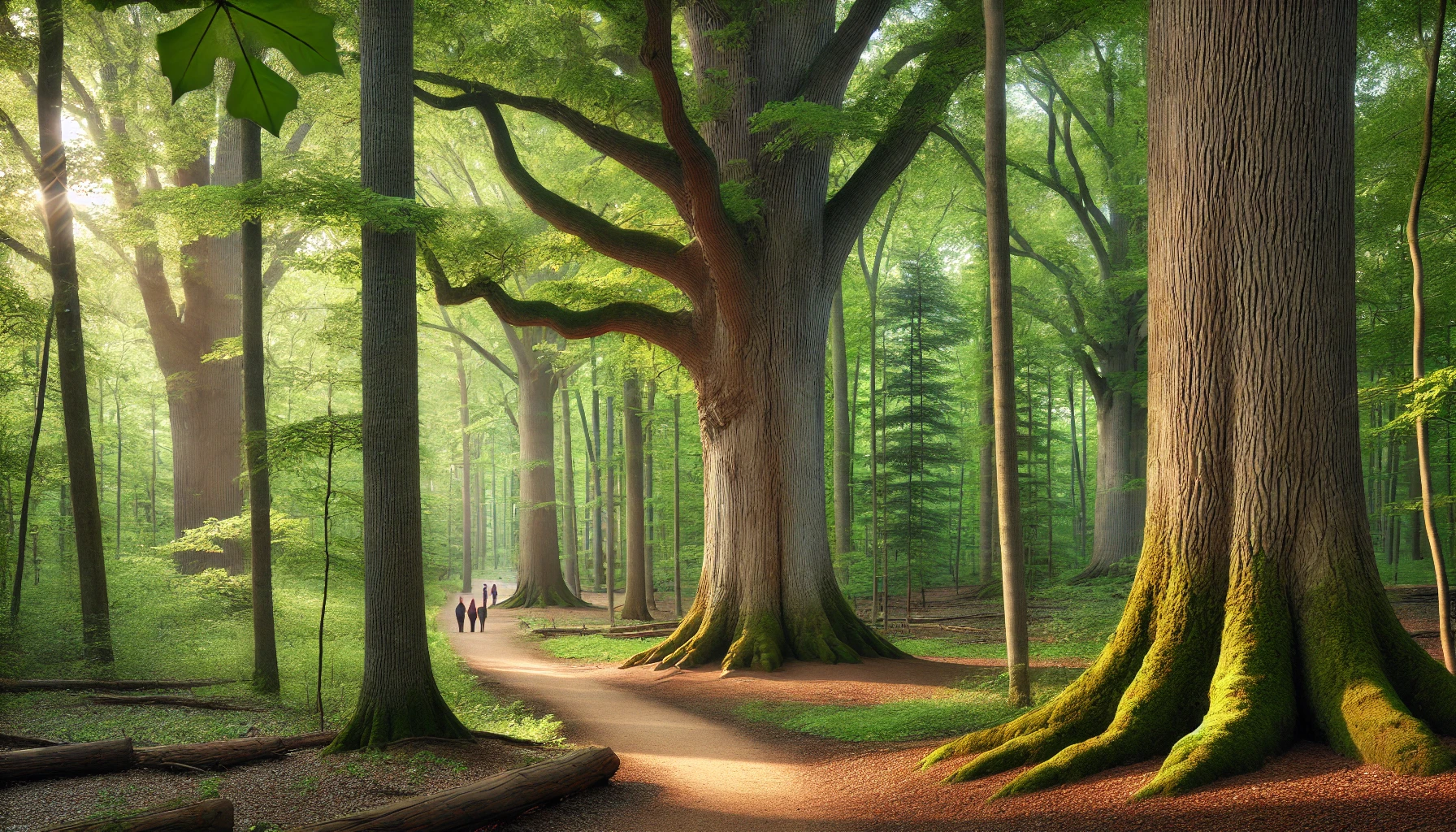
If you love nature, photography, or just the feeling of standing next to something truly massive, searching for champion trees near Lewis Center Ohio is one of the most rewarding “local adventures” you can take. Central Ohio doesn’t have mountain redwoods, but it does have towering hardwoods, creek-bottom giants, and old forest pockets where trees have had decades (sometimes centuries) to grow into living landmarks.
This guide explains what champion trees are, where you can realistically see big-tree habitat near Lewis Center, which species to look for, and how to explore responsibly—without wasting time chasing rumors or trespassing onto private property.
What “Champion Trees” Actually Means in Ohio
A champion tree is the largest known tree of its species within a specific area—often a state. In Ohio, the state’s champion tree program tracks the biggest measured specimens, and trees earn a “score” based on a standard big-tree formula that combines trunk circumference, tree height, and average crown spread.
That matters because “big” isn’t just about height. Some champion trees are shorter but unbelievably thick, while others are tall and straight with wide crowns. A true champion is a complete package: size, height, and canopy presence.
Why the Lewis Center Area Is a Great Place for Big-Tree Hunting
Lewis Center sits in a sweet spot for tree lovers: close to river corridors, glacial landscapes, and park systems that protect mature woods. This region’s mix of upland hardwood forests (oak, hickory, maple, beech) and stream/creek habitats (sycamore, cottonwood, willow) creates perfect conditions for big trees.
Another reason the area shines is access. You’re surrounded by public parks and preserves where you can walk trails, learn the land, and spot impressive trees without needing special equipment or backcountry skills.
How Big Trees Are “Made” (And Why Some Places Grow Giants)
Champion trees aren’t random. They usually come from places with a few key advantages: consistent moisture, protected soils, minimal disturbance, and enough space and sunlight for a crown to expand. Creek bottoms and floodplains often produce the largest trunks because water and nutrient cycles are generous.
In contrast, ridge tops and thin soils can still grow impressive trees, but the “true giants” tend to be found where conditions stay stable for decades—especially in protected forest pockets where logging or development didn’t reset the ecosystem.
Where to Explore Near Lewis Center Without Guesswork
When people look up champion trees near Lewis Center Ohio, they often expect a single “map of champion trees.” In reality, many of the biggest trees are either unmarked or located on private land, and official records don’t always share exact locations.
Your best strategy is to explore public places known for mature woods and ravines—areas that naturally support large, old trees. Near Lewis Center, start with wooded ravine parks and larger regional parks with established forest sections. You’re not just hiking—you’re scouting habitats where champion-size trees are most likely to exist.
A Local Favorite for Mature Woods: Char-Mar Ridge Park
Char-Mar Ridge Park (in the Lewis Center/Genoa Township area) is a strong pick because it features a wooded ravine system and trails that wind through classic Central Ohio hardwood habitat. Ravines often protect older trees from wind exposure and human disturbance, which increases the odds of finding tall trunks and wide crowns.
Even if you don’t find a documented “state champion,” you can still find trees that feel like champions—large beech, maple, oak, and hickory specimens that make you stop and look up.
Highbanks and Other Old-Forest Pockets Nearby
If you’re willing to drive a short distance, parks like Highbanks are famous for deep woods and scenic overlooks above river corridors. Areas like this can include older forest segments and mature tree communities where height and canopy development can be impressive.
Old forest sections are especially valuable for big-tree seekers because they’re less likely to have been recently cut or replanted. That means more time for trunks to thicken and crowns to spread—two things that help trees reach “champion-scale” measurements.
Species to Watch For Around Lewis Center
Not every species can grow into a “giant,” but several common Ohio trees can hit huge dimensions in the right conditions. When you’re scouting champion trees near Lewis Center Ohio, keep an eye out for these:
- American sycamore: Often the biggest-looking trees along water; massive trunks and high crowns.
- Tuliptree: Tall, straight, and fast-growing; can become one of the tallest trees in the region.
- White oak: Thick, powerful trunks and broad crowns; long-lived and iconic.
- American beech: Smooth gray bark and strong canopy presence; can be massive in older woods.
- Cottonwood: Floodplain giant that can grow extremely large, especially near rivers and reservoirs.
- Black walnut: Thick trunk potential and valuable hardwood; big specimens often stand out.
The trick is to look for mature habitat. Big sycamores usually mean water nearby. Big oaks often mean protected upland woods with stable soils and time.
How to Spot a “Potential Champion” on the Trail
You don’t need to measure every tree. Your eyes can narrow down candidates fast. Look for buttressed roots, unusually thick trunks, and a crown that dominates the canopy. Old trees often have textured bark, hollow sections, or large scars, but they still carry a healthy upper canopy.
A quick field tip: if you can’t comfortably wrap your arms even halfway around the trunk, and the canopy spreads wider than nearby trees, you may be looking at a serious contender.
The Simple Way to Measure Big Trees (Without Special Gear)
If you want to do it properly, big-tree scoring typically involves three measurements:
- Trunk circumference (measured at about 4.5 feet above ground on the uphill side).
- Total height (best measured with a clinometer, laser rangefinder, or a reliable phone method if you’re careful).
- Average crown spread (two measurements of the canopy spread taken at right angles, then averaged).
Even basic measurements can be valuable for personal records and comparison photos. If you’re serious, bring a cloth measuring tape and record tree species, location notes (trail landmarks), and approximate dimensions.
Why “Champion” Trees Aren’t Always Labeled (And Why That’s Normal)
Many people assume champion trees come with signs, fences, and photo ops. Most don’t. Some champion-sized trees are undocumented. Others are known but not advertised because they’re on private land or because heavy foot traffic can damage roots, compact soil, and stress the tree.
A better mindset is “big-tree discovery” rather than “trophy hunting.” You’ll have more fun, and you’ll protect the woods while you explore.
The Hidden Risk: Root Damage and Soil Compaction
One of the biggest threats to large trees is human attention. People step off-trail, crowd around the trunk, climb roots, and pack down the soil—especially during wet seasons. Compacted soil reduces oxygen for roots and can quietly weaken a tree over time.
When you find an impressive tree, admire it from a respectful distance. Take photos, zoom in, and stay on durable surfaces whenever possible. Big trees took decades to become legendary—protecting them is part of the experience.
Best Time of Year to Look for Big Trees Near Lewis Center
Each season has advantages. Late fall through early spring is great because leaves are down, making it easier to see trunk structure and canopy form. You can also spot big trees from farther away through the woods.
Late spring and summer are best for crown spread appreciation—when the canopy is fully leafed-out and you can see which trees truly dominate the forest ceiling. Just be prepared for mud on ravine trails after rain.
A Practical “Champion Tree Day Trip” Plan
If you want a simple plan for finding champion-scale trees without overthinking it, here’s a strong approach:
- Start early at a wooded ravine park near Lewis Center (like Char-Mar Ridge style terrain).
- Walk slowly and scan for the thickest trunks in shaded ravines and near streams.
- Take photos of the biggest candidates from multiple angles.
- Drive to a larger regional park with mature forest sections and repeat the process in a different habitat type (upland woods vs. creek corridor).
By comparing habitats in one day, you’ll quickly learn where the biggest trees tend to live.
Final Thoughts: What “Champion Trees Near Lewis Center Ohio” Really Offers
Looking for champion trees near Lewis Center Ohio is part nature walk, part treasure hunt, and part local history lesson—because every giant tree is proof of what the land has survived and what has been protected. You may not always find a formally documented champion on your first trip, but you will find impressive trees, learn which habitats produce giants, and build a personal map of “wow” moments worth revisiting.
If you treat the search like exploration—respecting trails, staying off roots, and appreciating the ecosystem—you’ll get the best of both worlds: unforgettable views and a healthier forest for the next person who looks up and wonders, “How did that tree get so big?”