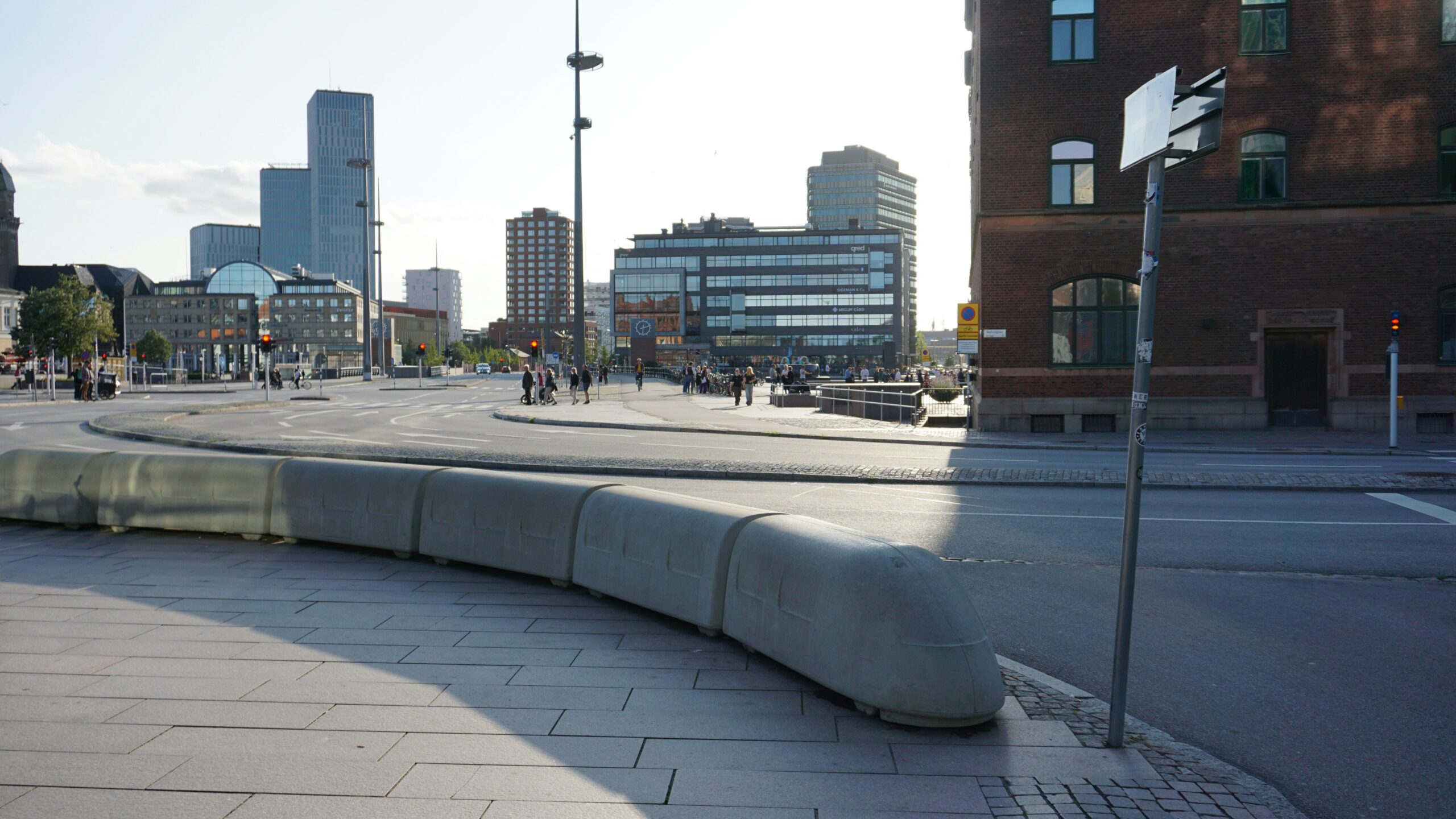
Barrier systems help to keep both workers and pedestrians out of harm’s way on work sites and in public spaces. In various industries, from construction to logistics, well-placed barriers create clear boundaries, reduce collision risks, and help operators meet Health and Safety Executive (HSE) and Department for Transport (DfT) rules.
Why barriers matter
UK law requires that pedestrians and vehicles on shared routes do not endanger each other or people working nearby. The HSE advice is to separate footpaths from vehicle routes where possible, and use suitable barriers or guard rails where they can’t be fully split. This principle applies as much to a warehouse loading bay as to a busy city-centre roadworks scheme. When barriers are used correctly, they reduce the chance of slips, trips, and vehicle-pedestrian collisions that can lead to serious injury or even fatality.
Last year, the HSE and sector-specific campaigns highlighted that many workplace incidents still arise at the interface between moving vehicles and people. That has encouraged contractors to standardise barrier layouts, signage, and lighting around walkways and site entrances. Temporary barriers that are easy to deploy and clearly marked, such as Chapter 8-style road-work barriers, are common on streets and construction sites, helping to channel traffic and protect anyone passing by.
Barriers protect workers
For workers, barriers act as a physical “buffer” between hazardous areas and safe zones. On construction sites, for example, guardrails and mesh-panel systems can separate working platforms, scaffolding edges, and excavation faces from traffic routes and pedestrian walkways. This lowers the risk of someone being struck by a reversing vehicle or falling into an open edge, which is especially important given that falls from height remain a leading cause of construction tragedies in the UK.
Barrier systems are also used around machinery and equipment where there are risks of entanglement or impact. In warehouses and factories, pedestrian-safety-barrier systems with open or mesh infill panels create protected workways and keep people clear of forklifts and conveyors.
Barriers protect pedestrians
From the public’s point of view, barrier systems turn potentially chaotic zones into clearly structured routes. Towns and cities use temporary and modular barriers during events, roadworks, and major infrastructure projects. Crowd-control barriers and Chapter 8-style street-works barriers help organisers create safe walkways, separate public areas from live traffic, and restrict access to unauthorised spaces.
During busy periods (e.g. city-centre engineering works or large public gatherings), these systems prevent people straying into restricted or high-risk areas.
Street-works sites are required to comply with Temporary Street Works legislation, which demands highly visible, stable barriers accompanied by warning signage. Recent UK guidance notes that adverse weather or night-time conditions can quickly increase risk, so barriers must be robust enough to withstand wind and vehicle impact while remaining easy to reposition as the works progress. In practice, this means concrete-based or weighted systems alongside reflective panels and lighting to keep both motorists and pedestrians aware of the works.
Companies and projects
Companies that supply and install barrier systems help with compliance and practicality. For example, JP Concrete (jpconcrete.co.uk) offers concrete-based products that can be integrated into site layouts to form temporary barriers. These elements can help stabilise barrier lines, mark out safe zones, and reduce the likelihood of a vehicle breaking through into a pedestrian or worker area.
Several large-scale infrastructure projects have used similar barriers for safety. For government-funded schemes, HSE “spot checks” and stricter working-at-height protocols have encouraged contractors to pair physical barriers with other controls such as CCTV, access-control systems, and clear signage. Where pedestrians and workers share space with temporary traffic routes, the combination of well-installed barriers, lighting, and site-specific rules has become the expected standard.