Concrete driveway cracks are more than a cosmetic issue. Once water enters the gap, it can weaken the base, expand during cold weather, collect weeds, and turn a small surface line into a deeper structural problem.
The frustrating part is that many homeowners try to patch cracks quickly, only to see the filler sink, split, or peel away after a few months. This usually happens because the crack was not cleaned, widened, backed, or sealed correctly.
The good news is that you can fix cracks in concrete driveway surfaces properly with the right preparation, suitable filler, and a flexible seal. The key is not just filling the crack, it is cleaning, shaping, supporting, sealing, and curing it in the right order.
How to Repair Cracks in Concrete Driveway the Right Way?
Repairing concrete driveway cracks starts with understanding the crack size, depth, and movement. A hairline surface crack needs a different product than a deep, moving gap. The best repair combines cleaning, backer rod, flexible sealant, surface finishing, and proper curing.
Step 1: Inspect the Crack Before You Start
Before you repair anything, look closely at the crack and decide whether it is cosmetic, active, deep, or structural. A thin hairline crack may only need liquid crack filler, while a wide or deep gap usually needs a backer rod and flexible polyurethane sealant.
This step matters because concrete naturally expands and contracts with temperature changes. If you use a rigid patching material in a moving crack, it may break away later. Flexible sealants are commonly used where movement is expected because they can stretch better than hard cement patches.
Check whether the crack is level or raised. If one side of the driveway has lifted, sunk, or created a trip hazard, the issue may be deeper than surface cracking. In that case, a professional inspection from a driveway contractor in Hertfordshire may be safer than a simple DIY repair.
Look for signs such as:
- Crack width wider than 1/4 inch
- Deep gaps over 1/2 inch
- Crumbling edges
- Water pooling near the crack
- Uneven concrete slabs
- Repeated cracking after previous repairs
If the crack keeps widening, it may be caused by ground movement, drainage failure, poor base preparation, or heavy vehicle load. Filling it may improve appearance, but the underlying cause still needs attention.
Step 2: Clean, Widen, and Prepare the Crack
Preparation is the most important part of concrete crack repair. Even the best filler will fail if it is applied over dirt, dust, moss, weeds, oil, or loose concrete. The filler needs clean concrete edges so it can bond properly.
Start by removing loose material with a cold chisel and hammer. Chip away weak or crumbling edges until you reach firm concrete. This may make the crack look slightly larger, but it creates a stronger repair area.
Next, scrub the crack with a wire brush. Remove dirt, weeds, sand, old filler, and broken concrete pieces. A pressure washer can help clean the gap deeply, but the crack must dry fully before applying most sealants or patching compounds.
For narrow, tight cracks, widen the opening to about 1/4 inch using an angle grinder or masonry tool. This gives the filler enough space to flow in and grip the sides. A very thin surface opening often prevents proper penetration.
After cleaning, vacuum or blow out all the dust. This final dust removal is critical because concrete powder can act like a barrier between the driveway and the filler.
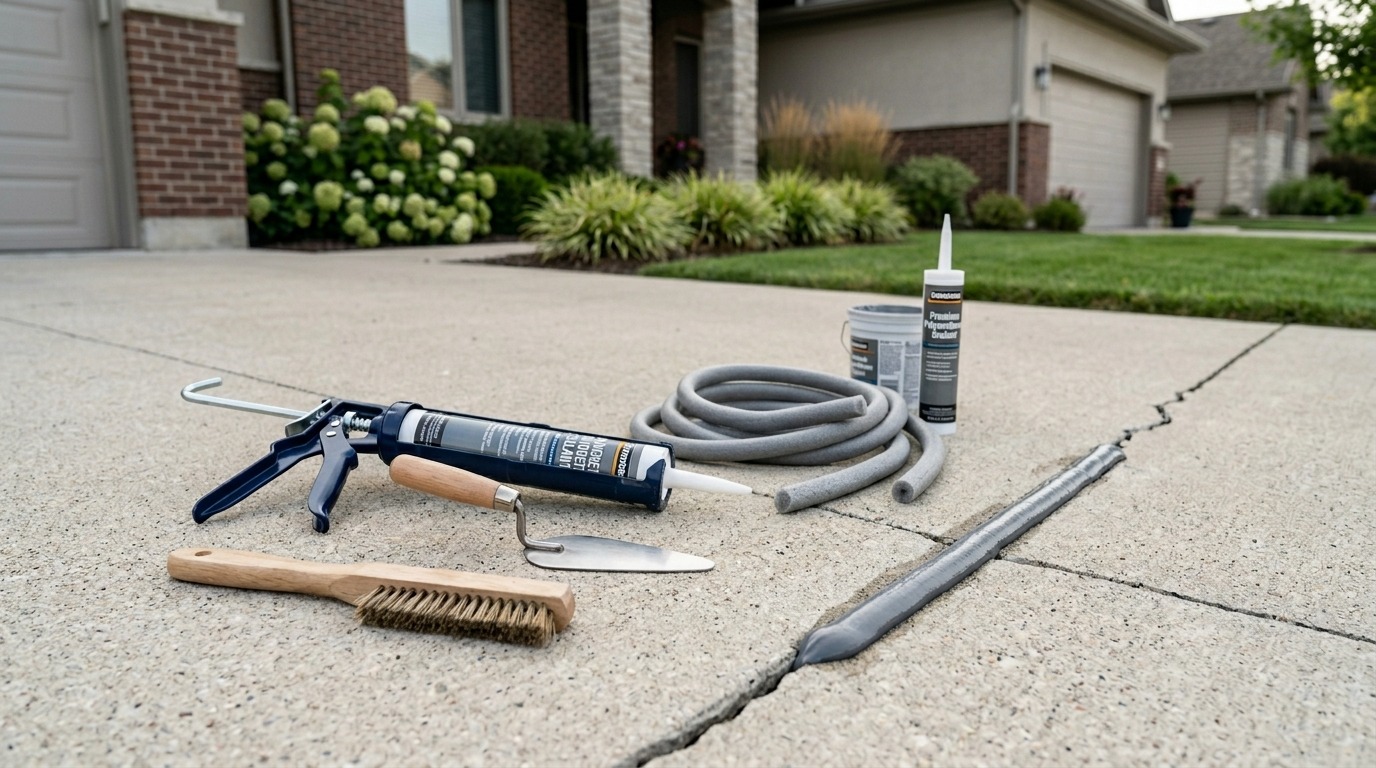
Useful tools include:
- Cold chisel and hammer
- Wire brush
- Pressure washer or garden hose
- Wet/dry vacuum or blower
- Angle grinder for narrow cracks
- Safety glasses and gloves
Step 3: Add Backer Rod for Deep Cracks
If the crack is deeper than 1/2 inch, do not fill the whole gap with sealant. Insert a foam backer rod first. This reduces material waste, controls sealant depth, and helps the sealant form the right shape inside the crack.
A backer rod is a flexible foam rope pushed into the gap before sealant is applied. It supports the filler from below and prevents the sealant from sinking too deeply. It also helps the sealant bond to the sides of the crack instead of sticking to the bottom.
This is important because sealants work best when they can stretch between two sidewalls. If the filler sticks to the bottom and both sides, movement can pull it in three directions and cause early failure. A backer rod helps prevent that problem.
Choose a backer rod slightly wider than the crack so it fits snugly. Press it down with a blunt tool, not a sharp screwdriver, because puncturing the foam can affect performance. Leave enough depth above it for the sealant layer.
A good general rule is to keep the sealant below the surface level rather than overflowing onto the driveway. This helps protect the repair from tyre contact, foot traffic, and messy surface buildup.
Use backer rod when:
- The crack is deep
- The gap is wider than a hairline crack
- Sealant would otherwise sink
- You want a flexible, longer-lasting repair
- You are sealing expansion-style gaps
Step 4: Apply Concrete Crack Filler or Polyurethane Sealant
Once the crack is clean and backed, choose the right filling product. For small hairline cracks, a liquid crack filler or vinyl concrete patching compound may be enough. For larger or deeper cracks, a flexible self-leveling polyurethane sealant is usually a better choice on horizontal driveway surfaces.
Self-leveling sealants are designed to flow into horizontal cracks and settle smoothly. Polyurethane sealants are often used for concrete joints and moving cracks because they stay flexible after curing. This makes them suitable for driveways exposed to weather, water, and vehicle load.
Cut the sealant nozzle to match the crack width and use a caulk gun for controlled application. Move slowly along the crack and press the material into the gap. Avoid rushing, because air pockets can weaken the repair.
Keep the filler slightly below the driveway surface. If it rises too high, it may collect dirt, catch tyres, or look uneven. Use a trowel or putty knife to smooth patching compound, but allow self-leveling sealant to settle naturally unless the product instructions say otherwise.
For rough patches or broken edges, a concrete patching compound may be needed before sealing. Large missing chunks, spalled areas, or edge damage may require a stronger repair method than simple crack filling.
Best product choices include:
- Liquid crack filler for hairline cracks
- Vinyl concrete patch for small surface repairs
- Polyurethane sealant for moving cracks
- Self-leveling sealant for horizontal driveway gaps
- Concrete patching compound for wider rough patches
Step 5: Finish, Blend, Seal, and Cure the Repair
After applying the filler, focus on finishing. A fresh crack repair may look darker or smoother than the surrounding driveway. To reduce the colour difference, sprinkle dry concrete dust or clean sand lightly over wet sealant before it skins over.
This does not make the repair invisible, but it helps it blend better with older concrete. Avoid overloading the wet sealant with too much sand, because that can weaken the top surface or create a gritty ridge.
Let the repair cure according to the manufacturer’s instructions. Many products need 24 to 48 hours before heavy use, but cure time can vary based on temperature, humidity, product type, and crack depth. Always follow the product label for traffic and weather exposure times.
Once cured, consider sealing the driveway surface if the concrete is porous or weathered. A suitable concrete sealer can help reduce future water infiltration, surface dusting, and staining. However, sealing should only be done after the crack repair is fully cured.
Do not pressure wash, park heavy vehicles, or drag bins over the repaired area too early. Early stress can disturb the bond before the product reaches full strength.
Best Materials to Fix Cracks in Concrete Driveway
Choosing the right material depends on crack size, depth, and movement. A thin crack may need a simple filler, but a wide driveway gap needs a flexible sealant and backer rod. Matching the product to the crack is what makes the repair last.
Concrete sealant is best for cracks that are open but not severely broken. It fills the gap, blocks water, and allows some movement. This is often the right choice for long driveway cracks that expand and contract.
Concrete patching compound is better for chipped edges, shallow holes, and rough damaged areas. It gives more body than liquid sealant and can be shaped with a trowel. However, it may not perform as well in cracks that continue to move.
A full residential driveway replacement may be needed when cracking is widespread, slabs are sinking, or the driveway has serious drainage and base failure. In those cases, repeated patching can become a short-term fix rather than a long-term solution.
Use this simple guide:
- Hairline cracks: liquid filler
- Deep cracks: backer rod and polyurethane sealant
- Rough broken edges: patching compound
- Sunken slabs: professional assessment
- Multiple structural cracks: replacement may be better
A professional driveway contractor can also check whether poor sub-base preparation, tree roots, water damage, or overloaded vehicles are causing repeated cracking.
When to Call a Driveway Contractor in Hertfordshire?
DIY crack repair works well for small to moderate driveway cracks. But not every crack should be handled with a tube of sealant. If the damage affects levels, drainage, safety, or the driveway base, professional help is usually the smarter option.
Call a contractor if the driveway has uneven slabs, large cracks, deep separation, drainage problems, or recurring damage after previous repairs. These signs may point to base movement or structural weakness rather than simple surface cracking.
A trusted driveway contractor in Hertfordshire can inspect the driveway, identify the cause, and recommend whether crack repair, resurfacing, or replacement is the right option. This is especially important for homes with heavy vehicle use, sloped driveways, or poor water runoff.
Professional repair may include routing cracks, applying industrial-grade sealants, resurfacing damaged areas, improving drainage, or replacing failed sections. If the driveway is too damaged, residential driveway replacement may provide better long-term value than repeated temporary patching.
You should get expert advice if:
- Cracks keep returning
- Concrete has sunk or lifted
- Water pools after rain
- Edges are breaking away
- The surface is heavily spalled
- You plan to sell or upgrade the property
A professional finish also improves kerb appeal, safety, and long-term driveway performance.
FAQs
Can I repair concrete driveway cracks myself?
Yes, you can repair small to medium concrete driveway cracks yourself if the slab is still level and structurally stable. The process usually involves cleaning the crack, removing loose concrete, inserting a backer rod for deep gaps, applying flexible filler, and allowing it to cure properly. DIY repair is best for non-structural cracks.
What is the best filler for concrete driveway cracks?
The best filler depends on the crack size. For hairline cracks, a liquid concrete crack filler or vinyl patching compound can work well. For wider or deeper driveway cracks, a flexible polyurethane sealant is usually better because it can handle expansion and contraction.
Should I seal my driveway after repairing cracks?
Yes, sealing the driveway after crack repair can help protect the concrete from water penetration, stains, surface wear, and future damage. However, you should wait until the crack filler has fully cured before applying any driveway sealer. Curing time depends on the product, weather, and crack depth.
When is driveway replacement better than crack repair?
Driveway replacement is better when cracks are widespread, slabs are uneven, the surface is crumbling, or water drainage has damaged the base. If you keep repairing the same cracks and they return, the issue may be structural. In that case, filling cracks only hides the problem temporarily.
A professional contractor can assess whether resurfacing, section replacement, or full residential driveway replacement will deliver better value and durability.
Repair Cracks Early Before They Spread
Concrete driveway cracks are easier and cheaper to repair when they are handled early. The right process is simple: clean the crack, remove loose material, widen narrow gaps, add backer rod for depth, apply the right filler, and let it cure properly.
For small cracks, DIY repair can work well. For sinking, spreading, or repeated cracks, a professional driveway contractor in Hertfordshire can help protect your driveway, improve safety, and prevent costly replacement later.