
There are two kinds of dentist appointments. The first catches you off guard — a tooth that cracks on a Sunday afternoon, a throbbing pain that builds through the night until waiting is no longer an option. The second is chosen, planned, and often surprising to people who hadn’t considered it: the same clinic where you get your check-up is also where Wimbledon residents are now going for facial aesthetic treatments. Understanding both — what each involves, and what to expect — makes both considerably less stressful.
When Dental Pain Becomes an Emergency: Knowing the Difference
The question most people face in the middle of a dental crisis is whether their situation actually qualifies as an emergency — or whether they should just wait it out until Monday morning, or until the next available routine appointment. The honest answer is that this ambiguity costs people more pain and, in some cases, more money than getting it checked promptly would have.
Not every bout of tooth sensitivity warrants an emergency visit. A minor chip with no pain, a loose crown with no discomfort, mild soreness after dental work — these can typically wait for a scheduled appointment. But the following situations are different, and treating them as urgent is the right call:
- Severe, persistent toothache — particularly if it throbs when you lie down, radiates to your jaw or ear, or doesn’t respond to over-the-counter painkillers. This pattern typically signals nerve involvement, infection, or both. Pain that keeps you awake at night is not something to manage with paracetamol and patience.
- Facial swelling — any swelling around the jaw, under the chin, or spreading towards the neck needs same-day assessment. A dental abscess can, in rare cases, progress to a serious infection if left untreated. Rapid swelling that develops over 12 to 24 hours is particularly significant.
- A knocked-out adult tooth — this is a genuine time-critical emergency. The best chance of reimplanting the tooth successfully is within 30 to 60 minutes of the injury. Handle the tooth by the crown only, not the root. Keep it moist — in milk, in saliva, or held carefully between your cheek and gum — and get to a dentist immediately.
- A broken or cracked tooth that is causing pain or has exposed the inner layers — cracks that reach the pulp or nerve require prompt attention, even if they seem minor visually.
- Uncontrolled bleeding from the gums or soft tissue that doesn’t slow with gentle pressure after 15 to 20 minutes.
The common thread is the word ‘deteriorating.’ If a dental problem is actively getting worse, or if there is any sign of infection spreading beyond the tooth itself, don’t wait. Early intervention almost always means simpler, less expensive treatment.
What Happens at an Emergency Dentist Appointment
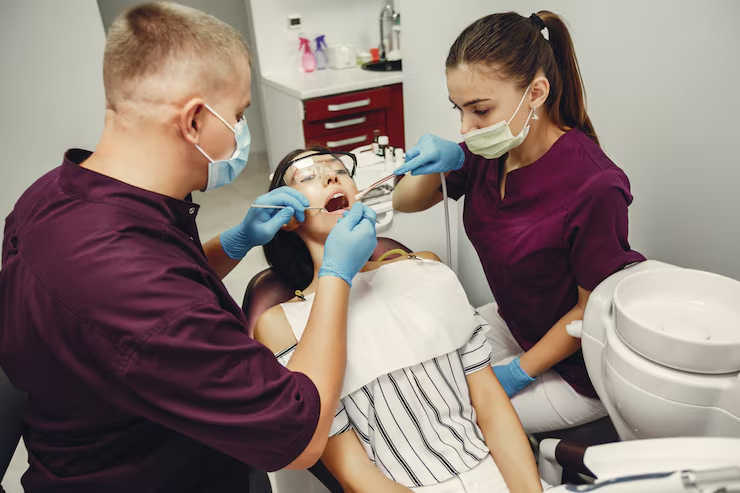
People who have never needed an emergency dental visit often imagine something chaotic and rushed. In reality, a well-run emergency appointment is structured and thorough — necessarily so, because identifying the true cause of acute pain requires a proper clinical assessment, not just a quick look and a prescription.
At an emergency dentist Wimbledon appointment, the process typically starts with a detailed clinical examination of the affected area, supported by X-rays to identify what’s happening beneath the surface — decay reaching the nerve, a fractured root, bone loss around an abscess, or an impacted tooth causing adjacent problems. That diagnostic picture determines the appropriate treatment.
Same-day treatments available during an emergency appointment include:
- Drainage of a dental abscess under local anaesthetic, with antibiotics prescribed where appropriate to address any active infection
- Emergency root canal treatment to remove infected pulp and relieve severe pain
- Extractions of teeth that cannot be saved
- Temporary filling placement to protect a tooth where a permanent restoration isn’t immediately possible
- Re-cementing of crowns, bridges, or inlays that have become displaced
- Pain management planning for patients who need a staged approach to treatment
A note on costs: emergency dental appointments at private practices in London are typically priced between £120 and £150 for an initial appointment, with treatment costs varying depending on what is required. Always ask for a written breakdown before treatment begins.
The Other Side of the Dental Chair: Aesthetic Treatments
The same practice that handles dental emergencies is, for many Wimbledon residents, also the place they go for anti-wrinkle treatments. That combination might seem unexpected, but it reflects something meaningful about why dental practices have become trusted providers of facial aesthetics in the UK.
Dentists spend a minimum of five years training in facial anatomy — the muscles, nerves, blood vessels, and structural relationships of the face and jaw. That knowledge is directly applicable to the precise, safe delivery of injectable treatments. In fact, dentists are among the most extensively trained practitioners in the UK aesthetics market when it comes to facial anatomy, and that expertise is one of the primary reasons patients feel confident choosing a dental practice for these treatments.
What Botox in Wimbledon Actually Involves
For people considering anti-wrinkle treatment for the first time, the process is often less involved than they expect. A botox Wimbledon consultation begins with a thorough assessment of the face — examining the movement and depth of lines when the face is both at rest and in motion, discussing what the patient wants to achieve, and explaining what is and isn’t realistic. Photographs are typically taken as part of the baseline record.
Conclusion
Whether you are facing an unexpected dental crisis or planning a subtle aesthetic enhancement, the modern dental practice is equipped to help. Recognizing the signs of an emergency—such as severe pain or rapid swelling—ensures you receive the prompt intervention needed to protect your health. Simultaneously, the profound expertise dentists possess in facial anatomy makes them uniquely qualified, trusted providers for treatments like Botox. Both types of visits rely on professional clinical skill to ensure your comfort and confidence.
The Dental Lounges
Author Name: Ankita Patel
Ankita Patel is a dedicated Dentist at The Dental Lounges, located in the heart of Cardiff, UK. With an extensive background in comprehensive patient care and a keen eye for the latest trends in dental health, Ankita serves as a vital resource for both her patients and the broader community. Outside the clinic, she dedicates her time to creating insightful and reader-friendly content for numerous esteemed online platforms.