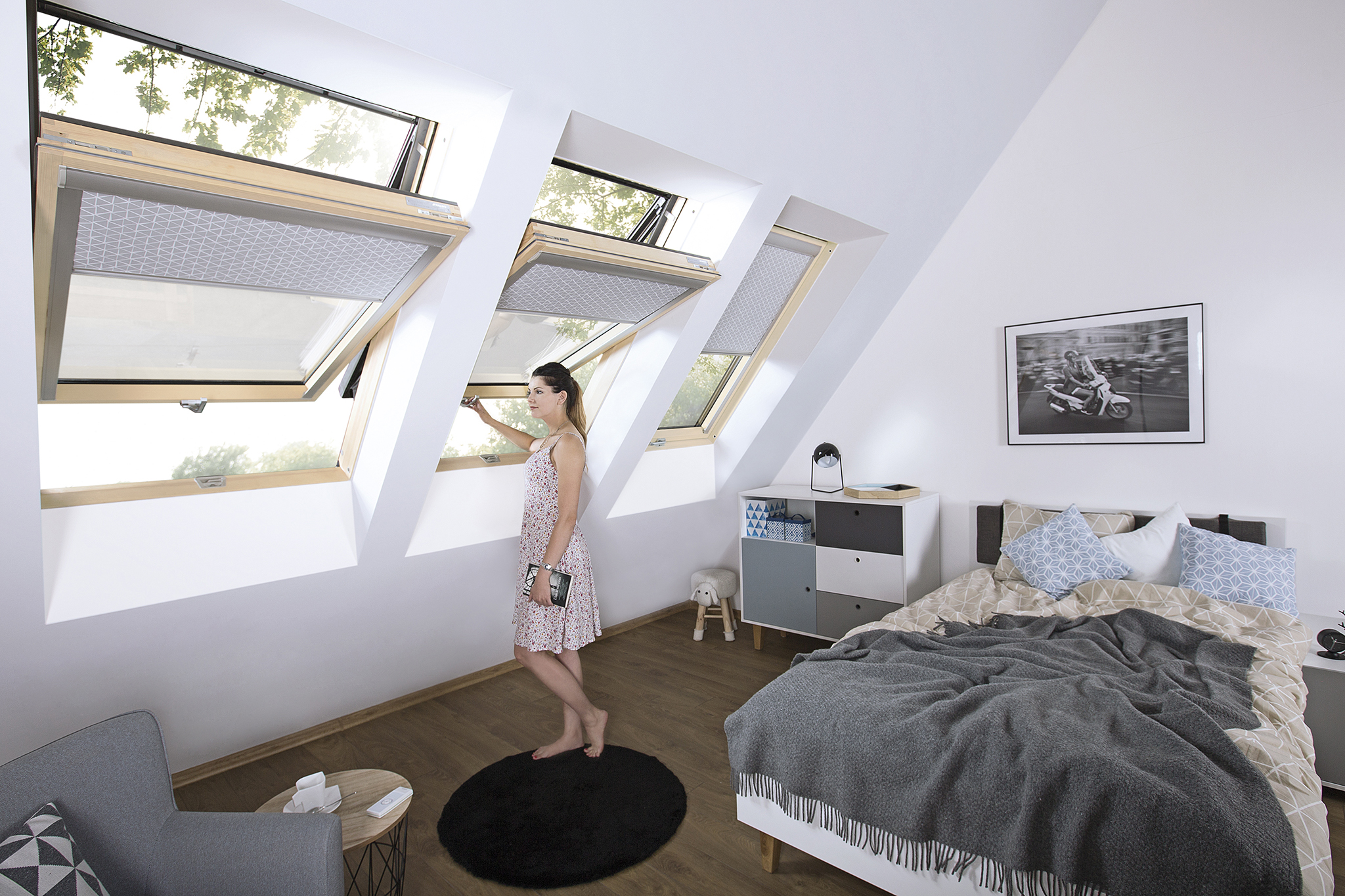
Instead of treating the attic as a separate zone, you can connect it with the rest of the house. Light, temperature, and airflow stop being manual tasks and become part of one system.
Why smart control matters in a loft
A loft reacts faster than other rooms. It heats up quickly and cools down just as fast. Opening a window at the right moment can completely change how the space feels.
With Z-Wave controlled roof windows, this no longer depends on remembering to adjust things. The system can react on its own or follow simple schedules. In practice, this means:
- less overheating during the day
- better airflow without constant opening
- more stable conditions overall
This is where smart home integration becomes practical, especially when the loft is used as a bedroom, office, or quiet living space.
How it works in everyday use
The idea is simple. Instead of controlling each element separately, everything works together. A loft can respond to:
- temperature
- sunlight
- time of day
- weather changes
That is what makes an automated loft feel different. You do not manage it all the time. It adjusts in the background.
For example, windows can open when the room gets too warm and close automatically when it starts raining. Lighting or heating can follow the same logic, so the room feels more consistent throughout the day.
3 steps to a smarter attic
1. Connect the windows
Start with Z-Wave controlled roof windows that can communicate with other devices.
2. Link key functions
Combine window opening with heating or lighting so they react together. This helps avoid situations where one system works against another.
3. Keep it simple
A few rules are enough:
- open when temperature rises
- close during rain
- improve airflow in the evening
- lower heating when ventilation is active
This is usually enough to make an automated loft work smoothly without making the setup feel complicated.
What changes in comfort
The difference builds over time. A loft with smart control:
- stays comfortable with less effort
- uses less energy for cooling
- reacts faster to changes
- feels easier to use in different seasons
This matters most in warmer months, when heat builds up quickly. It also helps in winter, when ventilation needs to be controlled without losing too much warmth.
A practical approach
The goal is not more technology, but better use of it. If you want to explore how these solutions work in practice, you can find relevant options on the Fakro website at https://www.fakro.co.uk/products/all-products/roof-windows/centre-pivot-windows-z-wave-controlled/.
Where it works best
Smart control works best in spaces that get a lot of sun, are used at different times, and need regular ventilation. A loft usually fits all of these conditions, which is why it becomes easier to treat it as part of the whole home.