A cork board – a simple tool, real results
Is your desk constantly cluttered with notes and sticky papers? Do you find yourself spending precious minutes searching for a password, deadline, or that idea you jotted down somewhere that was definitely somewhere around? Losing control of your information flow is one of the most common reasons for productivity decline – both in knowledge work and in learning.
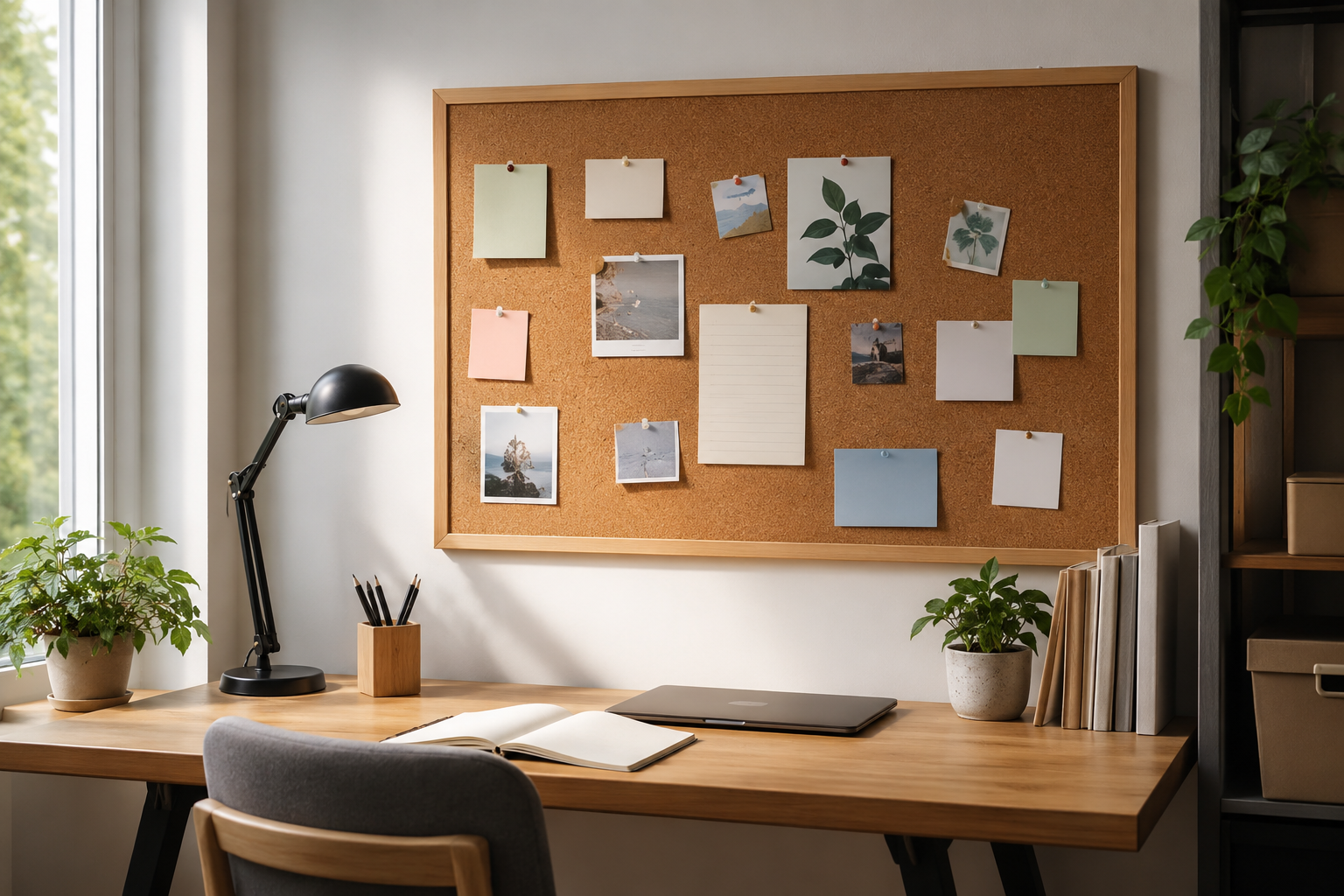
In a world dominated by apps and digital tools, it’s easy to overlook how powerful analogue solutions can be – especially ones that let you see everything that matters in real time. A cork board lets you pin notes, flashcards, reminders, and documents with classic pushpins, keeping all your key information immediately visible, in physical form, and right in front of you.
It requires no login, no updates, and no battery – and yet it can serve as a personal system for capturing information, tracking progress, and sparking inspiration.
It’s precisely this combination of instant visibility, flexibility, and full control that keeps cork boards relevant no matter how much technology evolves. And importantly – they work just as well for highly organized individuals as for those who are still building their planning habits.
Why a cork board actually works
- Boosts productivity and focus – clearing visual clutter is a genuine relief for the mind. When the most important information is right in front of you, you’re far less likely to lose focus or shift priorities throughout the day.
- Helps with task management and time planning – your board can become a true action map. Pin project timelines, lay out weekly goals, or sort tasks by priority — all in one place.
- Keeps information in place – instead of going through the same organizational routine from scratch every day, the board becomes your reference point. What’s pinned stays pinned, so you don’t have to keep it all in your head.
- Encourages creativity and strategic thinking – combine working notes, motivational quotes, images, and color-coded labels in one space. The board doesn’t just organize your tasks – it actively inspires new ideas and fresh thinking.
Practical uses for a cork board
Cork boards adapt to virtually any work or study style. They’re equally effective for freelancers, project managers, teachers, university students, and school pupils. They’re a great support tool for:
- Home and in-office work – a cork surface is ideal for managing tasks and deadlines. Use it as a weekly or monthly planner, pin priority lists, key dates, or meeting summaries. In a shared office, it can become a team information hub.
- Studying and exam prep – students can pin flashcards, vocabulary lists, draft outlines, and revision schedules. This keeps you in constant contact with the material and makes it easy to plan structured review sessions using a step-by-step approach.
- Creative projects – use it as a mood board for visual inspiration on graphic design, blog, or product projects. It’s also perfect for DIY projects, campaign planning, or mapping out ideas you want to bring to life.
How to get started
The best approach is to give the board one specific purpose rather than turning it into an all-in-one information centre right away. For example: make it your “weekly plan,” your current project priorities, or your revision schedule before an exam. A focused starting point will help you avoid overwhelm and give the board a clear, immediate purpose.
After a few days – once working with the board feels natural – you can gradually expand its scope: add an inspiration section, a long-term goals list, a professional development timeline, or a space for creative ideas.
The key principle is to keep the board clear, logical, and readable at a glance. Its purpose is to organize information, not multiply it – so it’s better to update it regularly than to let it become overcrowded and lose its effectiveness.
Aesthetics and layout
The way you arrange your cork board has a direct impact on how you use it – and how willingly you return to it every day. Aesthetics here aren’t just about looks – they affect cognitive comfort, meaning how easily you can process what you see. The cleaner and more logically structured the board, the faster you can “read” it without effort – and that, in turn, keeps you motivated to stay organized. Pay particular attention to:
- A clear layout – group information thematically (e.g., this week’s priorities, long-term goals, inspiration) rather than pinning things in random order.
- A consistent colour scheme for notes and pins – using colours intentionally builds a system where each colour signals a category (e.g., Project A, personal goals, study material, urgent tasks).
- Minimalism instead of clutter – keep the board up to date, but not overcrowded. Too many elements in one place creates the opposite effect — the chaos just moves to the wall.
- Leaving some empty spaces – leaving some areas deliberately empty makes the board look purposeful and inviting, rather than overwhelming.
- A consistent arrangement – pin notes, images, and documents in a logical order (e.g., left to right by priority or timeline), which helps build a natural habit of engaging with your information daily.
In summary
A cork board brings together the best of minimalism, clarity, and full ownership of your workspace. It makes planning easier, helps organize your thoughts, supports consistent study habits, and genuinely improves the quality of your work – whether you’re in an office, at home, or working on an academic project. If you want to get on top of your tasks, work with greater intention, and bring reliable structure to your day, a cork board is well worth considering – just choose a model that fits your working style and personal needs. It’s a small change that can make a surprisingly big difference to your everyday routine.