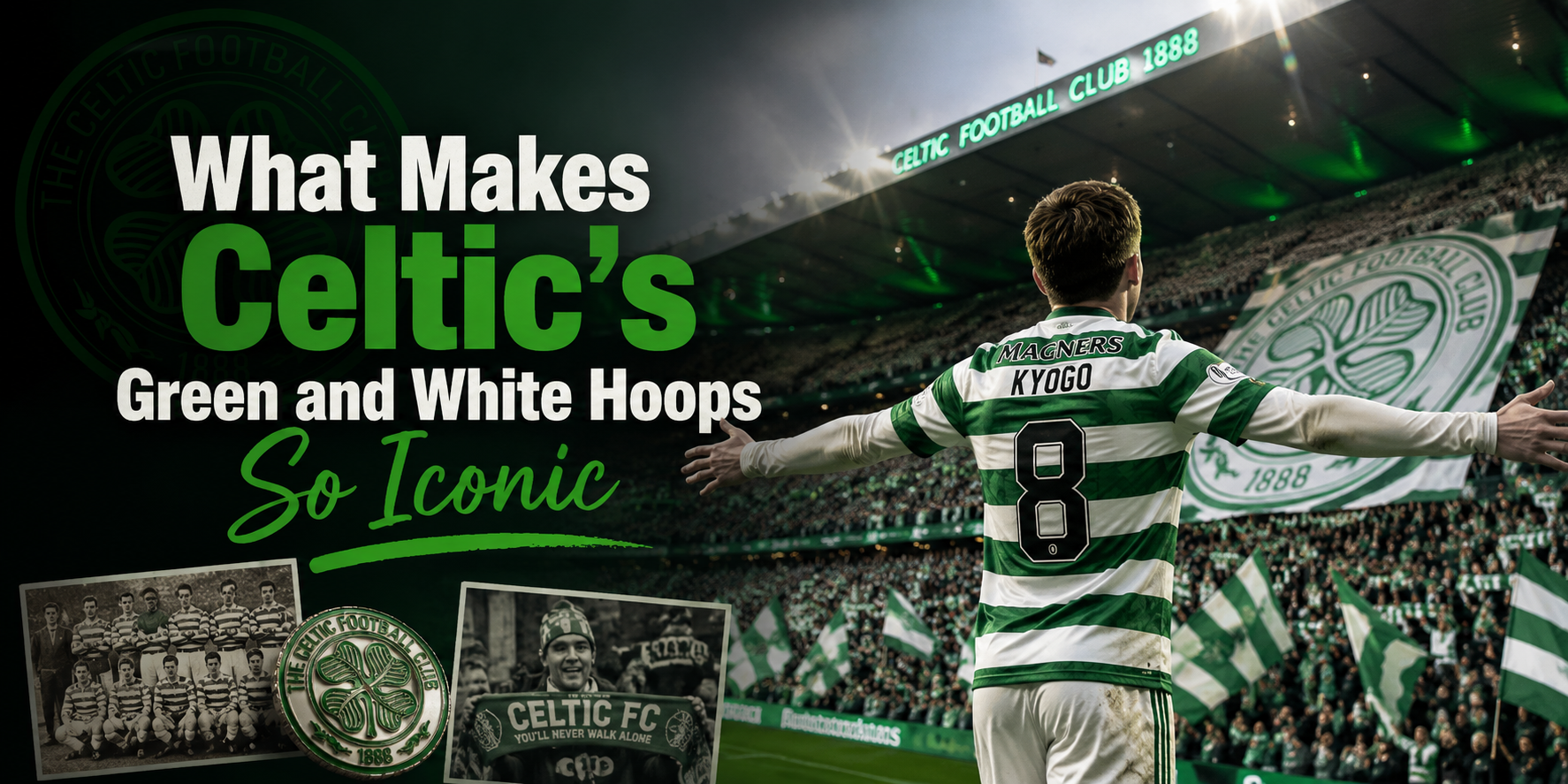
Celtic’s green and white hoops are iconic because they combine a genuinely rare kit design with more than a century of history, identity, and success. Very few major clubs play in horizontal hoops, and Celtic has worn them almost continuously since the early 1900s, making the pattern instantly recognisable and impossible to confuse with anyone else. The hoops aren’t just a kit, they’re the visual identity of the club and the community behind it.
What sets them apart is the meaning stacked on top of the design. The green and white ties directly to the club’s Irish heritage and its founding in 1888 to support the poor of Glasgow’s East End, so the colours carry a cultural weight that goes well beyond football. When people call the hoops iconic, they’re responding to both a distinctive look and everything it represents.
Why are horizontal hoops so unusual in football?
Most football clubs wear solid colours, vertical stripes, or halves, and horizontal hoops are genuinely rare at the top level. The design is harder to pull off, because hoops can look busy and were historically thought to make players appear shorter and wider, which is partly why so few clubs adopted them. Celtic committing to the pattern and sticking with it turned a potential disadvantage into an unmistakable trademark.
Celtic actually didn’t start with hoops. The club’s earliest kits used vertical stripes before switching to the green and white hoops around 1903, and the change proved so successful in cementing the club’s identity that it has been retained ever since. That longevity is a huge part of the iconic status, because a design worn consistently for over a century accumulates a recognisability that a frequently changed kit never can.
The rarity works in the club’s favour commercially too. Because almost no one else plays in green and white hoops, the pattern is strongly protected as a brand asset, and even a plain green-and-white hooped shirt reads immediately as Celtic to football fans worldwide. That kind of instant association is exactly what most clubs spend fortunes trying to build, and Celtic has it built into the shirt itself.
How do the colours connect to Celtic’s identity?
The green and white are inseparable from the club’s Irish Catholic roots in Glasgow. Celtic was founded to raise money for charitable causes in the immigrant Irish community of the city’s East End, and the green reflects that Irish heritage directly, giving the colours a significance that supporters hold onto fiercely. The kit is, in a real sense, a symbol of where the club came from.
This is why the design carries such emotional charge among fans. Wearing the hoops is an expression of belonging to a community and a history, not just support for a football team, and that depth of meaning is what elevates the shirt from sportswear to something closer to identity. Research into fan culture consistently links this kind of heritage-based attachment to unusually strong and durable loyalty, and Celtic’s support is often cited as an example.
The rivalry with Rangers sharpens it further. In a city divided along historic lines, the green and white hoops stand in direct visual and cultural opposition to Rangers’ blue, and that context loads the kit with additional meaning. The colours aren’t neutral, they’re a statement, which is part of why they provoke such strong feeling on both sides of the divide.
What does a Celtic shirt cost, and what should buyers know?
A current-season Celtic home shirt generally sits in the standard replica price band for a top club, with authentic player versions costing more and official name and number printing adding a further fixed amount. Retro and vintage hooped shirts occupy a separate market, where prices depend heavily on the season, condition, and whether the shirt is tied to a memorable trophy win, such as the 1967 European Cup-winning era or the treble seasons.
One quirk of the hooped design is worth knowing before you buy. Because the pattern is so consistent year to year, distinguishing one season’s shirt from another often comes down to the sponsor, the collar style, or the manufacturer, so collectors need to check those details carefully rather than relying on the hoops alone. This also means a well-kept older shirt can look almost identical to a current one at a glance, which affects both authentication and value.
For fans who want to compare the current options alongside classic designs, a dedicated range of Celtic shirts and kits makes it easy to see the home, away, and third variations together and to spot the season-specific details that set each apart. Buying from a seller who shows clear photos of the crest, sponsor, and tags protects you from reproductions, particularly on older hooped shirts where the pattern’s consistency makes fakes harder to catch by eye.
How the shirt’s appeal differs across fans and buyers
The hoops mean different things to different buyers, and that shapes what they look for. Committed local and diaspora supporters, especially across Ireland and Celtic’s large following abroad, buy the shirt as an expression of heritage and identity, and they tend to value authenticity and the connection to specific seasons. For them the emotional meaning outweighs any design trend.
Collectors focus on the significant eras, particularly anything linked to the 1967 Lisbon Lions who became the first British club to win the European Cup, or the dominant treble-winning seasons. Shirts from these periods carry both historical weight and scarcity, making them the most sought-after and the most likely to hold or grow in value over time. Authenticity and condition drive everything in this segment.
Casual and fashion-led buyers respond to the hoops as a striking, recognisable design, and the pattern’s boldness gives it appeal even to people with no connection to Glasgow. This broader reach, helped by Celtic’s global profile and the distinctiveness of the kit, means the shirt sells well beyond the traditional support base, which is unusual for a club outside the very biggest European leagues. Knowing which of these motivations is yours helps clarify whether you’re buying for heritage, history, or simply the look.
What to weigh before buying a Celtic shirt
If you want a shirt to wear and represent the club, a current-season replica gives you the authentic look at a reasonable price, while a quality retro reissue lets you connect to a celebrated era without hunting down a fragile original. If authenticity and history are the point, focus on genuine shirts from significant seasons with correct sponsors and intact tags, and expect the Lisbon Lions and treble eras to command a premium.
The thing worth keeping in mind is that the hoops themselves rarely change, so what dates a Celtic shirt and shapes its long-term value is the detail around them, the sponsor, the crest style, and the season’s story. Paying attention to which era a shirt belongs to, rather than just the familiar green and white, is what separates a considered purchase from one you might regret, and it’s the detail that will still matter long after the current kit has been replaced.