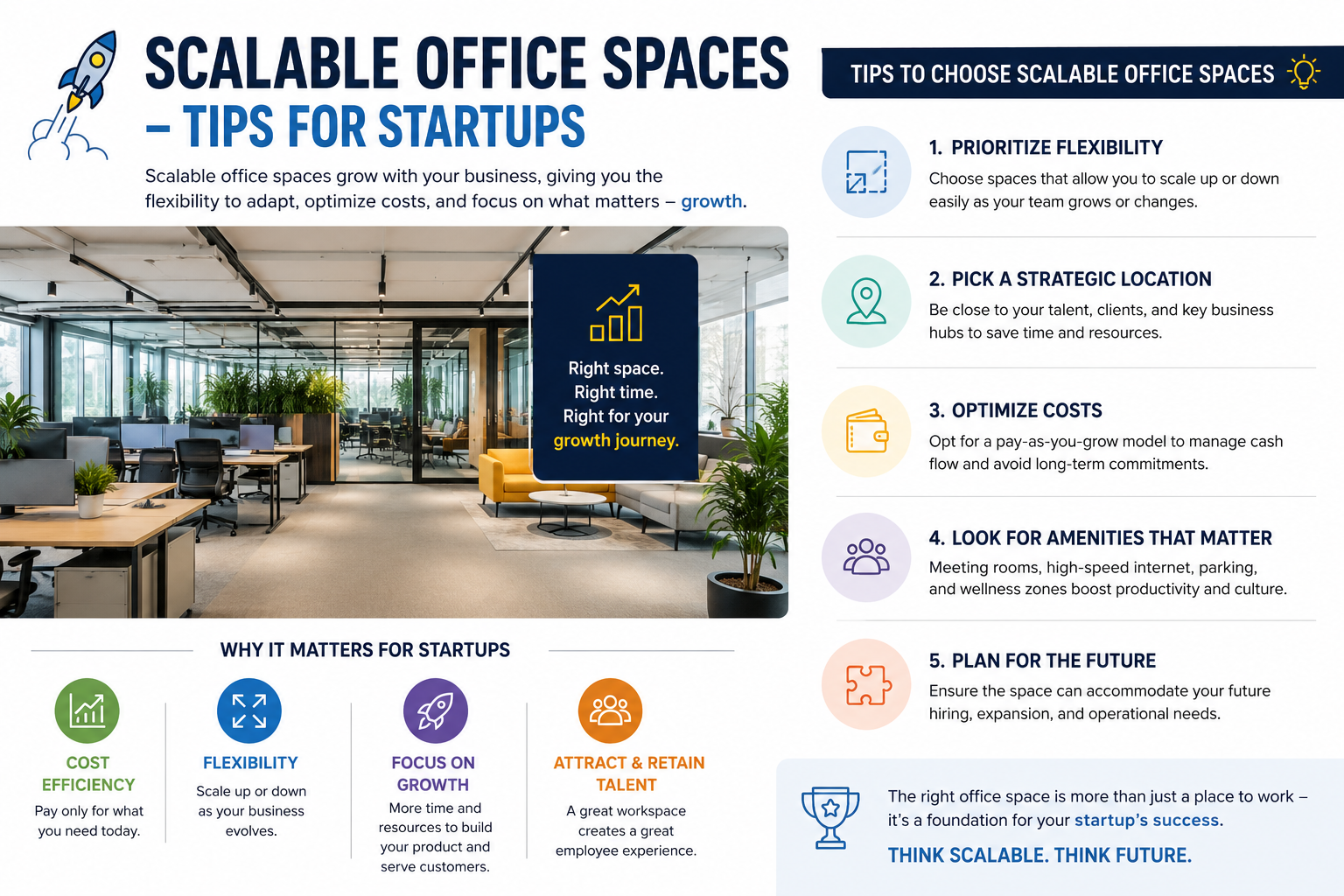
Startups know that nimbleness is key to their success.
As far as the physical space they occupy is concerned, this means the offices they use daily need to accommodate fluctuating staff numbers and be rapidly scalable.
That’s because the size, structure, and shift patterns of startup employees are liable to change quickly with the ups and downs of the business.
As such, a scalable office space is a must if the company is to navigate its growth spurts and its inevitable setbacks successfully.
By adopting a scalable approach to office space, startups can keep costs down and leases to a minimum, thereby giving themselves financial headroom and the space to pivot.
But how do startups find that sweet spot of having enough office space for now, but the room to scale quickly should the need arise?
Let’s find out.
Sign Flexible Leases
Startups need lease flexibility because they can never be what’s just around the corner.
A flexible lease arrangement or even a coworking membership gives startups the ultimate flexibility.
This will allow a startup to quickly and easily give up office space or occupy more floor space as the circumstances dictate.
Think Big
As a startup, things can change quickly, but as a general rule, it’s better to have too much office space on your hands than too little.
As ever with a startup, you need to keep your eyes fixed on where you are going, not where you have come from.
That means you should take on enough space for where you plan to be in the months ahead, not just where you are today, but remembering not to overstretch yourself financially.
Office occupancy rates may have fallen in the post-pandemic period, but startups will typically require 20–30% space headroom, allowing them to quickly scale up in-office employee numbers without running into overcrowding issues.
Focus on Function
It’s easy to think that as a plucky startup, you need a space that reflects your aspirations of becoming a world-beating brand.
But in the initial stages, you need to find an office space that is hyper-functional, not necessarily swish.
That means you need an office suite where the internet is reliable and has the bandwidth to accommodate new users, has both collaborative and quiet spaces for focused work, and has appropriate environmental controls so workers are comfortable.
Partition Space
Open-plan office spaces and hot desking are popular in-office working arrangements among many startups, although some have started to reconsider aspects of these layouts.
It’s well known that workers need noise control and an element of privacy to thrive – the trusty office partition has an important role to play in affording workers a sense of seclusion.
Partitions are not just useful for blocking sightlines, but they can also come fitted with sound-muffling acoustic materials, allowing you to cut out many of the aural as well as visual distractions an open-plan space is prone to.
Conclusion
The office space requirements for startups are often unique, idiosyncratic even.
But with the right approach to cost control, lease terms and by keeping an eye on the functionality of the space, a startup can find a space that is both usable and scalable.