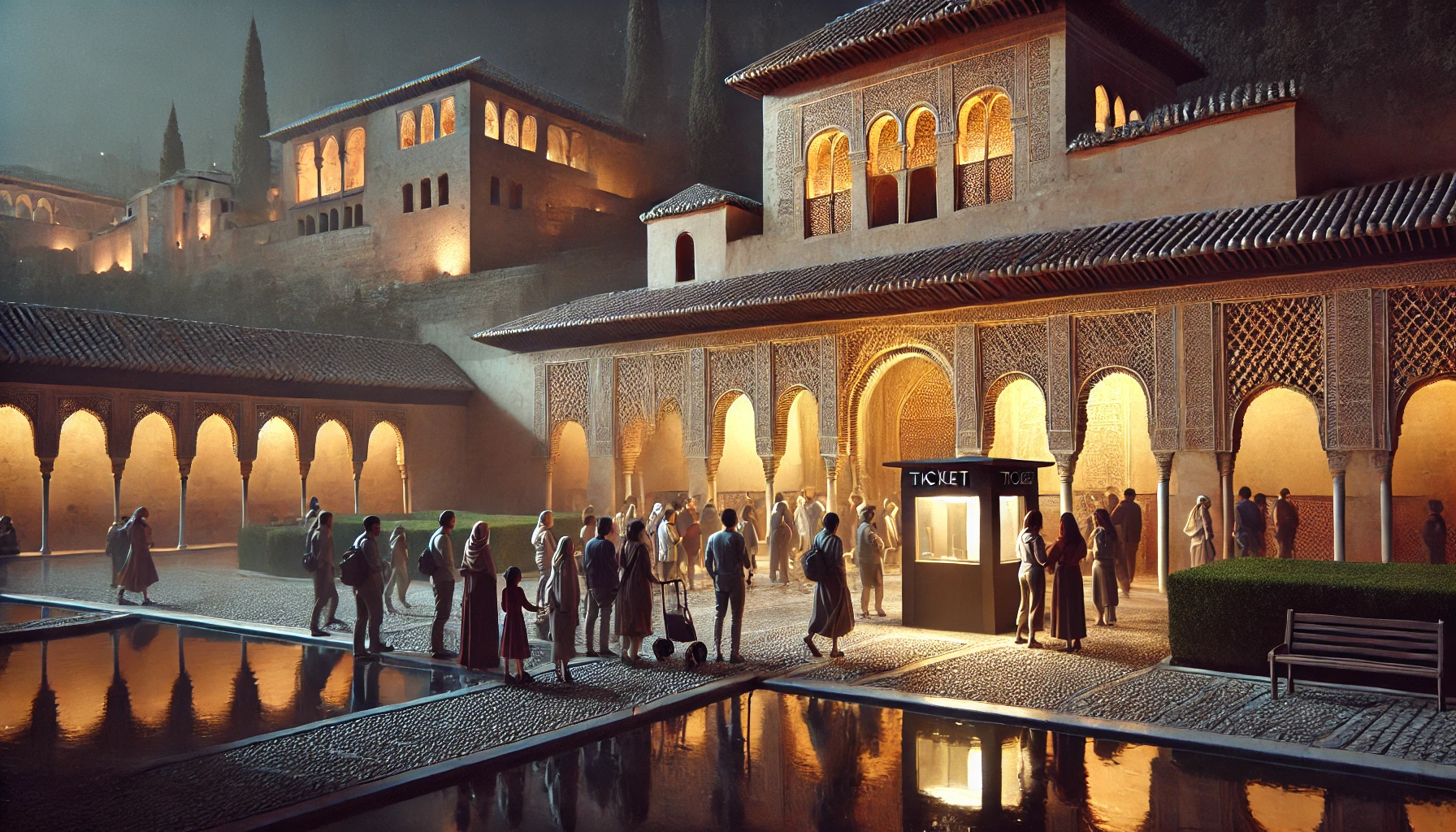
The Alhambra is already one of Europe’s most visited and admired heritage sites, but interest in Alhambra Palace night tour attendance revenue has increased sharply in recent years. The reason is simple: after-dark tourism has evolved from a niche experience into a strategic component of cultural tourism management, especially in destinations where daytime visitor capacity is strictly limited for conservation reasons.
Night tours at the Alhambra are not just about atmosphere and aesthetics. They play a measurable role in managing visitor demand, redistributing crowds, and generating additional income without exceeding preservation thresholds. While official reports usually focus on total annual visitors and overall revenue, night tours require a more nuanced, transparent analysis based on capacity rules, pricing, and operating schedules.
Why Night Tours Have Become Strategically Important
Cultural tourism has changed. Modern travelers increasingly seek curated, limited-access experiences rather than mass sightseeing. Night visits deliver a premium feel while allowing heritage managers to spread visitor traffic across more hours of the day.
For the Alhambra, this approach is especially valuable. Strict conservation policies limit daytime access, meaning revenue growth cannot rely on simply admitting more people. Night tours provide an alternative path by introducing high-demand time slots that respect preservation needs while adding economic value.
What an Alhambra Palace Night Tour Actually Includes
An Alhambra night tour is not a free-roaming experience. It is a carefully controlled, ticketed visit that follows specific routes at fixed times. The most well-known option is the night visit to the Nasrid Palaces, which allows access to iconic palace areas under artificial illumination.
Depending on the season, night tickets may also apply to other areas such as gardens or Generalife spaces. In all cases, movement is structured, entry is timed, and visitor flow is intentionally limited.
Capacity Controls That Define Attendance
The single most important factor in understanding Alhambra Palace night tour attendance revenue is capacity regulation. Entry to the Nasrid Palaces is controlled by a strict system allowing a maximum of 300 visitors per half-hour time slot.
This rule defines the upper boundary of attendance. Regardless of demand, ticket sales cannot exceed that limit per time window. As a result, night tour attendance is shaped not by interest alone, but by how many operating slots are made available.
Night Tour Operating Schedules and Availability
Night tours are not offered every night of the year. Availability changes by season, with some periods offering night visits on multiple weekdays and others restricting access to weekends only.
Each operating night typically includes one or two nighttime entry windows. Because the total number of nights is limited, demand often exceeds supply, reinforcing the perception of exclusivity and increasing sell-through rates.
Ticket Prices as the Core Revenue Indicator
Official ticket prices provide the most reliable foundation for analyzing night tour revenue. Night visit tickets are priced higher than some daytime options, reflecting their exclusivity and guided nature.
Prices vary depending on whether the ticket covers the Nasrid Palaces or other nighttime routes, but all official night products are clearly priced and sold through authorized channels. These prices allow realistic revenue modeling when paired with known capacity constraints.
Estimating Night Tour Attendance in a Responsible Way
Exact night-only attendance figures are not always published separately, so estimation requires honesty and restraint. A transparent method uses known constraints rather than speculation.
If a single nighttime window includes multiple half-hour entry slots, total attendance per window can be estimated by multiplying the number of slots by the 300-person capacity. When two windows operate in the same evening, attendance potential increases accordingly.
However, real-world attendance fluctuates. Not every slot sells out on every night, especially outside peak season. Therefore, attendance should be considered within a realistic range rather than as a fixed number.
Estimating Revenue From Night Tour Tickets
Revenue estimation follows directly from attendance estimates and official ticket prices. For example, if a night tour sells between 1,000 and 1,200 tickets at a fixed price, gross ticket revenue can reach five figures in a single evening.
On peak nights with near-full utilization, revenue approaches the upper limits allowed by capacity. Over a season, this creates a meaningful income stream that supplements daytime ticket sales without increasing physical pressure on the monument.
Demand Signals and Sell-Out Patterns
Demand for Alhambra night tours is consistently strong, especially during high tourism seasons. Night tickets are often treated as priority bookings, and travelers frequently plan their Granada itinerary around securing a specific night entry.
Scarcity amplifies demand. Limited operating nights combined with fixed capacity lead to frequent sell-outs, reinforcing the value perception of nighttime access.
Conservation and Revenue Balance
From a preservation standpoint, night tours can actually offer advantages. Controlled lighting, guided routes, and limited movement reduce random foot traffic and improve monitoring.
Economically, the revenue generated from night visits supports maintenance and conservation costs while preventing excessive daytime crowding. This balance is increasingly important for heritage sites facing sustained tourism pressure.
Why After-Dark Tourism Is Growing Globally
After-dark tourism appeals to travelers for multiple reasons. Cooler temperatures make visits more comfortable during warmer months, reduced crowds enhance the experience, and nighttime lighting transforms familiar architecture into something entirely new.
For destinations like Granada, night tourism also extends visitor activity into evening hours, encouraging spending on dining, lodging, and cultural experiences beyond the monument itself.
Economic Impact Beyond the Palace Walls
Night visits influence more than ticket revenue. Visitors attending evening tours often shift daytime activities elsewhere, spreading economic benefits across neighborhoods, restaurants, viewpoints, and museums.
This redistribution of visitor flow helps balance tourism density while supporting local businesses across longer time windows.
What Cannot Be Claimed With Certainty
While ticket prices, capacity limits, and schedules are known, precise night-tour-only revenue figures are not always publicly separated from total income reports. Any analysis presenting exact totals without clear official backing should be treated with caution.
Responsible discussion focuses on realistic ranges, structural constraints, and observable demand patterns rather than unverifiable totals.
Key Takeaways on Night Tour Attendance and Revenue
The real story behind Alhambra Palace night tour attendance revenue is not explosive volume growth, but controlled optimization. Capacity limits protect the site, night schedules create scarcity, and pricing reflects premium demand.
As after-dark tourism continues to grow, night tours are likely to remain an essential tool—enhancing visitor experience, supporting conservation funding, and strengthening Granada’s cultural tourism economy without compromising heritage integrity.