
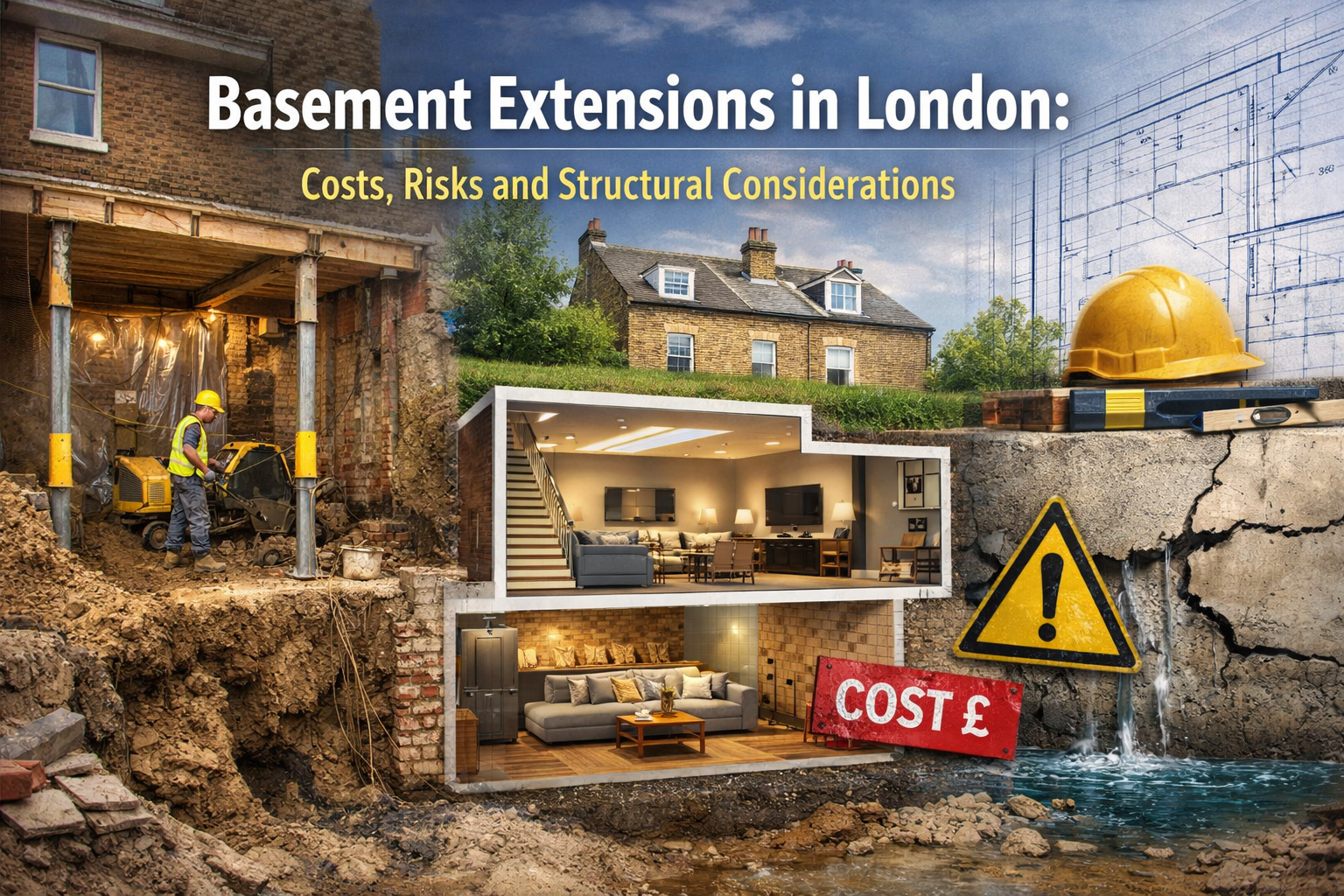
As space in London becomes increasingly limited, many homeowners look below ground to create additional living areas. Basement extensions have become a popular solution in dense urban neighbourhoods where expanding outward or upward is often restricted by planning policies or neighbouring buildings. When designed properly, a basement can significantly increase usable floor space while maintaining the existing character of the property.
However, building below ground level is far more complex than constructing a typical extension. It involves structural engineering, careful excavation and strict planning oversight. Understanding the main costs, risks and design considerations is essential before beginning such a project.
Why Basement Extensions Are Popular
In many parts of London, planning rules limit how much a property can expand above ground. Conservation areas, listed buildings and tightly arranged terraces often restrict visible alterations to the building envelope. Basement development offers a practical alternative because it increases floor area without significantly changing the exterior of the house.
Basements are often used for:
- open-plan kitchens and living spaces
- home cinemas or entertainment rooms
- gyms or wellness areas
- guest bedrooms and bathrooms
- utility rooms and storage
For many homeowners, the appeal lies in gaining substantial additional space while preserving the architectural appearance of the property.
Typical Costs of Basement Construction
Basement extensions are among the most technically demanding forms of residential construction, which is reflected in their cost. The final budget depends on multiple factors including soil conditions, excavation depth, structural support requirements and site accessibility.
Major cost components typically include:
- excavation and removal of soil
- structural underpinning of existing foundations
- waterproofing and drainage systems
- ventilation and mechanical services
- specialist structural engineering
Urban sites with limited access can increase construction costs because machinery, materials and excavation waste must be carefully managed within tight spaces.
Structural Complexity of Basement Projects
Excavating beneath an existing building requires careful structural planning. During construction the house above must remain stable while new foundations and retaining structures are installed.
One commonly used technique in London basement construction is underpinning, where sections of the existing foundation are strengthened and extended downward to support the structure during excavation.
Because neighbouring buildings are often close together, engineers must also assess:
- soil stability
- load distribution from upper floors
- groundwater conditions
- structural interaction with adjacent properties
Careful coordination between architects, structural engineers and contractors is essential to ensure the safety of both the building and surrounding structures.
Waterproofing and Long-Term Protection
Waterproofing is one of the most important aspects of basement design. Without proper protection, underground spaces can suffer from moisture ingress or long-term structural damage.
Modern basements typically use layered waterproofing systems combined with cavity drainage membranes and sump pumps. These systems prevent water penetration and safely remove any moisture that collects behind the drainage layer.
A well-designed waterproofing strategy ensures the basement remains comfortable, dry and suitable for everyday living.
Planning Permission and Local Regulations
Basement developments often require planning permission, particularly when excavation extends beneath gardens or significantly alters the building structure. Many London boroughs have introduced detailed planning guidance specifically for basement projects.
Planning authorities may evaluate:
- the structural impact on neighbouring properties
- groundwater and drainage considerations
- construction access and disruption
- heritage constraints in conservation areas
Because of these requirements, many homeowners research professional approaches to basement conversions in London before starting the planning process to better understand structural design, planning constraints and construction logistics.
Designing Basements That Feel Bright and Liveable
A well-designed basement should feel like a natural extension of the home rather than a separate underground space. Architects often use several strategies to improve light and spatial quality.
These may include:
- light wells or sunken courtyards
- glazed staircases connecting upper floors
- open-plan layouts that allow light to spread through the space
- carefully designed lighting systems that complement daylight
When integrated properly into the overall layout of the house, basement spaces can become some of the most comfortable and functional areas of the home.
Planning Basement Projects Carefully
Basement extensions can unlock valuable space in London homes where traditional expansion options are limited. Yet their complexity means that early planning, structural assessment and thoughtful design are essential. With the right preparation and technical expertise, underground extensions can add both practical living space and long-term value to urban properties.