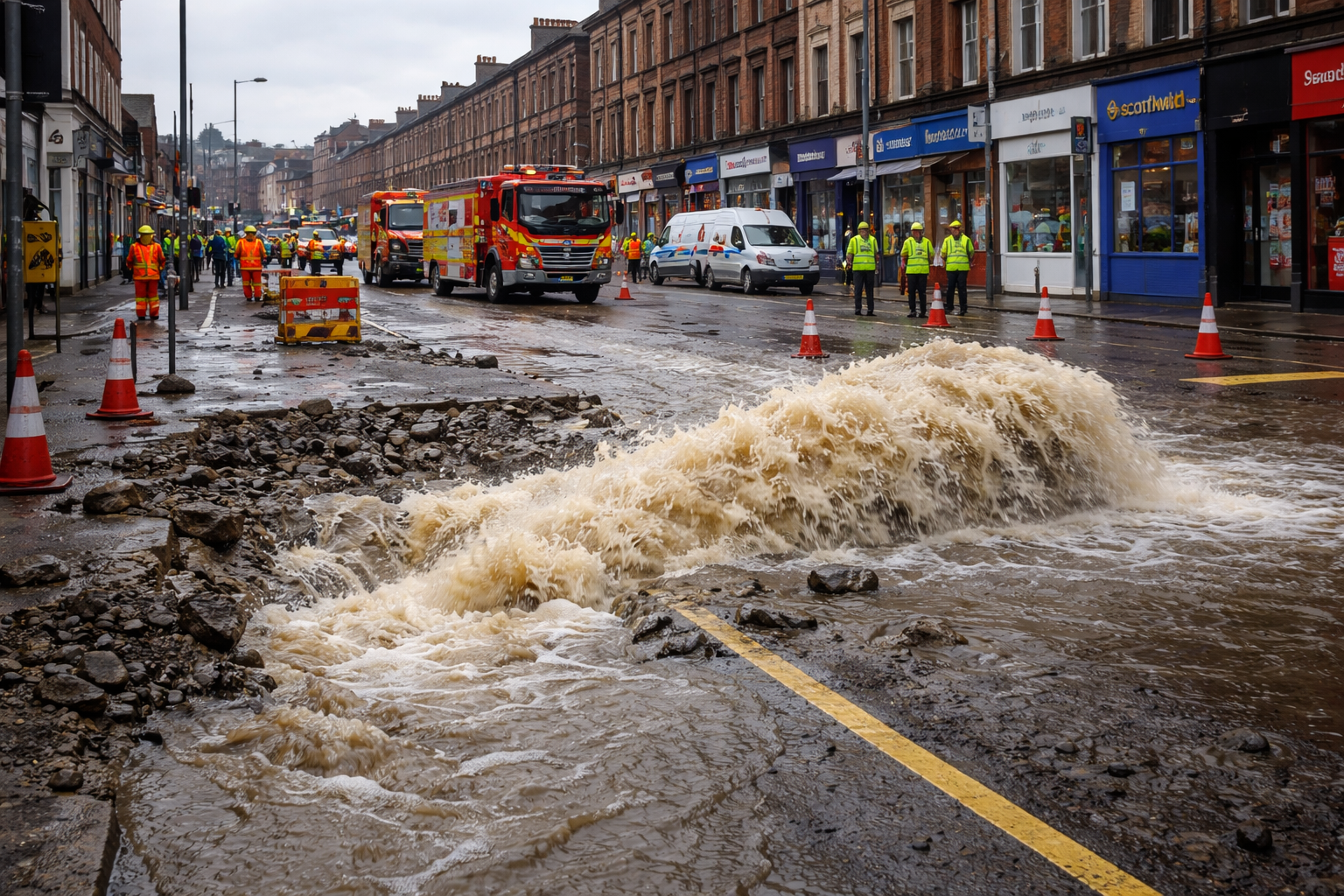
The Glasgow water main break on Shettleston Road has been one of the most talked-about infrastructure problems in the city’s recent months. With major flooding, road closures, and water disruptions, this incident affected commuters, residents, and local businesses across the East End. In this article, we break down the causes, impact on traffic and daily life, response efforts, and the latest updates on the situation.
What Happened on Shettleston Road
In the early morning of May 29, 2025, a significant underground water pipe burst beneath Shettleston Road — a key arterial route in Glasgow’s East End. The break occurred near the junction with St Mark Street, between Old Shettleston Road to Fernan Street and Westmuir to Hart Street. Once the pipe ruptured, water surged up through the road surface, flooding pavements and making large sections of the street unsafe for vehicles and pedestrians.
This wasn’t a small leak — it was a major break that immediately overloaded the surface, forcing authorities to act swiftly to prevent further danger and chaos.
Immediate Impact and Traffic Disruptions
Because Shettleston Road is one of Glasgow’s busiest East End routes, the water main burst created instant disruption for drivers and public transport users. Parts of the road were closed in both directions, especially between Old Shettleston Road and Fernan Street, and from Westmuir Street to Hart Street.
With this closure in place during rush hour, traffic quickly backed up on neighboring streets. Drivers were forced to take alternative routes around the disruption, and journey times increased significantly — in some cases doubling for commuters trying to reach work or school.
Public transport services were also affected. Several bus routes in and out of the area were diverted, adding to delays and confusion for passengers who arrived at stops without real-time updates.
Water Supply Outages and Quality Issues
One of the most immediate effects of the break wasn’t just on traffic — it was on water supply for local residents. The burst pipe served thousands of properties in the G32 postcode area, and its failure meant many households experienced:
- No water supply at all
- Low or intermittent water pressure
- Discoloured or cloudy water when flow finally returned
This made everyday tasks like cooking, washing, and even flushing toilets difficult, especially in the critical hours following the break. Businesses that depend on running water — cafés, salons, and laundromats — faced serious operational challenges too.
Why the Pipe Burst
Water mains don’t usually break for random reasons. In this case, engineers and officials pointed to several major factors that likely contributed to the failure:
Aging Infrastructure – Much of Glasgow’s underground water network was installed decades ago. Many pipes have been in service for so long that corrosion, metal fatigue, and natural wear and tear make them more vulnerable to failure.
Ground and Pressure Stress – Heavy traffic on Shettleston Road — buses, lorries, and constant vehicle vibration — creates subtle but ongoing stress on underground pipes. Temperature changes in the soil, movement of ground from weather changes, and pressure surges in the network themselves can all add stress to already weakened sections.
These factors, compounded over years, can eventually push a weak spot in the pipe beyond its breaking point — and that’s what seemed to happen here.
Emergency Response Efforts
When the water main burst, Scottish Water and Glasgow City Council crews moved quickly to respond:
- Isolation and safety – Teams worked to isolate the damaged section, stopping water flows into the break and limiting the flooding as much as possible.
- Pumping and excavation – Pooled water was pumped out of the road surface so workers could safely dig down to the pipe and perform necessary repairs.
- Traffic management – Barriers and detour signage were placed quickly to guide drivers around the safe alternative routes.
Utility crews worked through the day and night to make progress. While exact timelines varied by location and condition of the pipe, similar breaks in the network typically require 12 to 48 hours or longer for full repair and restoration, including road reinstatement.
How Residents Were Advised to Respond
Once the water main was tackled and supply began to return, Scottish Water recommended residents take simple steps to ensure water quality and safety:
- Run your cold kitchen tap slowly until water runs clear to eliminate discoloration.
- Avoid using washing machines, dishwashers, or hot water appliances until supply stabilizes.
- Be cautious of low or intermittent water pressure for a period as the system re-pressurizes.
These standard guidelines help manage temporary water quality issues that arise after a large main break and network pressure fluctuation.
Local Business and Community Effects
The impact of the water main break extended far beyond broken pipes and closed roads:
- Small businesses along Shettleston Road faced loss of customers and reduced services due to lack of usable water and reduced foot traffic.
- Parents and caregivers reported extra stress juggling disrupted routines — from breakfast time to getting children to school — under reduced water availability and heavier traffic congestion.
- Commuters relied on local side streets or buses that became crowded or delayed, which added frustration to daily routines.
Broader Lessons and Future Resilience
This incident highlighted a broader issue facing Glasgow and many UK cities: infrastructure resilience. While emergency response teams reacted efficiently, frequent breaks like this underline the need for long-term investment in replacing aging water mains and improving monitoring of underground networks.
Scottish Water has ongoing programs aimed at strengthening the network and preventing similar failures. But with thousands of pipe kilometers running beneath Glasgow, regular monitoring, maintenance upgrades, and strategic reinforcement remain key tasks for the future.
Latest Updates
As of the most recent reports, teams had been continuing repair work and traffic management around the damaged section on Shettleston Road. While water supply has returned to many homes, some properties still experienced lingering effects like low pressure or cloudiness in tap water.
Road closures and detours in the area remained in place as crews worked to fully reinstate the road surface and ensure everything was safe for normal traffic flow. Public transport operators also continued to update rerouted services for commuters using bus lines around Shettleston Road.
Officials remind the public that restoration timelines can vary, and local alerts or council/utility announcements remain the most reliable source for real-time updates as work progresses.