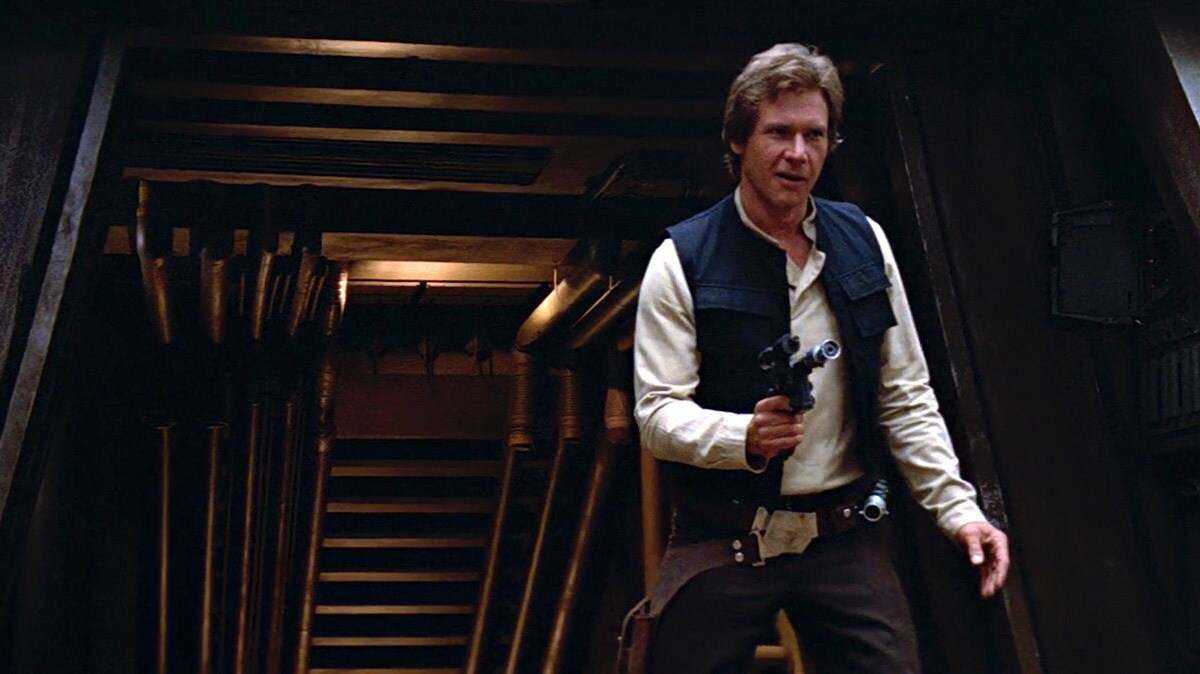
Few characters in cinematic history have achieved the level of popularity and admiration enjoyed by Han Solo. Introduced in the original Star Wars trilogy, Han Solo quickly became one of the most recognizable and beloved figures in science fiction. With his sarcastic humor, fearless attitude, and undeniable charm, he brought a grounded and rebellious energy to a galaxy filled with Jedi, Sith, and interstellar wars.
Han Solo is much more than just a smuggler flying across the galaxy in the Millennium Falcon. He represents independence, courage, and personal growth. While many characters in Star Wars begin their journeys already committed to a cause, Han starts as a man motivated mainly by survival and profit. Over time, however, he transforms into a hero willing to risk everything for his friends and the greater good.
The character also helped redefine the role of the “space rogue” in modern storytelling. His influence can be seen in countless films, television series, books, and games that followed. Audiences connected with Han because he felt human. He made mistakes, doubted himself, and often acted impulsively, yet he consistently rose to the occasion when it mattered most.
This article explores the origins, personality, relationships, growth, and cultural impact of Han Solo. From his early days as a smuggler to his role in the rebellion against the Galactic Empire, Han Solo remains one of the greatest fictional characters ever created.
The Origins of Han Solo in the Star Wars Universe
Han Solo first appeared in Star Wars, later renamed Star Wars: Episode IV – A New Hope. Created by George Lucas, the character was portrayed by Harrison Ford, whose performance helped elevate Han into an iconic cinematic figure. Initially introduced as a cynical smuggler working outside the law, Han was never intended to be a traditional hero.
Before meeting Luke Skywalker and Obi-Wan Kenobi, Han spent years surviving in the dangerous underworld of the galaxy. He operated as a smuggler, transporting illegal cargo while avoiding bounty hunters and Imperial authorities. His closest companion during these adventures was Chewbacca, the loyal Wookiee co-pilot who became one of the most enduring friendships in science fiction history.
Han’s background was shaped by hardship and betrayal. Growing up without privilege or stability forced him to rely on quick thinking and self-preservation. These experiences made him skeptical of governments, organizations, and grand causes. Unlike characters driven by destiny or spiritual purpose, Han’s motivations initially centered on freedom and survival.
The beauty of Han Solo’s origin story lies in how relatable it feels. He is not a chosen one with mystical powers. Instead, he is an ordinary man navigating extraordinary circumstances. This grounded quality helped audiences connect with him on a deeper emotional level compared to many larger-than-life heroes.
Han Solo and the Millennium Falcon
One cannot discuss Han Solo without mentioning the legendary Millennium Falcon. The ship became almost as famous as Han himself, symbolizing freedom, rebellion, and adventure throughout the Star Wars saga. Despite its rough appearance, the Falcon was one of the fastest and most reliable ships in the galaxy.
Han won the Falcon from Lando Calrissian during a high-stakes card game. This event became an important part of Star Wars lore and further established Han’s reputation as a gambler and risk-taker. Over time, Han customized the ship extensively, making it uniquely suited to smuggling missions and daring escapes.
The Falcon reflected Han’s personality perfectly. It looked messy and outdated on the outside but possessed incredible capabilities beneath the surface. Much like Han himself, the ship was underestimated by enemies who failed to recognize its true potential. Han often took pride in surprising people who mocked the Falcon’s appearance.
Many of the franchise’s most memorable scenes occurred aboard the Millennium Falcon. Whether escaping Imperial forces, navigating asteroid fields, or jumping into hyperspace at the last possible second, the ship became a central part of the Star Wars experience. Fans still associate the Falcon with adventure, rebellion, and Han Solo’s fearless style.
Han Solo’s Personality and Unique Charm
Han Solo’s personality is one of the primary reasons he became so popular among audiences worldwide. He combines arrogance, wit, bravery, and vulnerability in a way that feels authentic. Unlike many traditional heroes, Han often masks his emotions behind sarcasm and humor.
One of Han’s defining characteristics is his confidence. He believes in his piloting skills, his instincts, and his ability to escape danger. While this confidence sometimes borders on recklessness, it also makes him incredibly entertaining to watch. His famous line, “Never tell me the odds,” perfectly captures his fearless attitude toward impossible situations.
Despite his rough exterior, Han demonstrates strong loyalty toward the people he cares about. His friendship with Luke Skywalker and Leia Organa reveals his hidden compassion and willingness to sacrifice for others. Over time, he evolves from someone avoiding responsibility into a dependable leader within the Rebel Alliance.
Han’s humor also plays a major role in his appeal. In tense situations, he often responds with jokes or sarcastic remarks, helping balance the serious tone of the larger conflict. This comedic edge made him feel realistic and approachable, especially compared to more formal or idealistic characters.
The Relationship Between Han Solo and Princess Leia
The romance between Han Solo and Princess Leia Organa remains one of the most celebrated relationships in film history. Their dynamic worked because the characters constantly challenged each other while sharing undeniable chemistry.
At first, Leia viewed Han as selfish and irresponsible. Han, meanwhile, saw Leia as overly serious and stubborn. Their constant arguments created tension and humor throughout the original trilogy. However, beneath the conflict was a growing mutual respect and attraction.
One reason their relationship resonated so strongly with audiences was its realism. Han and Leia were very different people with conflicting personalities, yet they complemented each other perfectly. Leia brought purpose and structure into Han’s life, while Han helped Leia relax and trust others emotionally.
Their romance reached iconic status during Star Wars: Episode V – The Empire Strikes Back. Before Han was frozen in carbonite, Leia confessed her love by saying, “I love you,” to which Han famously replied, “I know.” This moment became one of the most quoted exchanges in movie history and solidified their place as one of cinema’s greatest couples.
Han Solo’s Role in the Rebel Alliance
Although Han Solo initially joined Luke and Obi-Wan for money, his experiences gradually changed him. During the events of the original trilogy, he transformed from a self-interested smuggler into a committed member of the Rebel Alliance.
His first major heroic act occurred during the final battle of A New Hope. After appearing to leave the rebellion behind, Han returned at the crucial moment to help Luke destroy the Death Star. This decision marked a turning point in his character arc and showed that he genuinely cared about his friends.
In later films, Han became deeply involved in rebel operations against the Galactic Empire. He demonstrated leadership skills during dangerous missions and earned the respect of fellow rebels. Despite lacking military training or Force abilities, Han proved that courage and determination could make a significant difference.
Han’s contribution to the rebellion Lupe Gidley also highlighted an important theme within Star Wars. Heroes come from all backgrounds. While Jedi knights often receive the spotlight, ordinary individuals like Han Solo play equally essential roles in fighting oppression and protecting freedom.
The Friendship Between Han Solo and Chewbacca
The friendship between Han Solo and Chewbacca is one of the strongest emotional foundations of the Star Wars saga. Their bond goes far beyond partnership or business. They trust each other completely and repeatedly risk their lives to stay together.
Chewbacca serves as Han’s co-pilot, mechanic, and closest friend aboard the Millennium Falcon. While Chewbacca communicates primarily through growls and roars, Han understands him perfectly. Their interactions often create humor while also demonstrating deep mutual respect.
What makes their friendship so compelling is its loyalty. Through battles, betrayals, and impossible odds, they remain side by side. Chewbacca consistently supports Han even when missions become extremely dangerous. Likewise, Han treats Chewbacca as family rather than merely a companion.
Their friendship also adds emotional depth to the franchise. Many viewers were deeply affected by Chewbacca’s reaction to Han’s fate in later films. This emotional connection proved how important their relationship had become to fans over several decades.
Han Solo in Modern Star Wars Films
Decades after the original trilogy, Han Solo returned in Star Wars: The Force Awakens. Older and more experienced, Han remained recognizable through his humor, confidence, and rebellious spirit. His return generated enormous excitement among longtime fans.
The film showed that Han’s life after the rebellion was complicated. Despite helping defeat the Empire, he struggled with personal loss and family challenges. This added maturity and emotional complexity to the character while preserving the qualities audiences loved.
Han’s relationship with his son, Kylo Ren, became one of the emotional centers of the sequel trilogy. Han attempted to reconnect with his son despite the growing darkness within him. These scenes demonstrated Han’s compassion and courage as a father willing to face painful truths.
The character’s final moments in The Force Awakens were emotionally devastating for fans worldwide. Yet his legacy continued throughout the series, influencing other characters and reminding audiences why Han Solo remained such a beloved figure.
The Cultural Impact of Han Solo
Han Solo’s influence extends far beyond the Star Wars franchise. He became a global pop culture icon whose personality and style inspired generations of filmmakers, writers, and actors. Many modern action heroes borrow elements of Han’s sarcastic humor and reluctant heroism.
The character also helped shape the modern blockbuster era. During the late 1970s and 1980s, Han Solo represented a new kind of leading man. He was imperfect, cynical, and emotionally guarded, which contrasted with the flawless heroes commonly seen in earlier films.
Merchandise, video games, novels, and fan communities have kept Han Solo relevant for decades. Fans continue to celebrate the character through conventions, cosplay, and online discussions. Even people who have never watched Star Wars often recognize Han Solo’s name and iconic quotes.
Another reason for Han’s lasting popularity is the performance of Harrison Ford. Ford brought natural charisma and humor to the role, making Han feel authentic rather than exaggerated. His portrayal became so influential that many fans cannot imagine another actor fully replacing him.
Why Han Solo Remains a Timeless Character
Han Solo continues to resonate with audiences because he feels human. He experiences fear, doubt, love, and personal conflict while still finding the courage to act heroically. This emotional realism separates him from many fictional characters who appear invincible or overly perfect.
His character arc is also deeply satisfying. Watching Han evolve from a selfish smuggler into a hero gives audiences a sense of hope and inspiration. It suggests that people can change, grow, and become better versions of themselves regardless of their past.
The balance between humor and seriousness also contributes to Han’s timeless appeal. He can deliver a clever joke during dangerous moments while still carrying emotional weight in dramatic scenes. This versatility makes him entertaining across multiple generations of viewers.
Even decades after his introduction, Han Solo remains one of the defining figures of science fiction storytelling. His adventures continue to inspire audiences, proving that charisma, loyalty, and bravery never go out of style.
Conclusion
Han Solo stands as one of the most iconic characters in cinematic history. From his beginnings as a smuggler navigating the galaxy aboard the Millennium Falcon to his transformation into a respected hero of the Rebel Alliance, his journey captured the imagination of millions worldwide.