Henna and indigo are the two plant powders behind every chemical-free black and brown hair color. Henna deposits a red-orange stain, indigo layers a blue-black tone over it, and the sequence determines the final shade. This guide explains the two-step process, the dye chemistry, and the timing each step requires.
What is the difference between henna and indigo for hair?
Henna (Lawsonia inermis) stains hair red-orange through a molecule called lawsone. Indigo (Indigofera tinctoria) deposits a blue-black tone through indigotin. Henna alone never produces black; black requires indigo applied as a second, separate layer over henna-treated hair.
Henna leaves contain 1–1.4% lawsone, the dye that binds to keratin and produces a permanent red-orange stain. Indigo carries indican, which converts to blue indigotin during a water-activated paste. Used on its own, henna yields copper to auburn results, and the shade deepens over 48 hours as lawsone oxidizes. A single-step blend of the two powders produces brown, not black, because the colors layer rather than combine into one reaction.
Why does black hair color need two separate applications?
Black hair color needs two steps because indigo binds poorly to bare hair. Henna applied first opens and coats the hair shaft, creating an anchor layer. Indigo applied second bonds to that henna base, and the overlay produces a stable blue-black result.
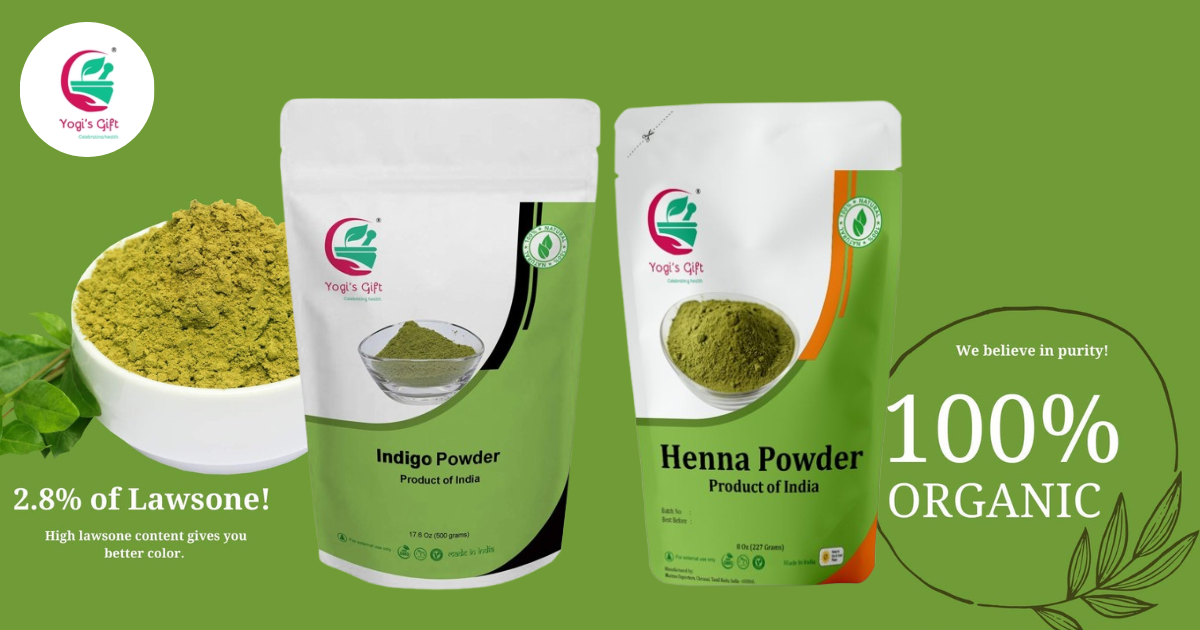
The two-step method follows a fixed order: apply 100% natural Lawsonia inermis henna powder first, rinse after 2–3 hours, then apply indigo as a second paste. Henna mixed with warm water rests for 6–12 hours before application so lawsone fully releases. Indigo is mixed fresh and applied immediately, because indigotin oxidizes within 10–15 minutes. Skipping the henna base is the most common reason indigo fades to a patchy gray-brown within a week.
How long does each step take to develop?
Henna develops over 2–3 hours on the hair and continues oxidizing for 48 hours afterward. Indigo develops in 45 minutes to 1 hour. Total active application time for jet black is roughly 4 hours across both steps, plus the henna soak.
A typical jet-black session runs in this order: soak henna paste 8 hours, apply 2–3 hours, rinse with water only, mix pure Indigofera tinctoria indigo powder fresh, apply 1 hour, then rinse. Shampoo is avoided for 48 hours so both dyes set. For brown shades, the indigo step shortens to 20–30 minutes. The color is permanent and grows out without a harsh root line, unlike oxidative box dyes.
Can henna and indigo cover gray hair?
Henna and indigo cover gray hair reliably, though gray strands take pigment more slowly than pigmented hair. Two applications spaced a week apart deepen coverage on resistant grays, because each layer adds dye density to the porous, pigment-free shaft.
Gray coverage improves with a slightly longer henna step, since gray hair lacks melanin and relies entirely on the deposited lawsone-indigotin layers for tone. Neither powder contains PPD, ammonia, or peroxide, which makes the two-step method suitable for sensitive scalps that react to oxidative dyes. A patch test 48 hours before the first full application remains standard practice for any new plant dye.