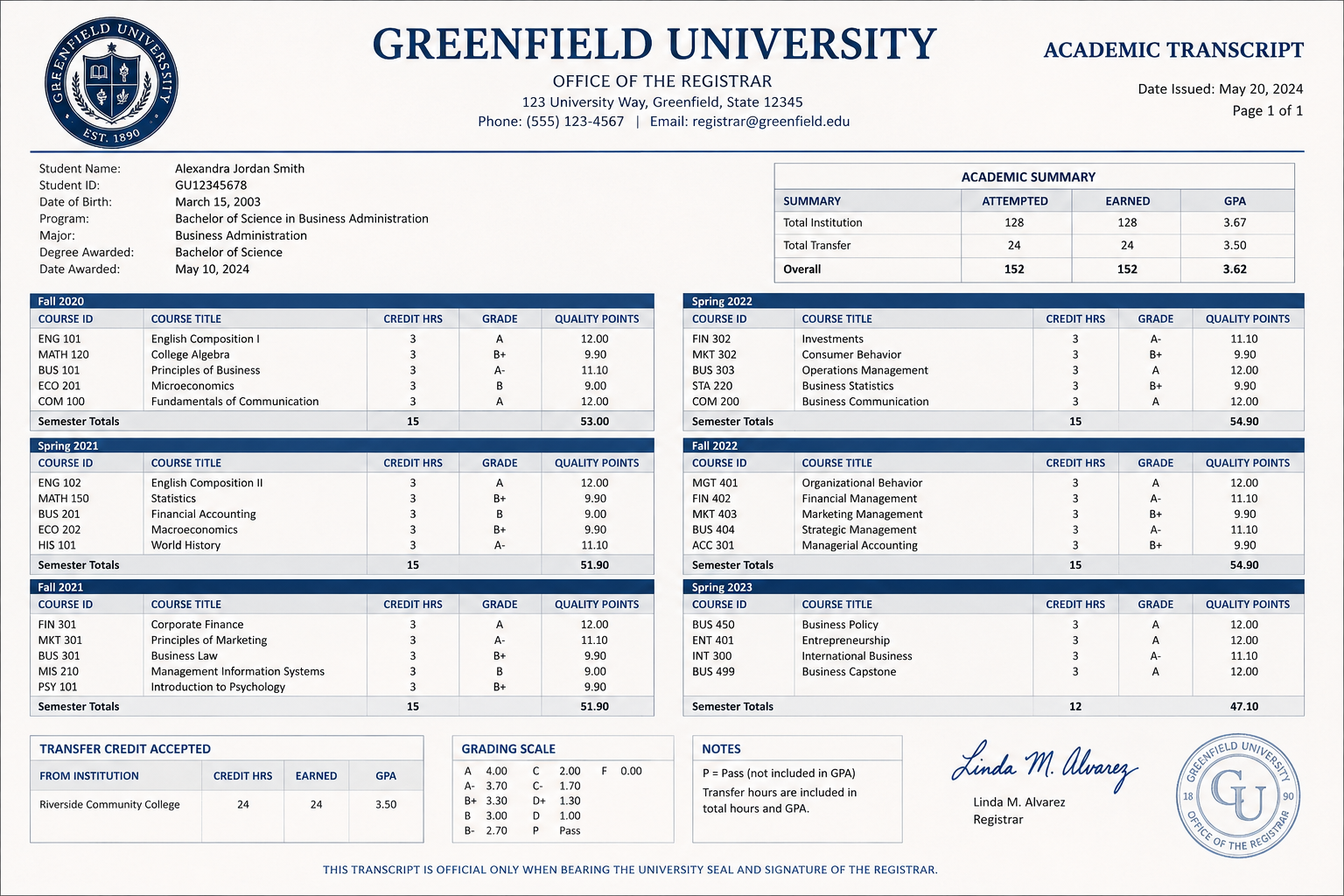
Italian academic transcripts can look familiar and confusing at the same time. Course names are clear enough to a local university office, but an admissions team abroad may need help reading Italian grades, credits, exam dates, and faculty names.
A strong English translation keeps the record useful. It does not rewrite the student’s academic history. It makes the same information readable for a university, scholarship office, or credential evaluator.
First, Find Out What the University Wants
Before ordering anything, the applicant should read the document checklist from the university abroad. Requirements vary. Some schools accept translations made by the issuing institution. Others ask for a certified translation from a professional translator.
A student comparing options may start here when looking at Rapid Translate for certified Italian academic transcript translation, especially when the university accepts digital uploads.
Original records still matter
There are universities that require an original Italian transcript and an English translation. An example is Indiana University South Bend which states if academic record(s) are not issued in English, the applicant must provide English translations as well as the official record(s) in the original language. However, the university states that having only English translations is not sufficient for a decision on admission.
That point is easy to miss. The translation helps the reviewer read the record, but the original transcript remains the source document.
What Needs to Be Translated?
It is important to translate and include the following items in a university transcript: course title, grade, credit value, degree program name, issuing university, issue date, signature, stamp, and any notes. Additionally, if the university transcript has a grading key on it, it needs to be translated as well.
Italian grades can surprise foreign reviewers
Italian university exams usually use a 0 to 30 scale, with 18 as the passing mark. The University of Pisa’s explanation of the Italian educational system also notes that 30 e lode may be added as a special distinction. Final degree grades are usually given on a 66 to 110 scale, with 110 as the maximum and possible cum laude distinction.
The translator should not convert these grades into a U.S. GPA unless the receiving institution specifically asks for evaluation. Translation and credential evaluation are separate tasks.
| Transcript item | Why it matters abroad |
| Course title | Helps admissions staff match subjects to prerequisites |
| Grade | Shows academic performance in the Italian system |
| CFU or ECTS credits | Helps compare course workload |
| Exam date | Confirms when the course was completed |
| Stamp or signature | Supports authenticity of the record |
Why Credits Need Care
Italian universities typically list CFU on their transcripts which correspond to the ECTS (European Credit Transfer and Accumulation System) as explained by the European Commission. The ECTS provides a way for students to assess the equivalent value of courses taken at different institutions or countries more easily than before. In general, a full academic year or 60 credits in ECTS equals one year of study or work.
That detail matters for study abroad. A master’s program abroad may not only look at grades. It may also check whether the student completed enough credits in a subject area.
Keep abbreviations readable
Abbreviations such as CFU, SSD, or course codes should be handled carefully. Some can stay as labels, but the surrounding meaning should be clear in English. A short translator note may help when a term has no perfect match.
Local Agency, University Office, or Online Service?
A local agency can be useful when the transcript has old stamps, handwritten corrections, or several attachments. The applicant can bring the original document and explain the context in person.
A university office may also issue English documents directly. That is often the cleanest route when available.
Alongside local agencies, platforms like Rapid Translate are often used for academic paperwork. The online route can be convenient when the transcript is already scanned and the deadline is close.
Where the online option fits
Rapid Translate says translations of Italian academic transcripts can be used to apply to universities, evaluate credentials, obtain licenses, immigrate, and apply for scholarships or exchange programs. The company also says that academic transcripts require accurate translations of course name, grade received, credit system and school information.
Rapid Translate also describes a workflow where the applicant uploads a clear scan or photo, chooses translation options, and receives the completed translation electronically. The same page lists a 12 to 24 hour delivery window for academic transcript translation, depending on the document and selected options.
Certified Translation or Credential Evaluation?
A certified translation confirms the accuracy and completeness of the translated text. A credential evaluation explains how the foreign education compares with another country’s system.
WES says that, for U.S. credential evaluations, it requires translations of documents issued in languages other than English when translations are requested. It also says translations should be exact, clear, legible, and completed by a professional translator, not by the applicant.
Which one is needed?
The university may ask you to submit an English transcript. However, in some cases, a certified translation may suffice. Also, depending on what the university has requested, if a grade equivalency course by course evaluation, or GPA conversion is being requested, then applicant may be required to go through an additional credential evaluation process separately.
Rapid Translate provides assistance with translating the Italian course records while the evaluator or university will determine how these records compare to their academic system.
Final Check Before Uploading
The applicant should compare the English file with the Italian original before submission. Names, dates, course titles, credits, and grades deserve the closest look.
File quality also matters. A blurry scan can slow the process. A missing back page can create questions later.
Make the Transcript Easy to Review
A good translation of an Italian academic transcript should feel practical. It should let a university abroad understand what the student studied, how many credits were earned, and how the grades were recorded.
Rapid Translate works best as one organized option in that process, especially for students who need certified digital delivery and already know the receiving university’s rules.