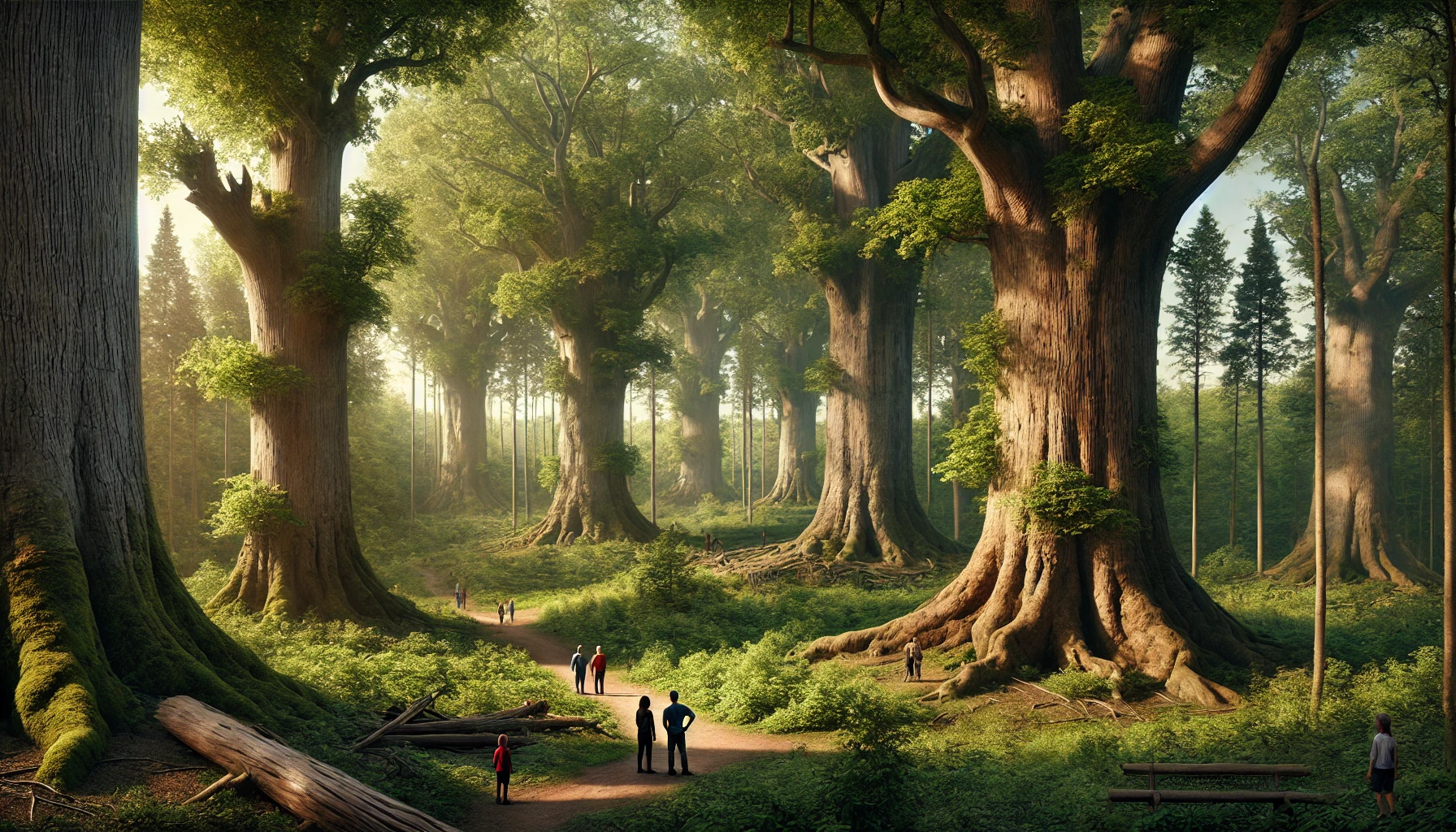
If you’ve ever walked a trail in Lewis Center and caught yourself staring up at a trunk that looks too wide to be real, you’re already halfway into the world of Lewis Center Ohio champion trees. “Champion” isn’t just a compliment—it’s a real designation used in big-tree programs to recognize the largest known specimens of a species, measured with consistent rules. Ohio has an active Champion Tree effort, and the bigger Central Ohio gets, the more valuable these living landmarks become as reminders of what the landscape once looked like—and what it can still be.
This guide breaks down what “champion” actually means, how big trees are measured, why Lewis Center is a surprisingly strong area for giant trees, and where you can go (ethically and safely) to find impressive specimens—especially around parks and river corridors.
What Are Champion Trees, Exactly?
A champion tree is the biggest documented individual of a tree species within a defined area, usually a state. Champion status is determined by a standardized scoring system that looks at physical size rather than age alone. Ohio recognizes champion trees through a statewide program that tracks the largest known examples of each species.
It’s important to understand that champion status is not permanent. A tree may hold the title for years or decades, then lose it when a larger specimen is discovered and measured. This keeps champion tree lists dynamic and encourages public participation.
How Champion Trees Are Measured and Scored
Champion trees are measured using a consistent formula that combines three elements: trunk circumference, total height, and average crown spread. Each measurement contributes to a final score that allows fair comparison between trees of the same species.
The scoring formula adds the tree’s height in feet, trunk circumference in inches, and one-quarter of the average crown spread in feet. This method rewards trees that are not only tall, but also wide and structurally impressive—qualities common in mature, undisturbed landscapes.
Why Lewis Center Is a Hot Spot for Big Trees
Lewis Center sits in a transition zone where suburban development meets preserved natural land. Big trees tend to survive in areas that were difficult to farm, less desirable for development, or intentionally protected over time.
Stream corridors, ravines, old property boundaries, and parkland provide the stable conditions necessary for trees to grow uninterrupted for decades. Lewis Center benefits from all of these factors, making it an ideal place to find large, mature specimens.
Highbanks Metro Park: The Heart of Big Tree Country
Highbanks Metro Park is one of the most reliable locations to explore large trees near Lewis Center. Covering more than 1,200 acres, the park protects deep ravines, forested slopes, and river-edge habitats that encourage long-term tree growth.
The park’s dramatic shale bluff and the nearby Olentangy River create microenvironments where moisture, soil depth, and reduced human disturbance allow trees to reach exceptional sizes. Trails throughout the park offer access to mature forest without disturbing sensitive areas.
Tree Species Most Likely to Reach Champion Size
Certain species found in and around Lewis Center are more likely to produce champion-sized trees due to their growth habits and environmental preferences.
American sycamores are among the largest trees in Ohio, often found near rivers where rich soils allow massive trunk expansion. Eastern cottonwoods grow quickly and can develop enormous circumferences in floodplain environments. White oaks and related oak species grow more slowly but can live for centuries, forming broad crowns and thick trunks.
Tuliptrees, maples, and hickories are also worth watching. While some may not rival sycamores in girth, their height and crown spread can still yield impressive scores.
Why Exact Locations Are Often Not Publicized
Champion tree lists usually avoid publishing precise locations, especially when trees are on private property. Publicizing exact coordinates can lead to trampling, soil compaction, vandalism, or unwanted attention.
Instead, listings typically identify general areas or counties. This approach protects both the tree and the landowner while still acknowledging the tree’s importance. When exploring Lewis Center, the best approach is to focus on public parks and preserves.
Best Public Places to Find Giant Trees Near Lewis Center
Public land offers excellent opportunities to see large trees without trespassing or causing harm.
Highbanks Metro Park is the top destination, with river corridors and ravines that support oversized sycamores, cottonwoods, and mature oaks. The Olentangy River corridor itself is another prime area, as trees near water often grow wider and taller than those in drier uplands.
Nearby public preserves and regional parks throughout Central Ohio also support large floodplain trees, especially in areas protected from frequent disturbance.
How to Spot a Potential Champion Tree
Champion trees often stand out, but not always in obvious ways. Height alone is not enough; the most competitive trees combine height with trunk thickness and a wide crown.
Look for trees with massive root flares, unusually thick trunks relative to surrounding trees, and expansive canopies. Trees growing near water with deep soils and minimal competition are often the strongest candidates.
Measuring a Big Tree Without Specialized Equipment
You don’t need professional forestry tools to make a basic measurement. A flexible tape measure can be used to determine trunk circumference at about 4.5 feet above ground. Height can be estimated using simple geometry or smartphone apps, and crown spread can be measured by pacing out the widest canopy points.
Accurate measurements help determine whether a tree might qualify for champion status and are essential if you plan to submit a nomination.
Can You Nominate a Champion Tree in Ohio?
Yes. Ohio’s champion tree program relies heavily on public participation. Anyone who discovers a large tree can document it and submit measurements for review.
When nominating, always follow ethical guidelines. Do not damage the tree, avoid disturbing the surrounding soil, and respect property boundaries. Trees on public land are generally easier to document responsibly.
Protecting Lewis Center’s Giant Trees
Champion trees are often old and vulnerable. Even minor damage to roots or bark can accelerate decline. Staying on designated trails, avoiding climbing, and not attaching ropes or hammocks to limbs all help preserve these giants.
Sharing general information about big trees is encouraged, but avoid posting precise locations of trees on private land. Protection begins with respect.
Why Lewis Center Ohio Champion Trees Matter
Champion trees are living records of ecological history. They show how large trees can grow when given time, space, and stable conditions. In a rapidly developing area like Lewis Center, these giants provide a tangible connection to the past.
Exploring Lewis Center Ohio champion trees is not just about breaking records—it’s about appreciating resilience, conservation, and the role old trees play in healthy ecosystems.