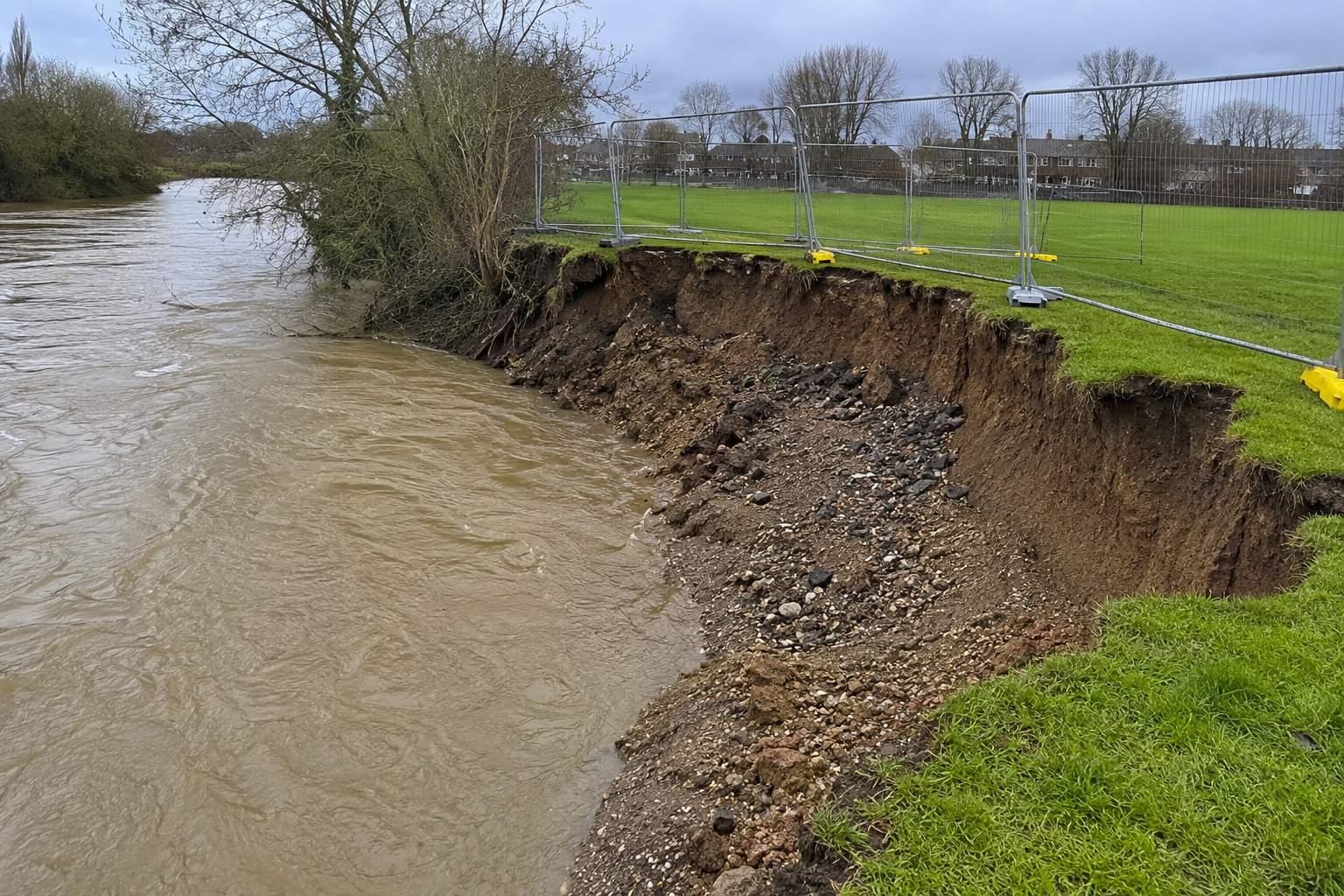
The recent riverbank collapse at Iford Playing Fields has become a growing concern for residents, families, and local authorities. What was once considered a peaceful recreational area has now raised serious questions about public safety, environmental stability, and the long-term future of the site. The incident has attracted attention from the local community, especially parents and regular visitors who use the playing fields for sports, walking, and outdoor activities.
As investigations continue, many residents are demanding urgent action to prevent further damage and protect public spaces from similar incidents. The collapse has not only disrupted access to parts of the playing fields but has also highlighted broader concerns about erosion, flooding, and infrastructure maintenance in riverbank areas.
What Happened at Iford Playing Fields?
The riverbank collapse at Iford Playing Fields reportedly occurred following a period of unstable ground conditions and increased pressure along the river edge. Witnesses described sections of the embankment giving way suddenly, leaving visible cracks and unsafe ground near the affected area.
Local authorities quickly responded by cordoning off sections of the playing fields to prevent public access. Safety barriers were installed while engineers and environmental specialists began assessing the extent of the damage. Although no injuries were reported, the incident has left residents worried about how close the collapse came to areas frequently used by children and families.
Why the Collapse Is Raising Serious Safety Concerns
One of the biggest concerns surrounding the riverbank collapse at Iford Playing Fields is the risk of additional land movement. Experts often warn that once a riverbank becomes unstable, nearby soil can continue shifting for weeks or even months after the initial incident.
Residents have expressed fears that heavy rainfall or flooding could worsen the situation. Parents are particularly concerned because the playing fields are commonly used for youth sports and school activities. Many locals believe stronger preventative measures should have been implemented earlier, especially if signs of erosion had already been visible.
The collapse also raises concerns about hidden underground instability. Cracks beneath the surface may not always be immediately noticeable, making the area potentially dangerous even after temporary repairs are completed.
Impact on the Local Community
The playing fields are more than just an open green space. For many people living near Iford, the area serves as a central hub for recreation, exercise, and community gatherings. The closure of sections of the site has disrupted football training sessions, local events, and weekend activities.
Residents who regularly walk along the riverbank say they now feel uneasy about visiting the area. Some have voiced frustration over what they see as delayed maintenance and insufficient monitoring of riverbank conditions.
Local businesses could also feel indirect effects. Recreational spaces often bring visitors into nearby shops and cafés, and any long-term closure may reduce foot traffic in surrounding areas.
Environmental Factors Behind Riverbank Collapses
Riverbank collapses can occur for several reasons, and environmental conditions usually play a major role. In many cases, prolonged rainfall weakens the soil structure, especially when river water levels rise and saturate the ground.
Erosion is another major factor. Over time, flowing water gradually removes soil from the base of a riverbank. Once enough support is lost, the upper section can suddenly collapse without warning.
Climate change has also increased concern over extreme weather events. Heavier storms and more unpredictable rainfall patterns have placed additional pressure on river systems across many regions. Environmental experts frequently warn that aging infrastructure and natural riverbanks may struggle to cope with changing conditions.
Vegetation loss can further contribute to instability. Trees and plant roots help hold soil together, and when vegetation is removed or weakened, riverbanks can become more vulnerable to collapse.
Emergency Response and Safety Measures
Following the riverbank collapse at Iford Playing Fields, local authorities moved quickly to secure the area. Temporary fencing and warning signs were installed to keep the public away from dangerous sections near the river edge.
Engineers have reportedly begun conducting structural and environmental assessments to determine whether more sections of the riverbank are at risk. These inspections are essential because secondary collapses can sometimes happen after the initial failure.
Authorities may also introduce longer-term stabilization measures, including reinforcement barriers, improved drainage systems, and riverbank restoration work. Such projects often require significant funding and careful environmental planning.
Residents are urging officials to maintain clear communication throughout the process. Many people want regular updates regarding safety inspections, repair timelines, and whether nearby areas remain safe for public use.
The Importance of Regular Riverbank Maintenance
The incident at Iford Playing Fields has sparked wider discussions about the importance of proactive maintenance around rivers and public spaces. Experts often emphasize that early warning signs, such as soil cracking, leaning trees, and gradual erosion, should never be ignored.
Routine inspections can help identify vulnerable areas before a major collapse occurs. Preventative engineering work is usually less expensive and less disruptive than emergency repairs after an incident has already happened.
Many communities located near rivers face similar risks, particularly where older embankments or natural slopes have not been reinforced for decades. The Iford Playing Fields collapse may serve as a reminder for local councils and environmental agencies to review the condition of other riverbank areas before further incidents occur.
Could Climate Change Increase Similar Incidents?
Climate experts increasingly warn that severe weather patterns are making flooding and erosion more common. Rising rainfall intensity can rapidly weaken riverbanks, particularly during storms when water flows become stronger and more destructive.
Increased urban development near waterways can also contribute to instability. Construction, drainage alterations, and land-use changes sometimes affect how water moves through an area, increasing pressure on nearby embankments.
As communities continue adapting to climate-related challenges, investment in flood prevention and riverbank protection is becoming more important than ever. Incidents like the riverbank collapse at Iford Playing Fields highlight how environmental changes can directly impact public safety and local infrastructure.
Residents Demand Long-Term Solutions
Many local residents believe temporary barriers alone are not enough. Community members are calling for permanent engineering solutions that will reduce the risk of future collapses and restore confidence in the safety of the playing fields.
Some residents have also requested greater transparency regarding previous inspections and whether earlier warning signs were identified before the collapse occurred. Public accountability is now becoming a major part of the conversation surrounding the incident.
Long-term solutions could include stronger flood defenses, reinforced embankments, improved drainage systems, and ongoing environmental monitoring. While such projects may require substantial investment, many locals argue that protecting public safety should remain the top priority.
Potential Effects on Property and Infrastructure
Although the immediate collapse occurred within the playing fields, nearby infrastructure could also face risks if erosion continues. Riverbank instability can sometimes affect pathways, roads, utility systems, and even residential properties located close to vulnerable areas.
Engineers will likely examine surrounding land to ensure the collapse does not spread further. In some cases, ground movement can continue gradually over time, creating additional structural concerns that may not be immediately visible.
Insurance concerns may also emerge for homeowners living near affected riverbanks. Similar incidents in other locations have sometimes resulted in increased property risk assessments and discussions around flood management responsibilities.
Community Support and Public Awareness
Despite the concerns, many residents have praised the community response following the incident. Local volunteers and community groups have helped spread safety information and encourage people to avoid restricted areas.
Public awareness plays an important role during incidents like this. People living near rivers are often encouraged to report signs of erosion, flooding, or unusual ground movement as early as possible.
The situation at Iford Playing Fields has also sparked renewed interest in environmental education and local conservation efforts. Some residents hope the incident will encourage stronger partnerships between councils, environmental agencies, and local communities.
What Happens Next at Iford Playing Fields?
The future of the affected area will depend largely on engineering assessments and environmental studies currently underway. Authorities must determine how stable the remaining riverbank is before reopening sections of the playing fields to the public.
Repair work could take weeks or even months depending on the severity of the damage. Environmental regulations may also influence how restoration projects are carried out, especially if wildlife habitats or protected ecosystems are involved.
For now, residents remain cautious but hopeful that the situation will lead to meaningful improvements in safety planning and riverbank management.
Conclusion
The riverbank collapse at Iford Playing Fields has become a serious issue for local residents and authorities alike. While no injuries were reported, the incident has exposed important concerns about erosion, environmental pressures, public safety, and infrastructure maintenance.
As investigations continue, the community is demanding both immediate protective measures and long-term solutions to prevent future collapses. The event serves as a powerful reminder that maintaining riverbanks and monitoring environmental risks must remain a priority, particularly as climate-related challenges continue to grow.
Protecting public spaces like Iford Playing Fields is essential not only for recreation and community wellbeing but also for ensuring the long-term safety of everyone who lives nearby.