A property developer had to go through the months of traditional drawings and blueprints during a project for a mixed-use development property. The project had great potential, but stakeholders were not able to imagine the result. Design changes rose, approvals got delayed, and there was scant marketing success.
That’s when the development team used professional 3D rendering services. At last, investors were able to see realistic building facades, spaces within the buildings, and site layouts before construction even started. There was a significant improvement in the speed of decision-making, communication, and overall project confidence.
This type of story is just one of the reasons 3D rendering has become crucial in architecture and real estate.
Why There Is A Need For Visualization More Than Ever?
The complex nature of modern construction or property development involves many players, including:
- Architects
- Developers
- Investors
- Contractors
- Planning authorities
- Buyers
It is important to have everyone on the project team on the same page so that it’s successful. While traditional 2D drawings illustrate technical information, they can be hard to read for viewers who are not experienced with the drawing. Project visions can only be created visually for many clients.
This challenge has led to the rise in demand for professional 3D renderings and the translation of technical plans into realistic views.
The Common Mistake: Technical Drawing only!
A common situation in any industry is that someone believes that everyone sees architectural plans just like an architect does. In fact, many things are misconceptions about what layouts, room size, materials, and design actually are. People tend to overestimate the expenses and the time that it takes to finish a project. This often results in unnecessary changes when projects are nearing completion, leading to cost escalation and delay.
That is where visual communication through detailed render can come in handy, and make everyone see it from the beginning.
The Role of 3D Exterior Rendering Services
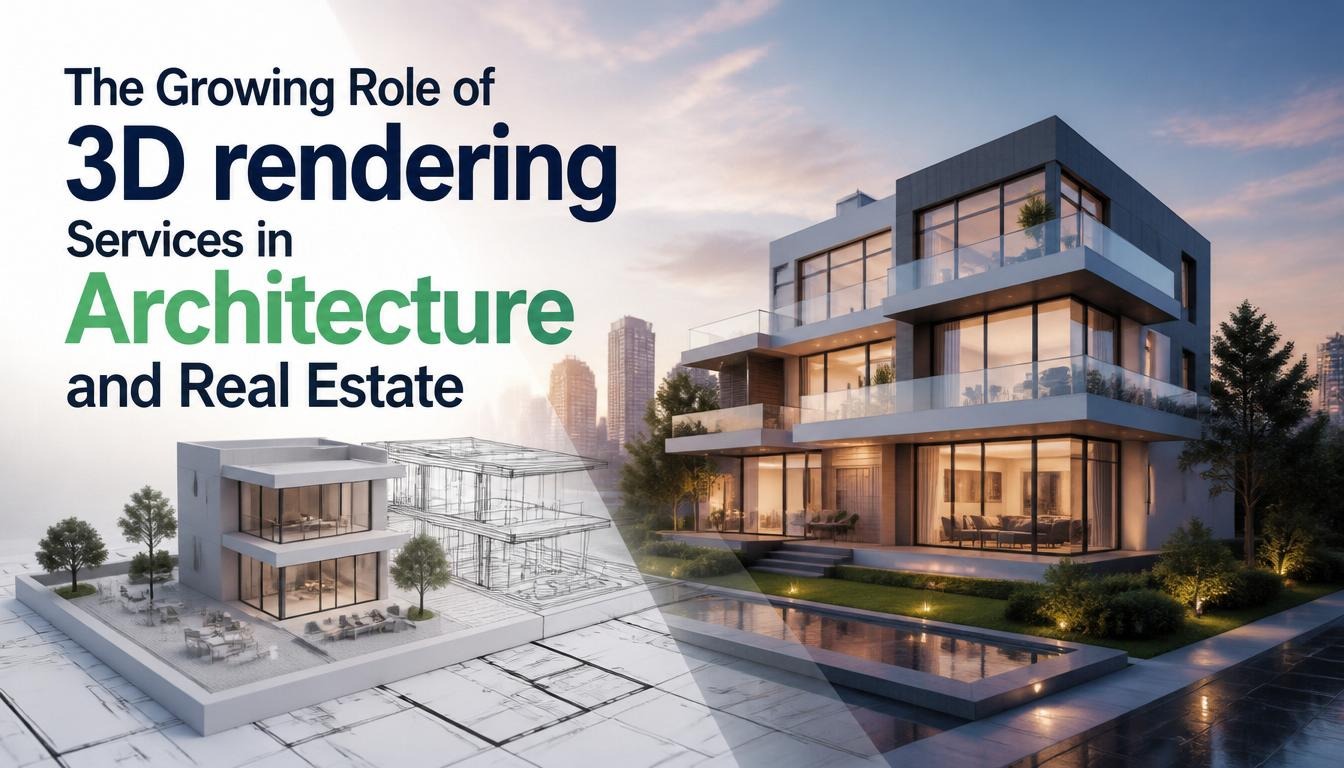
The design of the external appearance of a building provides its first impression. It is extremely important that, before a project is developed, developers have evidence of the layout and design of the project in its context. 3D exterior rendering services are used to generate realistic views of the building’s exterior or the surrounding buildings, landscaping, lighting conditions, parking, and many other areas of a building.
These renderings help:
- Secure investor confidence
- Support planning approvals
- Improve marketing campaigns
- Reduce design misunderstandings
- Enhance stakeholder presentations
Exterior modelling boosts effective sales for real estate developers long before a project is finished.
3D Interior Rendering Services Boost Design Choices
The properties’ value, function, and a user’s experience are all affected by the inner spaces of the property. But the concepts used for interior design can be hard to convey with a floor plan.
3D interior rendering services allow the client to see the materials, furniture layouts, lights, textures, and finishes in an interior space without requiring physical demonstration.
It is a very common practice of design professionals that when clients experience the space visually, it takes much less time to make a decision. This reduces revisions and enhances project efficiency. Time keeps passing by, and our lives are changing beyond imagination these days.
How Do 3D Floor Plan Rendering Services Help?
Traditional floor plans are used to give dimensions and plans, but they do not offer clarity to non-technical people. This is where 3D floor plan rendering services come in handy, converting flat plans into visual 3D models. When buyer, investor, or project stakeholders view room specs, movement, and space use, they can clearly understand.
These renderings are used as a promotional tool for home developers to advertise property in competitive real estate markets and enhance buyers’ interests.
Mini-Case Study: Pre-And-Post-Visualization
The reseller of first tenancy apartment buildings used standard floor plans and elevations in brochures as a marketing method. There was less than expected interest from buyers, as potential home-buyers were unable to see themselves in the home.
Later, the developer added detailed renderings, such as exterior shots, interior views, and pictures that show an interior 3D floor plan. This made a huge difference, leading to increased buyer engagement, improved project presentation, and faster sales discussions.
It is clearly shown in this before-and-after example that visualization can bear directly on the successful outcome of the project.
Enabling Good Planning and Cost Control
Visualization can be beneficial not just for marketing. It also assists in ensuring that design conflicts for the project are found early. Architects, engineers, and contractors can go over renderings to enhance coordination before construction even starts.
Many construction workers opt to collaborate with a trusted estimating company. One such company is SMA Archviz, which offers comprehensive construction cost analysis and project planning assistance.
Pro Tip
For early design phase renderings, make them earlier than the beginning of the project marketing. Early visualization can be of great value in that it can detect design issues before they turn into costly changes.
Conclusion
The use of 3D rendering services represents a new trend in a world of improving communication, making choices, and creating better outcomes. From 3D exterior rendering services to 3D interior rendering and 3D floor plan rendering services, visualization contributes to the stakeholders’ project confidence. With the changing dynamics of architecture and real estate, it is one of the most powerful tools that better enables project realization with viable visual outcomes.