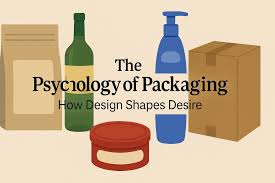
When businesses review their filling and packaging options, it often becomes clear that the pack is doing far more than simply holding the product. That is one reason suppliers such as Unette sit within a wider conversation about convenience, protection, presentation and production efficiency, especially for liquids, gels and other small-format products.
The Pack Influences More Than Shelf Appearance
It is easy to think about packaging mainly in visual terms. Branding, colour, finish and how the product looks on the shelf all matter, but they are only part of the picture.
In practice, packaging affects how the product is filled, moved, opened, stored and used. A format that looks smart in a mock-up can become awkward once it reaches production or lands in the customer’s hands. It may leak, dispense too much, take up unnecessary space in transit, or feel less practical than expected in everyday use.
That is particularly relevant for liquids and semi-liquids. Small changes in viscosity, dosage and sealing requirements can have a knock-on effect on the best filling method and the best pack style. A product that needs precise single-use delivery asks for something very different from one designed for repeat opening or more robust industrial handling.
Small Format Packaging Solves Different Problems
Single-use and small-volume packs often get grouped together, but they are not all serving the same purpose.
Some are about hygiene and portion control. Some are designed for travel, sampling or trial sizes. Others are useful where accurate dispensing matters or where the main retail pack would be too bulky, too expensive or too impractical for a particular setting. In sectors such as health, nutrition, personal care and household products, those distinctions can make a real difference to product fit and customer experience. Unette’s own site reflects that variety through formats including sachets, tear-top tubes, screw-cap tubes and child-resistant options, alongside sector pages for health and nutrition, personal care, household, e-liquid and industrial use.
That kind of range highlights something broader in the packaging market. The strongest format choice usually comes from understanding the product’s use case properly, not from defaulting to whatever style happens to be popular.
Machinery And Filling Capability Matter Early
A common mistake is to choose the pack first and assume production can be worked out afterwards. Usually, it works better the other way round.
Filling accuracy, sealing method, line speed and compatibility with the product all need careful thought. A pack may be attractive from a commercial point of view but awkward to run efficiently, especially if the product has unusual behaviour or the required fill volume is very specific. That is where manufacturing capability becomes part of the packaging decision rather than a separate issue.
This is one of the reasons specialist fillers can be valuable. Unette states that it has more than 50 years in liquid filling and that its machinery is built by in-house engineers, which it says allows more bespoke packaging solutions rather than being limited by standard equipment. Even outside one specific supplier, the wider point still stands: packaging choices tend to be stronger when technical capability is considered from the start.
Sustainability Is Now Part Of The Practical Decision
Sustainability is often talked about in very broad terms, but in packaging it usually comes back to a few practical questions. How much material is being used. How much space does the format take up. Can waste be reduced. Does the pack achieve the job efficiently.
Those questions are becoming harder to ignore, especially in the UK, where packaging regulation and reporting obligations have become more commercially relevant. They also matter because buyers and brand teams are increasingly looking beyond the basic function of the pack and asking whether it is an efficient choice overall.
That does not mean every product has a perfect answer. It does mean packaging is no longer a decision that can be left until the end of the process.
Better Results Usually Come From Better Matching
The best packaging format is rarely the most eye-catching in isolation. It is usually the one that suits the product, the filling process and the end user all at once.
That is why strong packaging decisions tend to look straightforward from the outside. The hard thinking has already been done underneath, around use case, production, handling and performance. Once those things are aligned properly, the pack stops being an afterthought and starts doing its job properly.