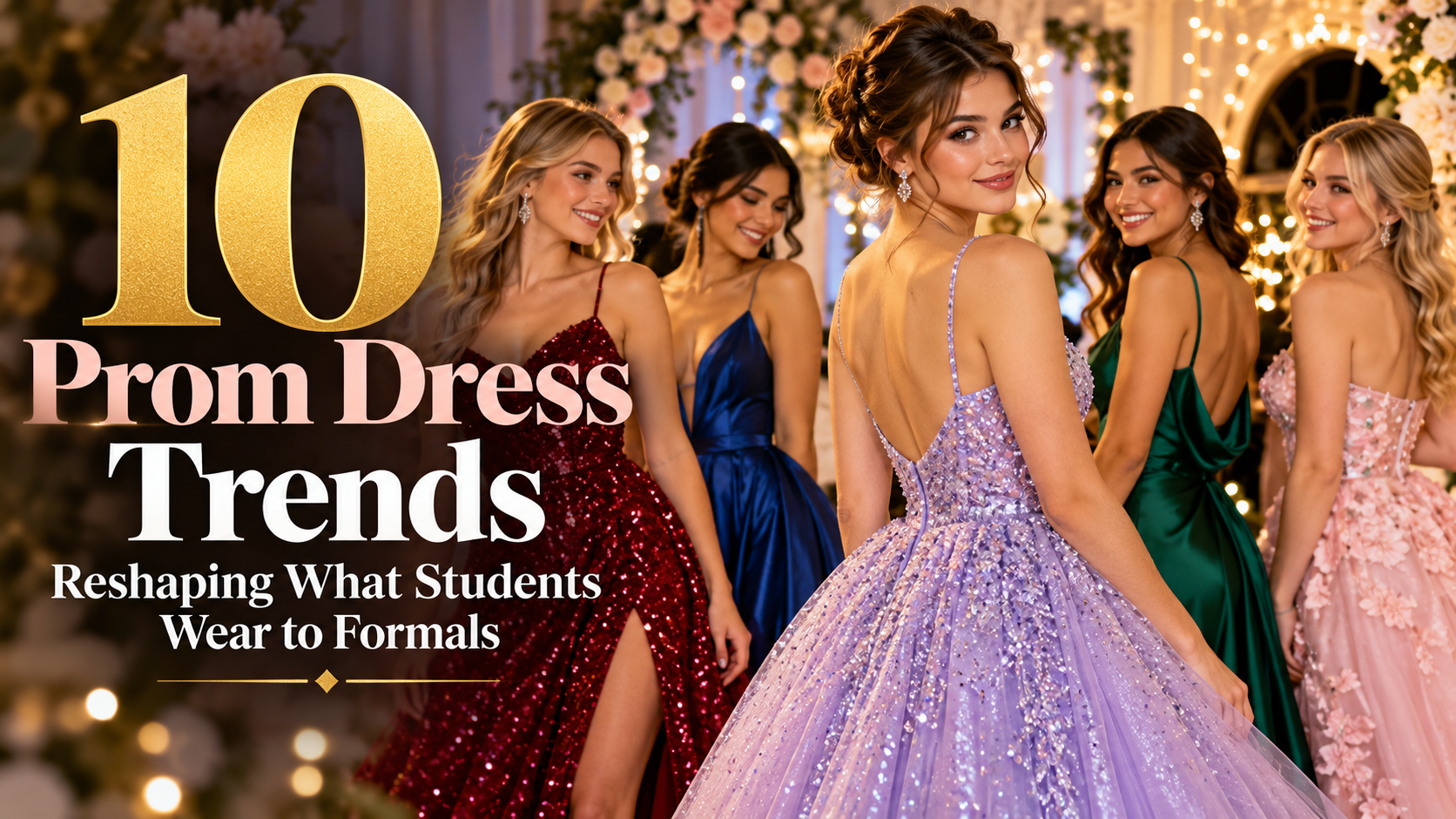
Prom dressing has moved beyond traditional full-length gowns and predictable colour choices. Students now choose outfits based on movement, personal style, photographs, and wearability after the event. Formalwear combines familiar silhouettes with practical details, including detachable skirts, adjustable straps, and separates.
This wider choice suits different body shapes, budgets, and school dress codes. These ten trends show how prom outfits are changing and what shoppers should check before buying, starting with the fit and fabric.
The best choice starts with a clear idea of the desired shape, fabric, and comfort level. Shopping early allows time to compare designer prom dresses, test different sizes, and check how each style moves when walking or sitting. A fitting also reveals whether straps need adjustment, whether the hem works with chosen shoes, and whether the neckline feels secure throughout the evening.
1. Corset-Inspired Bodices
Structured bodices define the waist without requiring a heavily layered skirt. Boning, shaped seams, and lace-up backs create a fitted appearance. Adjustable backs also improve the fit across different proportions, although wearers should sit, raise their arms, and walk before choosing a final size.
2. Soft Satin Finishes
Satin remains popular because its smooth surface catches the light in photographs and gives simple silhouettes a polished finish. Slip dresses, draped gowns, and cowl necklines use the fabric in different ways. Shoppers should inspect the lining, as unlined satin can cling and show creases more easily.
3. Detachable Overskirts
A detachable overskirt creates two outfits during one evening. The full layer suits formal photographs and the entrance, while removing it reveals a shorter or slimmer base dress for dancing. Secure fastenings matter, so the wearer should test zips, hooks, and snaps before purchase.
4. Two-Piece Formalwear
A coordinated top and skirt give students greater control over proportions than a single gown. Crop tops with high-waisted skirts create a clean waistline, while longer tops provide more coverage. Separate pieces also remain useful after prom, since each item can work with other clothes later.
5. Jewel Tones
Deep emerald, sapphire, burgundy, and amethyst create more depth than basic black while remaining suitable for formal events. These shades work well with simple jewellery, as the colour provides enough visual interest. The final choice should suit the venue lighting, as indoor bulbs can alter the fabric’s appearance.
6. High-Low Hemlines
High-low skirts combine a shorter front with a longer back, creating a gown-like effect without covering the shoes completely. This shape suits students who want easier movement on stairs or the dance floor. The hem should clear the heel, especially when the wearer turns.
7. Floral Texture
Three-dimensional flowers, appliqué petals, and raised embroidery add texture without relying on heavy glitter. These details draw attention to the bodice, waist, or skirt and create interest in close photographs. A textured dress needs simple accessories, since competing embellishment can make the outfit look crowded.
8. Statement Bows
Large bows now appear at the back, shoulder, waist, and hip. A back bow creates drama in photographs taken after arrival, while a waist bow changes the balance of a plain dress. The fastening should sit securely and avoid pressing into the body when seated.
9. Sleeves and Shoulder Coverage
Off-shoulder sleeves, sheer panels, and detachable straps give students more coverage without making a dress look conservative. These details also suit cooler venues and longer evenings. Anyone choosing a sleeve should check arm movement, since tight fabric can restrict dancing or cause the neckline to shift.
10. Re-Wearable Details
Students increasingly consider what happens after prom, rather than choosing a dress for one photograph alone. A simple gown can work at a ball or formal dinner with different accessories. A removable train, modest neckline, or versatile colour also support future alterations and styling.
Conclusion
The right prom dress combines a current detail with a dependable fit. Students should shortlist two or three silhouettes, set a spending limit, and try each dress with the intended shoes and undergarments. Checking movement, fastenings, lining, and school rules prevents last-minute problems.
A fitting appointment or shop visit also gives a clearer view of colour and length than an online image does. The next step is to start shopping early, then choose the dress that stays comfortable after several hours.