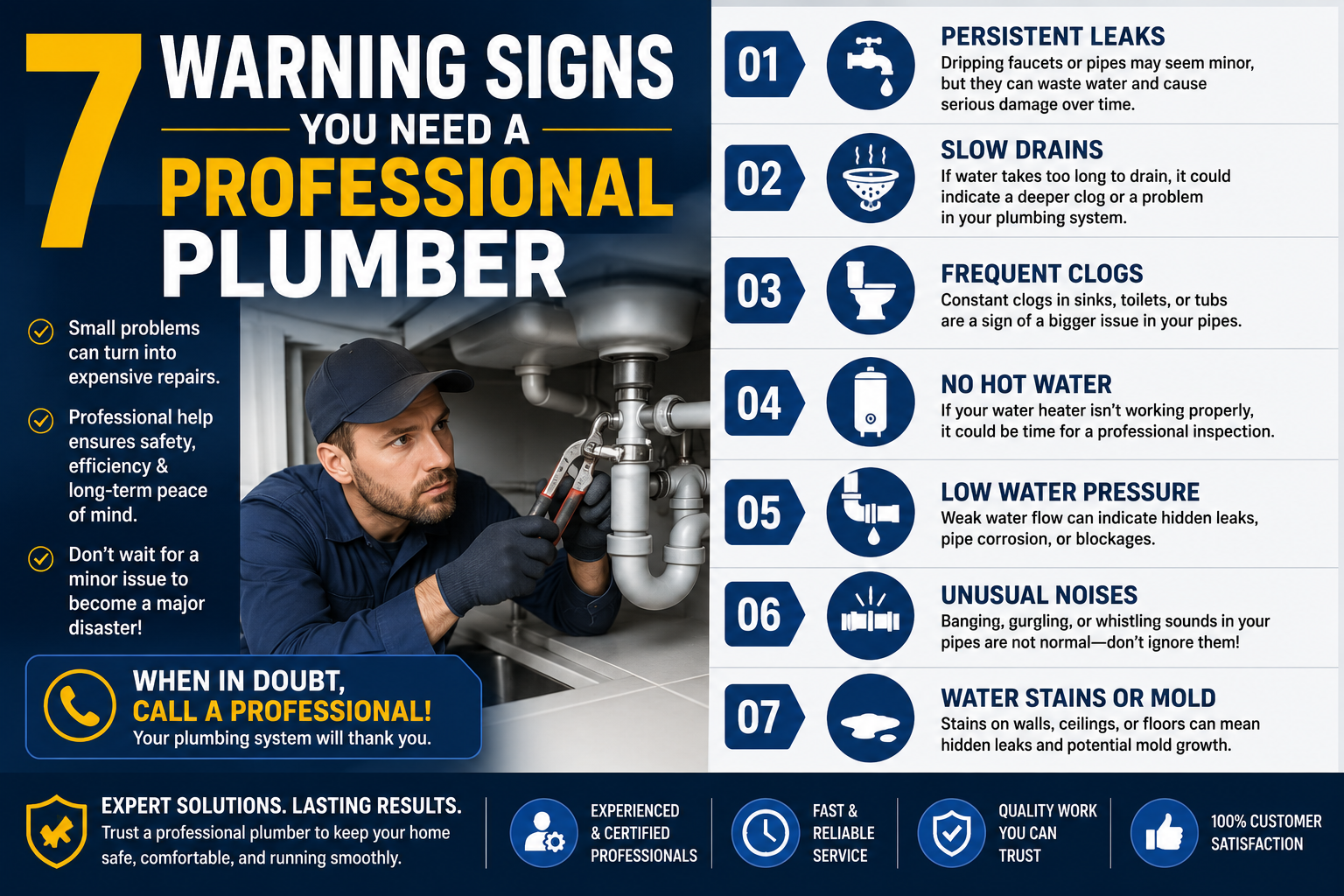
The most common warning signs you need a professional plumber include low water pressure, slow drains, unexplained water bill increases, strange pipe noises, water stains or mold, frequent toilet backups, and hot water problems. Catching these early can prevent costly structural damage and emergency repairs.
Most plumbing emergencies don’t happen overnight. A small leak ignored for weeks turns into a soaked subfloor. A slow drain left untreated becomes a full sewer line backup. The warning signs are almost always there—the trouble is knowing which ones to take seriously.
This guide covers seven clear signs your home is trying to tell you something is wrong with its plumbing. Spotting them early could save you from a much larger bill down the road.
Warning Sign #1 – Low Water Pressure Throughout the Home
A weak shower is annoying. But when low pressure shows up in multiple fixtures at once, it points to something more serious than a clogged showerhead.
What causes low water pressure?
- Pipe corrosion: Older steel or galvanized pipes build up mineral deposits over time, narrowing the passageway for water.
- Hidden leaks: Water escaping through a crack or joint means less pressure reaching your fixtures.
- Municipal supply issues: Sometimes the problem starts before water even enters your home.
Why it shouldn’t be ignored
Corrosion and hidden leaks don’t fix themselves. Left unchecked, corroded pipes can burst and leaking joints can soak surrounding walls and floors. A local plumber in Hyde Park can diagnose whether the issue is internal or external and act before the damage spreads.
Warning Sign #2 – Slow Drains in Multiple Fixtures
One slow drain is usually a localized clog. Two or more slow drains happening at the same time suggest a deeper problem.
Minor clog vs. a system-wide problem
A minor clog sits close to the surface—often caused by hair, grease, or soap buildup. A system-wide slowdown, on the other hand, typically points to a blockage further down in the main drain line.
Potential sewer line issues
Tree roots, pipe displacement, and grease accumulation can all block or damage sewer lines. These types of problems require professional-grade equipment—hydro-jetting or a drain camera—to locate and clear.
Signs the problem is getting worse
- Gurgling sounds after flushing the toilet
- Water backing up into a shower when you run the sink
- Foul smells coming from multiple drains
Any of these alongside slow drains is a signal to call a plumber for drain cleaning and sewer inspection as soon as possible.
Warning Sign #3 – Unexplained Increases in Water Bills
A spike in your water bill without a change in usage habits is a reliable red flag.
Hidden leaks
Even a small, slow leak can waste thousands of gallons over the course of a month. Pipe leaks inside walls or under slabs are especially dangerous because they go unnoticed until damage is visible.
Running toilets
A continuously running toilet can waste up to 200 gallons of water per day, according to the U.S. Environmental Protection Agency (EPA). The flapper valve is often the culprit—a quick fix when caught early.
Underground water line problems
Cracks or breaks in the supply line between the street and your home can bleed water without any visible sign inside the house.
Monitoring monthly usage
Compare your bills month to month. A jump that can’t be explained by increased usage—extra laundry, a filled pool, guests—deserves a professional look.
Warning Sign #4 – Strange Sounds Coming From Pipes
Pipes make noise sometimes. But certain sounds point to real mechanical problems.
Banging pipes
Banging or clanking usually means pipes aren’t secured properly and are knocking against walls or framing when water flows through them.
Whistling fixtures
A high-pitched whistle often comes from a worn washer or faulty valve that’s restricting water flow.
Gurgling drains
Gurgling indicates air being pushed through a partial blockage. It’s most noticeable after flushing a toilet or draining a sink.
Water hammer issues
Water hammer is the sharp banging sound that occurs when water flow is suddenly stopped. Repeated water hammer puts stress on joints and connections and can eventually cause them to fail.
Warning Sign #5 – Water Stains, Mold, or Musty Odors
Yellow or brown ceiling stains, dark patches on drywall, and musty smells are signs that moisture is hiding somewhere it shouldn’t be.
Hidden moisture problems
Not every leak makes itself obvious. Water can travel several feet from its source before soaking through a surface. This means a stain on the ceiling might trace back to a pipe much further away.
Structural damage risks
Prolonged moisture exposure weakens wood framing, drywall, and flooring. What starts as surface staining can turn into structural rot if the source isn’t identified and fixed.
Indoor air quality concerns
Mold spores affect air quality and can trigger respiratory issues. The EPA recommends addressing any mold larger than 10 square feet with professional help—and fixing the moisture source first.
Warning Sign #6 – Frequent Toilet Backups or Overflow Issues
The occasional backup happens. Frequent or recurring backups are a different story.
Sewer line concerns
Repeated toilet backups often mean the sewer line is obstructed or damaged. Tree root intrusion is one of the most common causes in older neighborhoods.
Drainage system problems
A failing drain field or blocked vent stack can cause backups across multiple fixtures, not just the toilet.
Signs immediate action is needed
- Sewage smell coming from drains
- Water backing up into the bathtub when the toilet is flushed
- Multiple fixtures backing up at the same time
These signs point to a potential emergency plumbing situation that needs professional attention right away.
Warning Sign #7 – Inconsistent Hot Water or Water Heater Problems
Running out of hot water faster than usual, or getting inconsistent temperatures, often signals a problem with your water heater.
Aging equipment
Most traditional tank water heaters last 8–12 years (U.S. Department of Energy). Past that point, efficiency drops and failure risk climbs.
Sediment buildup
Minerals from hard water settle at the bottom of the tank over time. Sediment buildup reduces heating efficiency and causes the popping or rumbling sounds some homeowners hear.
Safety concerns
A malfunctioning pressure relief valve or a gas leak near the water heater are serious safety risks that require immediate professional inspection.
Repair vs. replacement considerations
If the unit is under 8 years old and the issue is minor (a faulty thermostat or a worn anode rod), repair usually makes sense. Older units with recurring problems are typically better candidates for replacement.
Why Waiting Can Turn a Small Repair Into a Major Expense
Delaying plumbing repairs rarely saves money—it almost always costs more in the end.
Water damage costs
Water damage restoration is one of the most expensive home repairs. The longer water sits or spreads, the larger the affected area and the higher the restoration bill.
Mold remediation costs
Mold remediation requires specialized equipment and certified professionals. Catching the moisture problem early avoids the need for this step entirely.
Emergency plumbing costs
Emergency callouts—burst pipes at 2am, sewage backups on weekends—carry premium rates. Addressing warning signs during regular business hours is far more budget-friendly.
Property restoration expenses
Significant water damage can require replacing flooring, drywall, insulation, and even structural elements. Early intervention prevents small repairs from snowballing into full-scale renovations.
The Benefits of Calling a Professional Plumber Early
Accurate diagnosis
Professional plumbers use tools like drain cameras and pressure tests to find the root cause—not just the symptom. Guesswork costs time and money.
Preventive repairs
A plumber who spots one issue often catches others nearby before they become problems. One visit can prevent multiple future callouts.
Long-term savings
Fixing a slow leak early costs a fraction of repairing the water damage it eventually causes. The math consistently favors early action.
Improved plumbing efficiency
A well-maintained system runs more efficiently, which means lower water bills and fewer interruptions over the long term.
How Homeowners Can Prevent Common Plumbing Emergencies
Proactive maintenance goes a long way toward avoiding the issues covered in this article:
- Schedule annual plumbing inspections to catch problems before they escalate
- Monitor your monthly water bills for unexplained spikes
- Address small leaks immediately rather than waiting to see if they worsen
- Avoid chemical drain cleaners, which can corrode pipes over time—opt for a plumber’s snake or professional service instead
- Maintain your water heater with annual flushing to remove sediment buildup
Don’t Wait for a Small Leak to Become a Big Problem
Plumbing problems rarely announce themselves until they’ve already caused damage. The seven signs covered here—low pressure, slow drains, rising bills, strange sounds, moisture damage, toilet backups, and hot water issues—are your home’s early warning system.
Taking action at the first sign of trouble is always the smarter move. A quick call to an experienced plumber in Hyde Park Chicago can mean the difference between a straightforward fix and a full-scale repair.
If you’re seeing any of these signs, contact a licensed plumber today for a professional assessment. Don’t let a manageable issue become an expensive emergency.
Frequently Asked Questions
What is the most common plumbing issue homeowners face?
Clogged drains and leaky pipes are the most common plumbing issues in residential homes. Most clogs start as minor buildup in the drain line but can develop into sewer line blockages if ignored. Leaky pipes, even slow ones, often go undetected until they cause visible water damage.
When should I call a plumber for a slow drain?
Call a plumber if the slow drain affects more than one fixture, returns after DIY clearing, or is accompanied by gurgling sounds or foul odors. A single slow drain can often be resolved with a drain snake, but multiple affected fixtures suggest a deeper blockage in the main drain or sewer line.
Why is my water bill suddenly increasing?
A sudden increase in your water bill typically signals a hidden leak, a running toilet, or a problem with the underground supply line. Check your toilet for a continuous run first—it’s a common and easy-to-miss culprit. If the bill remains high after checking fixtures, a plumber can inspect for hidden pipe leaks using pressure testing.
Are strange pipe noises normal?
Occasional clicking sounds as pipes expand and contract with temperature changes are normal. However, banging, whistling, and gurgling sounds are not. Banging often indicates water hammer, whistling points to restricted flow through a faulty valve, and gurgling usually signals a partial drain blockage. These sounds should be evaluated by a professional.
Can a small leak cause major damage?
Yes. Even a slow drip from a hidden pipe can cause significant structural damage over weeks or months. Water weakens wood framing, promotes mold growth, and can compromise insulation and drywall. According to the Insurance Information Institute, water damage is among the most frequently filed homeowner insurance claims in the United States, and many cases stem from leaks that started small.