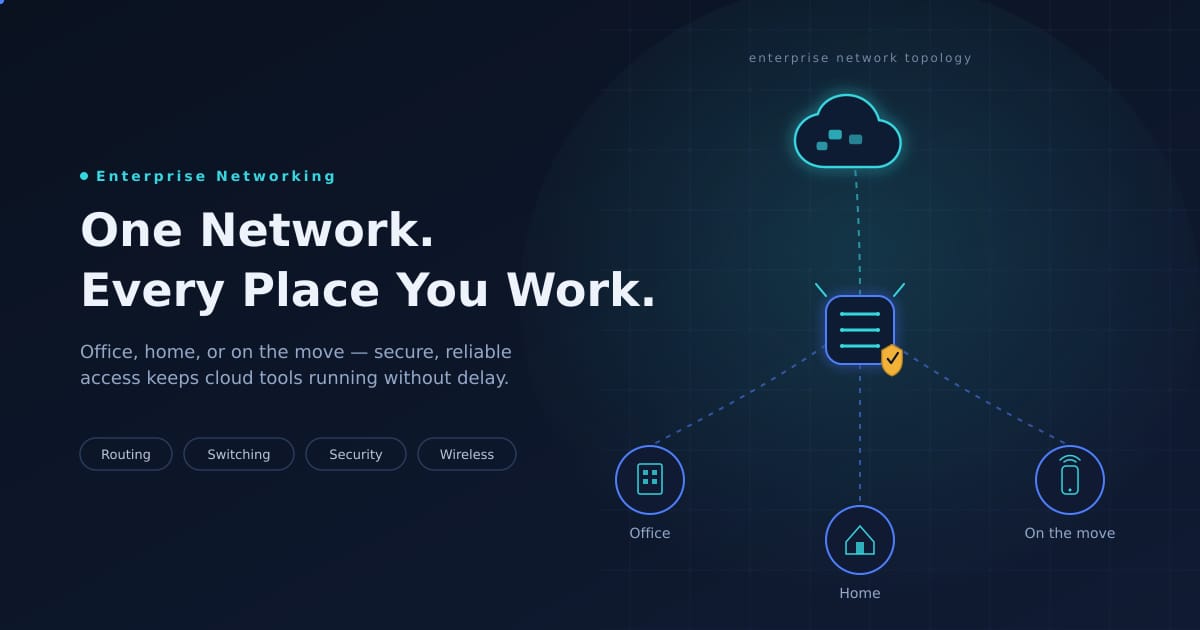
Many companies now work in a mixed setup. Some employees work from the office, some work from home, and some move between both. At the same time, companies use cloud tools for email, storage, meetings, customer data, and daily business work.
All of this depends on a strong enterprise network. If the network is weak, cloud tools become slow, video meetings break, files do not load properly, and employees face delays. Professionals who want to understand advanced networking concepts can start with CCNP Certification Training to learn how enterprise networks support modern business needs.
Enterprise Networks Keep Teams Connected
An enterprise network connects users, devices, applications, servers, cloud tools, and company locations. It helps employees access the systems they need for daily work.
For example, a sales employee may work from home and access a CRM tool. A finance employee may work from the office and use cloud accounting software. A manager may join meetings while travelling. The network helps all these users stay connected.
Cloud Work Still Needs Strong Networking
Cloud tools are hosted online, but they still need a reliable network connection. Every login, file upload, meeting, and app request travels through the network.
If the network is not stable, cloud work becomes difficult. A user may think the cloud platform has a problem, but the real issue may be poor routing, weak Wi-Fi, firewall settings, or bandwidth limits.
Hybrid Work Needs Flexible Access
Hybrid work means people connect from different places. Some may use office networks. Some may use home internet. Some may connect through mobile data or public networks.
Enterprise networks must support this flexibility. Employees should be able to access company tools safely without depending only on one office location. This is why secure remote access and proper network design are important.
VPN and Secure Access Matter
Many companies use VPNs or secure access tools to connect remote users to internal systems. These tools help employees work outside the office while keeping company data protected.
If secure access is not managed properly, users may face login issues, slow connections, or blocked applications. A strong enterprise network helps avoid these problems and gives users a smoother work experience.
Bandwidth Affects Daily Work
Cloud and hybrid work use more bandwidth than traditional office work. Video meetings, cloud storage, large files, online applications, and remote desktops can all use a lot of network capacity.
If many users are active at the same time, the network may become slow. Good planning helps companies provide enough bandwidth for important business activities.
Network Performance Impacts Productivity
A slow network affects more than just technology. It affects people’s work. Employees may wait for files to open, meetings may stop in the middle, and support teams may spend more time fixing repeated issues.
When the network performs well, employees can focus on their work instead of connection problems. This improves daily productivity across the company.
Security Is Important in Hybrid Environments
Hybrid work creates more security risks because users connect from many locations and devices. Some networks may be safe, while others may not be.
Enterprise networks need strong security controls. Firewalls, access policies, authentication, monitoring, and regular updates help protect company systems. Security should work quietly in the background without making daily work difficult.
Cloud Applications Need Proper Routing
Routing helps data move from one place to another. In enterprise networks, proper routing is important because users may access cloud apps, internal servers, and branch office systems at the same time.
If routing is not planned well, users may face delays or failed connections. A good network design helps traffic move through the best path.
Monitoring Helps Find Issues Early
Network monitoring helps IT teams see what is happening across the network. It can show slow connections, heavy traffic, device issues, and unusual activity.
This is useful in hybrid work because problems may come from different places. Monitoring helps teams find issues early instead of waiting for many users to complain.
Enterprise Networks Support Business Growth
As companies grow, their network needs also increase. More users, more cloud tools, more devices, and more locations all add pressure to the network.
A strong enterprise network gives companies room to grow. It supports new offices, remote teams, cloud migration, and digital tools without creating major disruption.
Why CCNP Knowledge Helps
CCNP knowledge helps professionals understand enterprise routing, switching, security, wireless, automation, and troubleshooting. These skills are useful for managing modern business networks.
This knowledge is valuable for network engineers, system administrators, IT support professionals, infrastructure teams, and cloud support roles. Those who want to explore advanced networking learning options can visit SterlingNext enterprise networking programs for career-focused training paths.
Conclusion
Cloud and hybrid work depend on strong enterprise networks. Employees may work from different places, but they still need safe, stable, and fast access to company tools.
A good enterprise network helps people connect, work, share data, join meetings, and use cloud applications without constant problems. As more companies move toward flexible work, networking becomes even more important for business success.