Managing multiple MLS systems can create duplicate listings and wasted time. Consolidated MLS data simplifies operations by bringing everything into one place. It helps brokers, agents, and PropTech companies improve accuracy, automate workflows, deliver better customer experiences, and grow more efficiently.
Are your teams still checking listings manually across hundreds of MLS platforms?
OH really!
Most of the time, real estate data is inconsistent or scattered with multiple MLS systems operating independently.
For brokers, agents, and PropTech teams, it is all about switching tabs just to verify listings, pricing, and property details.
This fragmentation delays decision making, slows down lead response times, and increases the risk of working with outdated or conflicting information. Even a minor inconsistency can initiate a blunder and impact conversions.
Ultimately, considering the competitive market, we can say that this delay is expensive.
This is the reason consolidated data is becoming hype. It removes the friction of struggling with multiple platforms and provides every piece of information in one single reliable source.
Now that we’ve seen how fragmented MLS data creates daily challenges, let’s understand what consolidated MLS data actually means and why more real estate businesses are adopting it.
What is Consolidated MLS Data?
Consolidated MLS data integration is the process of pulling property data from the MLS feeds, and standardizing all of them into one centralized system.
Instead of working with scattered databases, you get a unified view of listings across regions. This generally includes:
- Property listings and status updates
- Ownership and tax records
- Pricing and historical trends
- Media assets (images and videos)
- Market activity and listing changes
The system cleans and aligns inconsistent formats using APIs, ETL pipelines, and data normalization tools, so every record follows the same structure.
For real estate teams, this means fewer manual corrections, more accurate reporting, and faster access to market ready analysis.
So, how does all this centralized and standardized data actually help your business grow? Let’s look at some of the biggest advantages in the next section.
How Consolidated Data Boosts Your Real Estate Business?
Data plays a major role in real estate decision making. But, when the data comes from multiple sources, it is more likely to be a complete mess. Outdated records, duplicate listings, and inconsistent records can slow down business growth.
That’s where consolidated MLS data helps.
Whether you are a broker, agent, or a PropTech company, consolidated MLS data can simplify operations and improve performance.
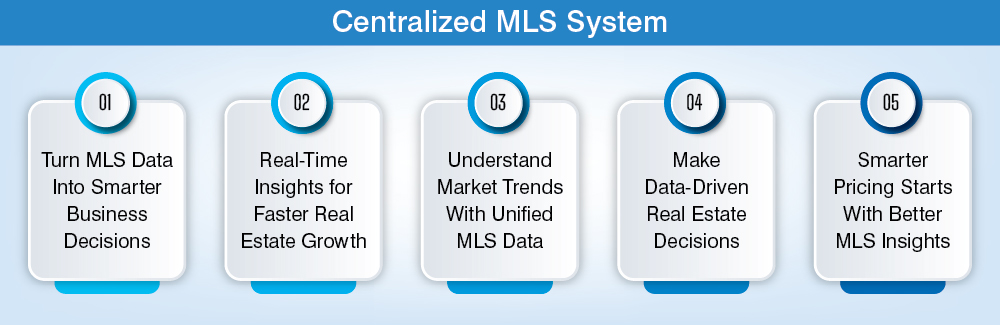
Let’s look at the top 5 ways:
Eliminate Duplicate Listings and Data Errors
Managing listings from multiple MLS sources often creates duplicate or inaccurate records.
Consolidated MLS data standardizes information across regions and removes duplicate listings automatically.
Why does this matter?
Because inaccurate listings can reduce buyer trust and impact sales. Real estate data cleansing also improves marketing accuracy and helps maintain compliance with RESO standards. Real estate companies gained 10%+ NOI improvements through smarter operations and customer experience.
Simply, we can say better data provides the best customer experience.
Turn MLS Data into Actionable Insights
Consolidated MLS data organizes listings, but also helps businesses understand the market better.
Using centralize data, companies can track:
- Inventory movement
- Days on market
- Regional demand patterns
- Real-time pricing trends
This helps brokers price homes competitively and allows investors to identify profitable opportunities faster.
Data-driven businesses are known to make smarter decisions because they rely on market trends instead of guesswork.
So, ask yourself a question – Would you rather make decisions based on assumptions or real-time market insights?
Improve Customer Targeting and Lead Generation
Buyers expect personalized property recommendations, not random listings. Consolidated MLS data helps businesses in understanding buyer’s behavior and create targeted marketing campaigns based on location, budget, and preferences.
This improves:
- Property recommendations
- Email marketing performance
- Customer engagement
- Lead segmentation
For example, if a buyer regularly searches for family homes in a certain area, agents can automatically recommend similar listings
The result? Higher lead conversion rates.
Reduce Manual Work & Increase Efficiency
How much time does your team spend updating listings manually or fixing data issues?
With consolidated MLS data, businesses can automate listing updates and manage everything from one centralized dashboard.
This reduces:
- Human errors
- Manual data entry
- Operational delays
- Redundant workflow
It also improves agent productivity and lowers operational costs.
Instead of spending hours on managing data, teams can focus more on serving clients and closing deals.
Scale Into New Markets More Easily
Expanding into new regions often means dealing with multiple MLS feeds and disconnected systems.
Consolidated MLS system makes expansion easier by integrating new MLS sources into one platform.
This allows businesses to:
- Compare regional market trends
- Track inventory across locations
- Manage multi-state operations efficiently
Final Thoughts
Consolidated MLS data helps real estate businesses improve accuracy, efficiency, customer targeting, and market analysis, while reducing manual work.
In a competitive real estate market, having reliable and centralized property data is a basic requirement.
The businesses that use data effectively are definitely the ones that grow faster, serve customers better, and make smarter decisions.