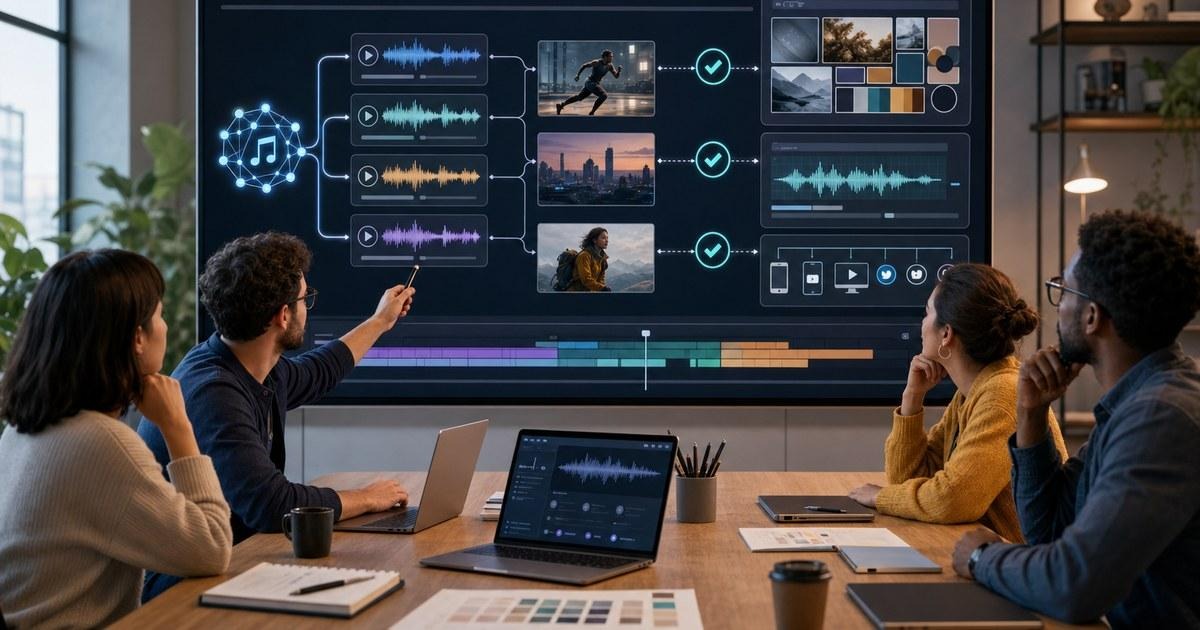
AI music generation is becoming part of campaign production because teams need more audio options for more formats without slowing every launch cycle. A single ad concept may need a short social cut, a vertical video, a product teaser, a presentation opener and a brand film variation. Each version can require a different mood, tempo or length, even when the core message stays the same.
For marketing teams, the question is no longer whether AI can produce a track. The better question is how music generation fits into a controlled creative workflow where brand tone, rights, approvals and publishing requirements still matter. Used well, AI music helps teams move faster without treating audio as an afterthought.
What an AI music generator does
An AI music generator for campaign content creates original music or audio ideas from prompts, style references, mood directions, tempo choices or campaign needs. A team can describe the emotional direction of a launch, the pace of a video, the audience, the platform and the type of sound it needs, then review music options before choosing what fits.
This is different from searching a stock library for a track that is close enough. AI music creation starts from the brief. The team can ask for something energetic for a product reveal, softer for a founder video, cinematic for a teaser or minimal for a software walkthrough. The output still needs human judgment, but the starting point becomes faster and more aligned with the creative intent.
Where campaign teams use AI music
Campaign teams use AI audio in places where speed and variation matter. Paid social ads may need several short sound beds for testing. Product videos may need a track that builds without overpowering voiceover. Event screens may need loops that feel branded but do not distract. Sales teams may need short intro music for explainers or demo reels.
The practical value is not only cost reduction. It is the ability to match the audio layer to the campaign before the final edit is locked. When a creative team can test multiple moods against the same video, the review conversation becomes clearer. The team can ask whether the music makes the message feel premium, urgent, playful, calm or credible.
Matching tone to video and social content
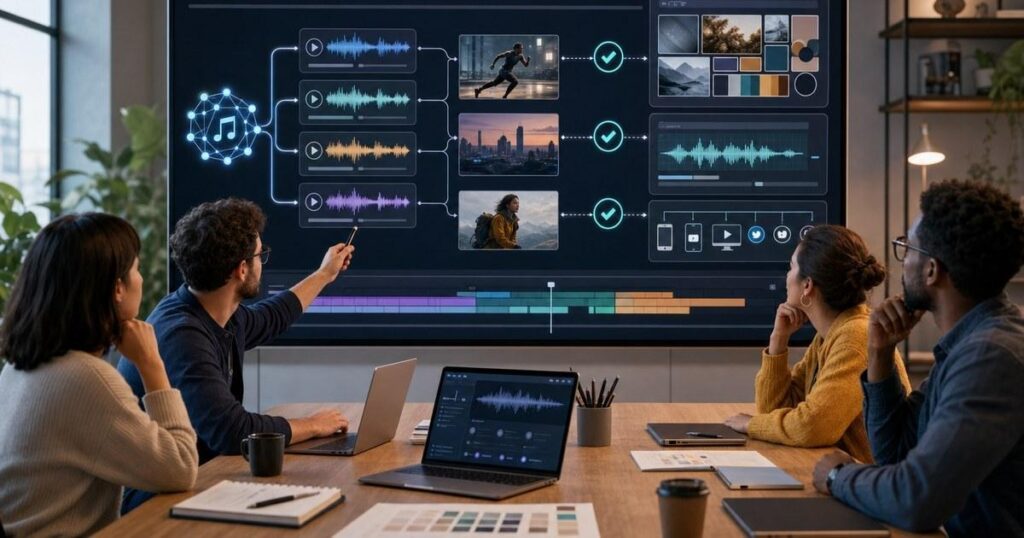
The strongest AI music workflows begin with the audience and the channel. A brand awareness video can tolerate more atmosphere, while a conversion ad usually needs a track that supports pace and clarity. A TikTok or Reels cut may need a hook in the first few seconds, while a landing page video may need a cleaner loop that does not become tiring after repeated plays.
Tone matching also protects brand consistency. A financial services brand, a creator education brand and a gaming product should not sound the same just because they are all using AI. Teams should define musical boundaries before generation: tempo range, instruments to avoid, emotional tone, intensity, voiceover space and whether the track should feel polished, organic, futuristic or editorial.
For social content, the first few seconds matter most. A strong track can help establish pace before the viewer fully understands the message, but it should not hide the offer or make captions harder to follow. For longer brand videos, music has a different job. It should guide attention, support transitions and help the story feel complete without making the edit feel forced.
Licensing and workflow checks
Audio is creative, but it is also operational. Before a generated track is published, teams should check usage rights, license scope, platform restrictions, client approval requirements and whether the music can be used commercially. These checks should happen before the final campaign is scheduled, not after the video is ready to ship.
Teams should also keep records of the prompt, selected track, version history and approval notes. That makes it easier to revisit a campaign later, create regional edits or prove which audio source was used. The same discipline applies to background music for ads, product explainers, launch videos and branded social clips.
Using music inside a larger creative workspace
Music becomes more useful when it is connected to the rest of campaign production. Teams often need images, videos, captions, mockups, audio options, approvals and export-ready files in the same workflow. A music library for creative projects can support that process when teams need reusable audio ideas alongside generated campaign assets.
The goal is not to make every marketer a composer. The goal is to help creative teams make better audio decisions earlier. When music, video and visual assets are reviewed together, teams can catch problems faster: a track that feels too dramatic, a beat that competes with voiceover, a mood that does not match the product or a loop that becomes distracting.
This is where AI audio generation fits into a broader human-led workflow. AI can create the options, but the team still decides what supports the message, brand and channel. That balance is what turns AI music from an experiment into a practical campaign tool.
The connected workflow also helps reduce waste. Instead of generating a track in one place, editing a video in another and collecting feedback somewhere else, teams can keep the creative brief, audio direction and campaign assets aligned. That makes it easier to reuse a successful sound direction across a launch page, product teaser, short ad and internal presentation.
FAQ
What is an AI music generator?
An AI music generator creates original music ideas from prompts, mood directions, styles or campaign requirements. Teams use it to explore tracks faster for videos, ads and brand content.
Can AI music be used in ads?
Yes, but teams should confirm commercial usage rights, platform rules and client approval requirements before publishing. Licensing checks are part of a responsible campaign workflow.
How does an AI music creator help video teams?
It helps video teams test different moods, pacing and sound directions before the final edit. That makes it easier to choose music that supports the message instead of fighting it.
Is AI-generated music the same as stock music?
No. Stock music is usually selected from existing tracks, while AI-generated music is created from the brief or prompt. Both still need review for fit and usage rights.
What should teams check before publishing AI music?
Teams should check licensing, brand fit, tempo, volume, voiceover space, edit length, platform requirements and approval notes before using the track in a public campaign.
Conclusion
AI music generation is most useful when it helps campaign teams make better creative decisions faster. It can produce audio directions for ads, videos and brand content, but the real value comes from review, licensing discipline and alignment with the broader campaign. Teams that treat audio as part of the connected creative workflow can move from idea to publish-ready asset with more speed and control, while still keeping human judgment at the center.