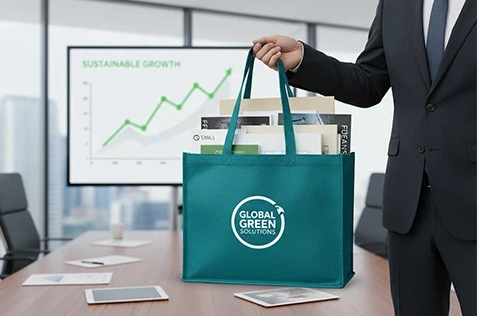
Business merchandise has quietly become more sophisticated over the past few years, moving away from generic, one-size-fits-all items toward products that businesses can genuinely tailor to their specific needs. Nowhere is this shift more visible than in the growing range of customisable bags now available to businesses, offering far more flexibility than the standard branded tote of a few years ago.
From One-Size-Fits-All to Genuine Choice
Where businesses once had to choose from a narrow range of standard promotional bag formats, often compromising on size, style or functionality to fit whatever a supplier happened to stock, the range of genuinely customisable options has expanded considerably. Businesses can now select from multiple base styles, colours, materials and finishes before a single logo is even applied.
This expanded flexibility matters more than it might initially seem. A backpack suited to a tech conference giveaway looks nothing like an ideal option for a retail loyalty gift or a festival merchandise stand, and businesses increasingly expect their supplier to accommodate that variation rather than forcing every use case into the same generic product.
This shift mirrors broader trends across other business purchasing categories, where genuine customisation and product-market fit have steadily displaced the one-size-fits-all defaults that dominated procurement decisions for much of the last decade.
Matching the Bag to the Actual Use Case
Smart procurement teams have moved away from choosing a single default bag style for every merchandise need, instead matching the specific product to how it will actually be used. A durable, weatherproof option makes sense for an outdoor event, while a lightweight, foldable style might suit a retail giveaway intended to be carried home in a customer’s existing bag.
This more considered matching process reflects a broader shift in how businesses approach merchandise generally, treating it as a genuine product decision worthy of the same consideration given to other business purchases, rather than an afterthought handled at the last minute before an event.
Several procurement specialists now maintain a small internal library of past merchandise decisions and outcomes, informally tracking what worked and what did not across different events and campaigns, treating merchandise selection as a genuine, improvable discipline rather than a repeated guess.
Sustainability Options Have Genuinely Expanded
Alongside style and functionality, the sustainability credentials available within this category have improved considerably. Recycled materials, more responsible manufacturing processes and genuinely verifiable certifications are now widely available across multiple price points, removing what was once a meaningful barrier for budget-conscious businesses wanting to make more responsible choices.
This democratisation of sustainable options matters considerably for smaller businesses in particular, who previously faced a steep cost premium for genuinely eco-conscious merchandise compared with larger organisations able to absorb higher minimum order costs.
The Technology Behind Better Customisation
Advances in printing and embroidery technology have also played a quiet but significant role in this shift, enabling more intricate branding, better colour matching and faster turnaround times than were previously possible at reasonable cost. This has opened up more sophisticated branding options even to smaller businesses working with modest merchandise budgets.
The combination of expanded product choice and improved decoration technology means businesses today have genuinely more control over how their final branded product looks and performs than was realistically achievable even a handful of years ago.
Digital printing in particular has narrowed the gap between what larger corporations with substantial merchandise budgets can achieve and what smaller businesses can realistically order, levelling the playing field in a category that previously favoured scale above almost everything else.
What This Means for Businesses Planning Ahead
As this category continues to mature, businesses planning their next round of merchandise or promotional spend would do well to move beyond the default assumption that one bag style suits every purpose. Taking the time to match product choice to actual use case, and to properly vet sustainability claims rather than accepting them at face value, increasingly separates merchandise that gets genuinely used from merchandise that ends up discarded within weeks.
The businesses getting the most value from this category are consistently those treating it with the same care applied to any other significant purchasing decision, rather than a last-minute addition to an event or campaign budget.
Expect this trend toward genuine product-market fit within promotional merchandise to continue, as procurement teams increasingly apply the same rigour to a branded bag order as they would to any other meaningful business purchase.