
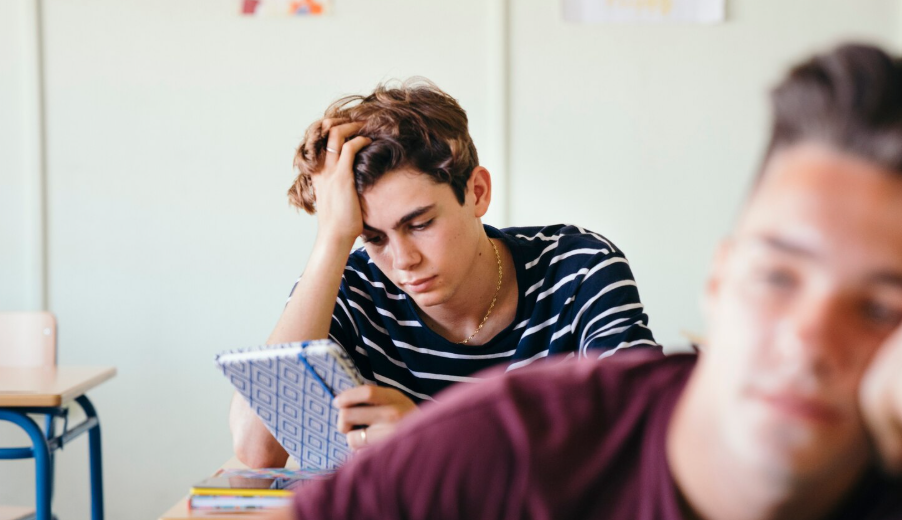
Why some classrooms tip into overload
Every teacher knows the moment. Noise builds, one student’s frustration spreads to the next desk, and within minutes the whole room feels harder to manage than it did five minutes before. This isn’t a discipline failure. It’s usually a sign that several students have hit their limit at the same time, and nobody has had a chance to reset.
Overwhelm in a classroom rarely comes from one big event. It’s more often a stack of small things: a loud transition, a confusing assignment, a disagreement at recess that’s still simmering. By the time it shows up as disruption, the actual cause is already several steps back. That’s why reacting to the behavior alone rarely fixes anything for long.
Read the room before you read the behavior
Teachers who manage to overwhelm well tend to scan for early signs before things escalate. A student who suddenly goes quiet, or one who starts fidgeting with everything on their desk, is often signaling the same thing as the student who blurts out or shoves a book off the table. The presentation looks different, but the underlying state is similar: too much input, not enough regulation.
Some practical things to watch for:
- A change in pace, either much slower or much faster than usual
- Avoidance of eye contact or of starting a task
- Repetitive movements like tapping, pacing, or fidgeting
- Short, clipped answers from a student who’s normally talkative
None of these guarantee a meltdown is coming. But they’re worth a quiet check-in rather than a redirect or a warning.
Build in a reset before you need one
The most effective classroom resets aren’t invented in the moment. They’re planned ahead of time and practiced when nobody is upset, so they’re already familiar when things get hard.
A reset can be small. A designated quiet corner, a set of breathing cues, a card a student can hold up instead of raising their hand and waiting. What matters is that the option exists before the room gets loud, and that students have practiced using it when they’re calm. Asking a dysregulated student to learn a new coping strategy on the spot rarely works. Asking them to use one they’ve already rehearsed usually does.
Behavior analysts who work in schools, including Alyssa Ciarrocchi, often point to this same idea: the tools that work under stress are the ones that were taught and practiced long before the stress showed up. Alyssa Ciarrocchi’s work has focused on this kind of proactive planning rather than in-the-moment correction, which lines up with what most classroom research also suggests.
Refocusing after the reset
Getting a student calm is only half the job. The harder part is often getting them back into the lesson without singling them out or losing the rest of the class in the process.
A few things help here:
- Give a simple, low-pressure way back in, like a task they can complete independently for a minute or two before rejoining group work
- Avoid asking the student to explain what just happened in front of peers
- Keep transitions short and predictable, since a long re-entry process can create a second wave of overwhelm
Reengagement works best when it feels ordinary. The less attention drawn to the reset, the easier it is for a student to come back without feeling embarrassed about needing one.
What this looks like across a whole class
Individual resets matter, but whole-class overwhelm needs a different response. If several students are struggling at once, the environment itself is usually contributing. Lighting, noise level, an unclear set of instructions, or a schedule that’s run long can all push a room past its threshold.
Teachers who build in short whole-class resets, a minute of quiet, a stretch break, a change in seating, before things boil over tend to need fewer individual interventions later. It’s easier to prevent overload for thirty students than to manage it once it’s already spread.
Keeping perspective day to day
Not every hard day means a system is broken. Some days are simply harder than others, for reasons that have nothing to do with the classroom. The goal isn’t a room that never gets overwhelmed. It’s a room where students, and the adults with them, have a clear and practiced way back to calm.
That’s a realistic target for most classrooms, and it’s one worth building toward on purpose rather than hoping it happens on its own.