
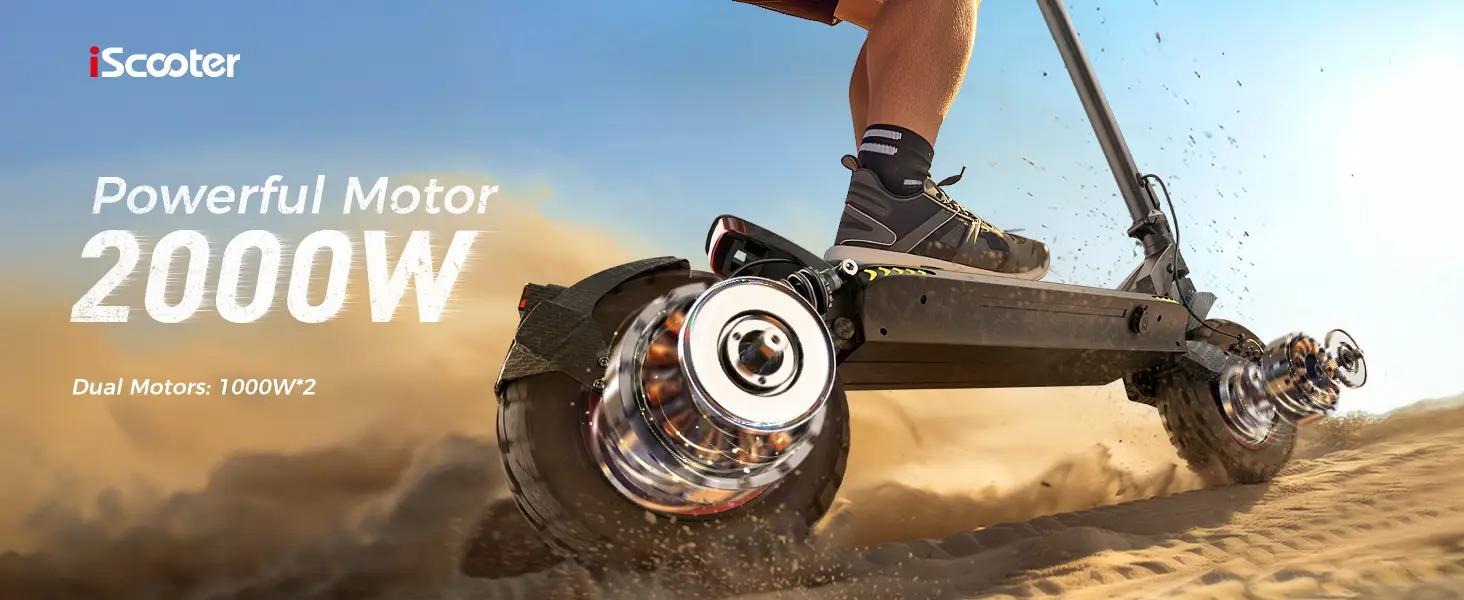
A single rear motor works well on smooth tarmac. The moment the surface turns loose, wet or steep, that same motor often becomes the limiting factor. The rear tyre spins, the front end drifts, and the rider ends up walking. This is the everyday problem that pushes many people toward a dual-motor setup.
This guide looks at the decision from the ground up. It does not focus on marketing claims or peak wattage numbers. Instead it examines the actual situations where a second motor changes the outcome, the situations where it adds little value, and the practical limits every buyer should understand before spending the extra money. Along the way it covers terrain types, rider weight, supporting hardware, battery behaviour, maintenance realities and the current UK legal position.
A well-designed dual-motor off-road electric scooter can turn marginal trails into usable ones. The same machine can also feel heavier, more expensive and less efficient if the rider’s routes never demand the extra capability. Matching the technology to real conditions is the key.
What Dual Motors Actually Change on the Trail
Dual-motor scooters place one hub motor in the front wheel and one in the rear. A controller (or two controllers working together) decides how much current each motor receives. Many models allow the rider to run in single-motor mode on easy ground and engage both motors only when needed.
The headline power figure is almost always the combined output. A scooter advertised as 1000 W or 2000 W is usually sharing that total across two smaller motors. What matters more than the combined number is the ability to put drive through two contact patches instead of one.
On hard, dry pavement the difference is modest. Acceleration may feel stronger and hill starts smoother, but a competent single-motor scooter still performs adequately. The real change appears when grip is limited:
- Loose gravel or sand – a single driven tyre digs in and spins. Two driven tyres share the load and keep the scooter moving forward.
- Wet grass, mud or leaf litter – one wheel can lose traction while the other continues to pull.
- Steep climbs – weight shifts rearward. The front motor keeps driving even when the rear is light, reducing the classic “rear spinning, front stuck” problem.
- Soft or rutted tracks – the front motor helps the scooter track straighter instead of being pushed sideways by a spinning rear tyre.
Physics still applies. Dual motors cannot create grip that the tyres themselves do not provide. Wrong rubber, incorrect pressure or worn tread will still limit performance. The second motor simply gives the tyres a better chance of staying effective.
Matching Dual Motors to Specific Terrain Types
Not every off-road surface benefits equally. The value of dual motors depends heavily on the kind of ground the rider actually encounters.
Firm Dirt and Compacted Tracks
On hard-packed dirt the advantage is mainly hill-climbing consistency and reduced wheelspin under hard acceleration. A strong single-motor scooter can still cope, especially if the rider is light and the climbs are short. Dual motors become more useful when the tracks include longer gradients or when the rider is carrying extra weight.
Loose Gravel and Forest Paths
This is where dual motors usually deliver the clearest benefit. Gravel and forest floor material punish a single driven wheel. The second motor spreads the demand and keeps forward progress more predictable. Riders who regularly use bridleways, forestry tracks or unsurfaced lanes notice the difference most.
Wet Grass, Mud and Soft Ground
Dual drive helps, but only up to a point. Deep mud or saturated ground can still bog any scooter. The second motor reduces the chance of becoming completely stuck on the first soft patch, yet the overall weight of a dual-motor machine can work against it once the surface turns truly soft. Tyre choice and lower pressure become at least as important as motor count.
Steep or Technical Climbs
Here the combination of shared torque and front-wheel drive is most valuable. Weight transfer lightens the front on steep slopes. Having a motor that continues to pull the front end keeps the scooter moving when a rear-only machine would dig in. Riders who face consistent hills or short technical sections gain the most from this behaviour.
Mixed Urban-Plus-Trail Use
Many owners ride pavement for the majority of their miles and only leave the road occasionally. In these cases dual motors still offer a safety margin for unexpected wet or loose sections, but the extra weight and higher cost are harder to justify if the off-road portion is rare.
Rider Weight, Load and Power Demand
Heavier riders and those who carry cargo feel the limits of a single motor sooner. A 100 kg rider plus backpack places significantly more demand on one tyre than a 70 kg rider. Dual motors spread that demand and reduce the chance of wheelspin under load.
The same principle applies to steeper or longer climbs. A single motor that feels adequate on flat ground can overheat or lose traction once the gradient and rider weight combine. Dual motors give more thermal headroom because each motor works less hard for the same overall output.
Lighter riders on mostly flat or gently rolling terrain often find a quality single-motor scooter more practical. The dual-motor machine still works, but the rider pays for capability that is rarely used.
The Supporting Hardware That Actually Matters
Motors alone do not decide the outcome. Several other components determine whether the dual-motor advantage can be used.
Tyres
Knobby or semi-knobby pneumatic tyres with appropriate pressure are essential. Dual motors on slick road tyres still struggle on mud. The second motor multiplies the benefit of good rubber; it does not replace it.
Suspension
Front and rear suspension keep both wheels in contact with uneven ground. Without it, one wheel can lift or unload and the dual-drive advantage is partially lost. Decent travel and progressive damping make a noticeable difference on rutted or rooty tracks.
Brakes
Extra power demands extra stopping ability. Hydraulic disc brakes (preferably on both wheels) are strongly preferred. Regenerative or motor braking on both hubs can help, but mechanical braking remains the primary safety system.
Frame and Geometry
A rigid frame prevents flex when torque is applied at both ends. Deck height, wheelbase and handlebar position also affect how the scooter feels when the front motor is pulling.
Riders evaluating any dual-motor model should look at the complete package rather than the motor wattage in isolation.
Battery, Range and Thermal Reality
Two motors draw more current when both are working hard. Real-world range is therefore usually lower than an equivalent single-motor scooter under the same aggressive conditions. Many dual-motor models offer selectable modes so the rider can stay in single-motor or eco mode on easier sections and only engage both motors when the terrain requires it. This flexibility is one of the practical advantages of modern dual-motor designs.
Heat is another factor. A single motor forced to deliver high torque for long periods can overheat and reduce power. Sharing the load across two motors generally keeps temperatures lower and performance more consistent on long climbs. This is especially relevant for heavier riders or those who ride continuous hills.
Battery capacity still sets the absolute limit. Dual motors do not create energy; they only use it differently. Buyers should treat manufacturer range claims with the usual caution and look for independent real-world figures when available.
UK Legal and Practical Considerations
Privately owned electric scooters remain restricted to private land in the United Kingdom. They are not currently legal on public roads, pavements or cycle paths outside of approved rental schemes. Anyone considering an off-road dual-motor scooter should treat it as a private-land or trail machine and check the rules that apply to the specific land they intend to use.
Even on private land, local bylaws, landowner permission and insurance considerations still apply. The higher power and weight of dual-motor models can also affect storage, transport and the physical effort required to lift the scooter into a vehicle or up stairs.
These constraints do not change the technical advantages of dual motors, but they do shape how and where the scooter can actually be used.
Common Buyer Mistakes
Several recurring mistakes reduce the value of a dual-motor purchase:
- Choosing dual motors purely for top speed when the real need is traction and hill performance.
- Ignoring tyre type and suspension quality because the motor specification looks impressive.
- Underestimating the extra weight when the scooter must be carried or loaded regularly.
- Expecting dual motors to overcome deep mud or completely unsuitable tyres.
- Buying the highest combined wattage without checking whether the controller allows single-motor mode for efficiency.
- Overlooking brake quality and assuming motor braking alone is sufficient.
Avoiding these mistakes usually matters more than the exact power rating.
Decision Checklist
Before choosing a dual-motor model, answer these questions honestly:
- How often do the routes include loose, wet or steep sections?
- What is the typical rider weight plus any regular load?
- Will the scooter need to be carried upstairs or loaded into a car frequently?
- Is there access to private land or trails where the extra capability can be used legally?
- Does the model offer selectable single-motor or eco modes?
- Are the tyres, suspension and brakes appropriate for the intended surfaces?
If the answers point to frequent mixed or demanding terrain and acceptable practical constraints, dual motors are likely to deliver clear benefits. If most riding stays on firm, relatively flat surfaces, a strong single-motor scooter will often prove more efficient and easier to live with.
Final Perspective
Dual-motor technology changes off-road scooter performance most clearly in traction, sustained hill climbing and control on imperfect surfaces. It does not magically solve every terrain problem, nor does it remove the need for proper tyres, suspension and brakes. The second motor simply gives the rest of the machine a better chance to work as intended.
Riders who regularly face loose ground, wet conditions or meaningful climbs will usually feel the difference. Riders whose routes stay closer to prepared paths may find the extra weight, cost and complexity harder to justify. Matching the technology to actual use remains the most reliable way to decide.
When evaluating options, look beyond the combined power figure and examine how the power is delivered, what modes are available, and how the complete package of tyres, suspension and brakes supports the dual-drive system. A carefully chosen dual-motor off-road electric scooter can expand the range of usable trails. The same machine can also sit under-used if the terrain never demands its capabilities.
Frequently Asked Questions
Do dual motors always improve range?
No. When both motors work hard, consumption rises. Selectable single-motor or eco modes help preserve range on easier sections.
Is a dual-motor scooter legal on public roads in the UK?
Privately owned e-scooters are currently restricted to private land. Only approved rental schemes are legal on public roads. Always verify the latest rules for the specific location.
Are dual-motor scooters harder to maintain?
They have additional wiring and a second motor to inspect. Routine checks for tyres, brakes, bolts and connectors remain similar to any scooter.
Will dual motors help a beginner?
They can reduce wheelspin and improve stability on imperfect surfaces, but the extra weight and power still require careful, progressive familiarisation.
How important are the tyres compared with the motors?
Extremely important. Dual motors amplify the benefit of good off-road tyres and cannot compensate for completely unsuitable rubber.
Should I prioritise higher combined wattage?
Not automatically. Controllable power delivery, thermal behaviour, mode options and the quality of the supporting components usually matter more than the headline total.