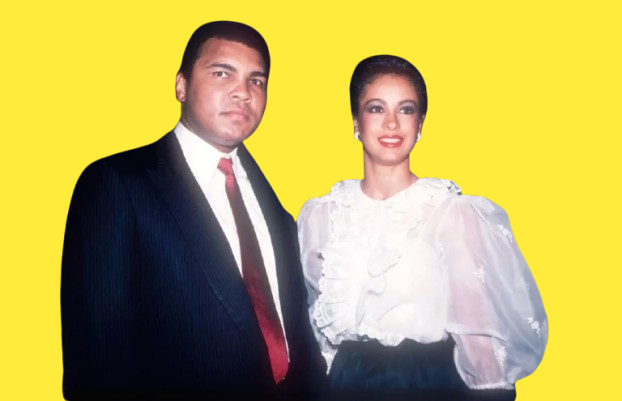
Introduction: Why Sonji Roi Still Matters Today
Sonji Roi remains a compelling historical figure because her life sits at the crossroads of personal conviction, cultural change, and one of the most famous sports icons of the 20th century. Though best known as the first wife of boxing legend Muhammad Ali, Sonji Roi’s own story reflects the tension between individuality and public expectation during a time of dramatic social transformation in America.
Interest in Sonji Roi hasn’t faded with time. Instead, curiosity has grown as audiences seek a fuller understanding of the women whose lives intersected with globally recognized figures. Her marriage was brief, but the questions it raised about faith, identity, and autonomy continue to resonate decades later.
Early Life and Background
Sonji Roi was born in the United States and came of age during the late 1950s and early 1960s, a period marked by civil rights activism, shifting gender norms, and generational rebellion. Compared to later public figures, details about her early upbringing remain intentionally private, largely because Sonji Roi avoided public exposure both before and after her marriage.
What is known is that she was independent, strong-willed, and fashion-forward—traits that stood out during a time when women were often expected to conform quietly to traditional roles. These qualities would later become central to the conflicts in her marriage and to the legacy people now examine more closely.
Meeting Muhammad Ali: A Moment in Time
Sonji Roi met Muhammad Ali when he was still known as Cassius Clay, just before his rise to international superstardom. At the time, Ali was an emerging boxing sensation, charismatic and ambitious, while Sonji Roi represented a more modern, unconventional worldview that contrasted sharply with the social norms surrounding professional athletes.
Their connection was immediate, fueled by mutual attraction and the excitement of youth. However, beneath the romance lay deep differences in personal values, beliefs, and expectations that would soon come into conflict.
Marriage and Public Attention
Sonji Roi married Muhammad Ali in 1964, the same year Ali claimed the heavyweight championship and publicly announced his conversion to Islam. Almost overnight, Sonji Roi was thrust into the global spotlight—not as a celebrity in her own right, but as the wife of a man whose fame was exploding.
The marriage placed intense pressure on both partners. Ali’s faith became central to his identity, while Sonji Roi struggled with expectations that demanded dramatic changes to her lifestyle, clothing, and personal independence. These pressures were magnified by media attention, which often framed her through a narrow lens rather than acknowledging her individuality.
Cultural and Religious Differences
One of the most defining aspects of Sonji Roi’s story is the clash between her personal values and the religious expectations placed upon her. Muhammad Ali’s interpretation of Islam at the time emphasized modest dress and strict behavioral guidelines for his spouse—standards Sonji Roi was unwilling to accept.
Rather than quietly conform, she chose to remain true to herself. This decision, though deeply personal, became symbolic of broader conversations about women’s autonomy, especially within marriages shaped by strong ideological beliefs.
The Divorce and Its Significance
The marriage ended in divorce in 1966, just two years after it began. While brief, the union had a lasting impact on public perception—both of Ali’s private life and of Sonji Roi herself. The separation was widely reported, often without nuance, and Sonji Roi was sometimes unfairly portrayed as incompatible or resistant to change.
In hindsight, many observers view the divorce differently. Rather than failure, it represents a clear moment of personal integrity. Sonji Roi chose self-respect over public approval, a decision that continues to earn admiration from modern audiences.
Life After the Spotlight
Following the divorce, Sonji Roi intentionally stepped away from public life. Unlike many who remain connected to celebrity through media appearances or memoirs, she chose privacy and independence. This absence from the spotlight has only deepened intrigue, as limited verified information leaves space for speculation and renewed interest.
Her post-divorce life appears to have been defined by discretion and self-determination—qualities consistent with the principles she demonstrated during her marriage.
Public Perception and Modern Reassessment
For years, Sonji Roi existed in public memory primarily as a footnote in Muhammad Ali’s biography. Today, that perspective is changing. Cultural historians, journalists, and fans increasingly recognize her as an individual whose choices reflected courage during a time when women were rarely encouraged to assert autonomy within high-profile marriages.
Modern reassessment places Sonji Roi within a broader narrative of women who resisted being defined solely by the men they married. Her story resonates particularly with audiences interested in gender roles, religious freedom, and personal agency.
Why Sonji Roi Still Draws Interest
Sonji Roi’s lasting relevance lies in the questions her life continues to raise. How much should one compromise for love? What happens when personal belief collides with public expectation? And how should history remember women who choose independence over conformity?
In an era obsessed with celebrity culture, Sonji Roi stands out precisely because she rejected it. Her quiet withdrawal from fame contrasts sharply with today’s visibility-driven world, making her story feel both rare and refreshingly authentic.
Legacy Beyond a Famous Marriage
Sonji Roi’s legacy extends beyond her association with Muhammad Ali. She represents a moment in American cultural history when personal freedom, faith, and gender roles were being actively renegotiated. Her refusal to surrender her identity under public pressure remains a powerful statement.
Though she never sought recognition, Sonji Roi’s life continues to inspire discussion and reflection—proof that even brief chapters in history can leave a lasting imprint.
Final Thoughts
Sonji Roi’s story is not about fame, wealth, or notoriety. It is about conviction, self-respect, and the courage to walk away when values no longer align. As interest in her life endures, it becomes clear that Sonji Roi deserves recognition not merely as a famous spouse, but as a woman who quietly insisted on living life on her own terms.