Not long ago, building a marketing campaign meant gathering a long chain of specialists. A brand needed a photographer to shoot the product, a designer to create ad formats, a copywriter to write headlines, a strategist to shape the concept, and often an agency to coordinate everything. Even a modest campaign could take weeks to move from idea to launch.
That system made sense when content moved more slowly, and campaigns lasted longer. But digital marketing no longer works that way. Brands are expected to publish constantly, test rapidly, adapt visuals for multiple channels, and respond to trends in real time. In that environment, the traditional agency model often feels too slow, too expensive, and too fragmented.
AI workflows are changing that. Today, a single product photo can become the starting point for an entire campaign. With the right tools and process, one image can be transformed into ads, social media assets, product page visuals, written copy, and campaign variations designed for different audiences. The shift is not just about automation. It is about turning one asset into a scalable creative system.
The Traditional Agency Model Was Built for a Slower Market
For years, agencies played a necessary role because campaign production was highly manual—brands needed outside teams to handle every stage of execution. A simple campaign required planning, moodboards, photography, editing, design adaptation, copy development, approval rounds, and final delivery in multiple file sizes and formats.
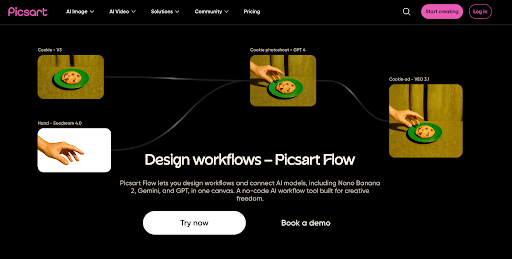
Today, design workflows are becoming far more centralized and efficient, allowing brands to move from a single product image to a broader campaign structure without relying on the same heavy production model. Tools like Picsart Flow reflect this shift by helping creative teams organize, generate, and adapt campaign assets faster across formats and channels.
That model still works for certain large-scale brand campaigns, but it is no longer the only way to produce effective marketing. Modern companies do not just need one final, finished campaign every quarter. They need fresh creatives every week, sometimes every day. They need to test different messages, produce content for multiple platforms, and adjust quickly when performance changes.
This is where the agency structure starts to show its limitations. Too many handoffs slow down production. Too many people touching the same work adds cost. And too much dependence on external teams reduces flexibility. In a market that rewards speed and iteration, brands are looking for systems that can move faster without sacrificing quality.
One Product Photo Is No Longer Just One Asset
The most important change AI introduces is a new way of thinking about creative input. In the past, a product photo was a finished deliverable. It could be used on a product page, maybe cropped into an ad, and that was about it. Now, that same photo can become the base layer for dozens of campaign outputs.
A single product image can be isolated, enhanced, restyled, and placed into different contexts. It can appear in a clean studio setting, then in a lifestyle environment, then in a seasonal campaign version. It can be reformatted for social posts, banner ads, website hero images, and email graphics. Instead of scheduling multiple shoots for each variation, brands can build a flexible creative flow around one original visual. That changes the structure of content creation. The value is no longer in how many assets a team can manually produce from scratch. The value is in how intelligently one strong asset can be expanded into many useful forms.
AI Image Generation Is Reshaping Creative Production
One of the clearest ways AI workflows are replacing agencies is through visual production. Traditional campaigns often required separate shoots for different themes, platforms, or audiences. A brand might need one set of images for summer, another for holiday promotions, and another for paid social. Each variation meant more planning, more coordination, and more production expense.
AI changes that by making visual iteration far more accessible. A product can be placed in multiple scenes without physically transporting it to different locations. Backgrounds can be changed. Lighting styles can be adjusted. The same item can be shown in different moods, contexts, and campaign concepts without rebuilding the process every time.
This does not mean every AI-generated image is automatically great. Good inputs still matter. Taste still matters. Brand consistency still matters. But the speed difference is undeniable. What once took a team of creatives and several rounds of approvals can now begin with a single source photo and a much faster workflow. For fast-moving ecommerce brands, especially, this is a major advantage. They can produce more content, test more ideas, and react more quickly to demand without waiting on a full creative production cycle.
Copy and Creative Direction Can Move Alongside the Visuals
The old agency model separated visual development from copywriting and concepting. Designers worked on layouts. Copywriters developed messaging. Strategists refined campaign angles. Everything moved in stages, and that often meant delays between idea and execution.
AI workflows compress those steps. Once a product image and campaign objectives are defined, AI tools can help generate headlines, taglines, ad copy, product descriptions, social captions, email subject lines, and call-to-action options at the same time the visuals are being developed.
This matters because strong campaigns are rarely built from one perfect idea. They are built through comparison. Teams need to test different hooks. They need to see whether a product performs better when framed around convenience, luxury, simplicity, sustainability, or price. AI makes that exploratory stage faster and broader. Instead of developing one campaign concept and hoping it works, brands can generate multiple creative directions in parallel. That gives smaller teams something agencies used to offer as a premium service: range. The difference is that the range is now faster, cheaper, and easier to revise.
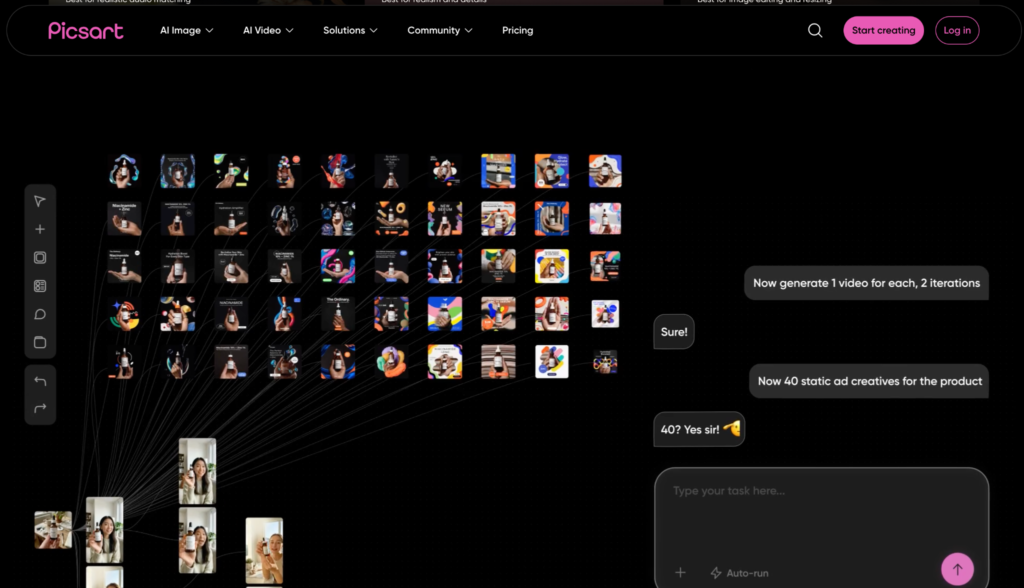
Advertising is moving away from the old model where campaigns depended on large external teams and slow production cycles. In its place, a new workflow is emerging, one where a single product photo can power an entire campaign system. Visuals, copy, formats, and testing variations can all grow from one starting asset when AI is built into the process.
For brands, this changes more than efficiency. It changes control. The ability to launch faster, iterate more often, and create more with fewer resources is no longer reserved for companies with large agency budgets. It is becoming a standard capability. The brands that adapt to this shift early will not just save time. They will build faster creative cycles, stronger experimentation habits, and a much more flexible way to market in a world that rarely slows down.